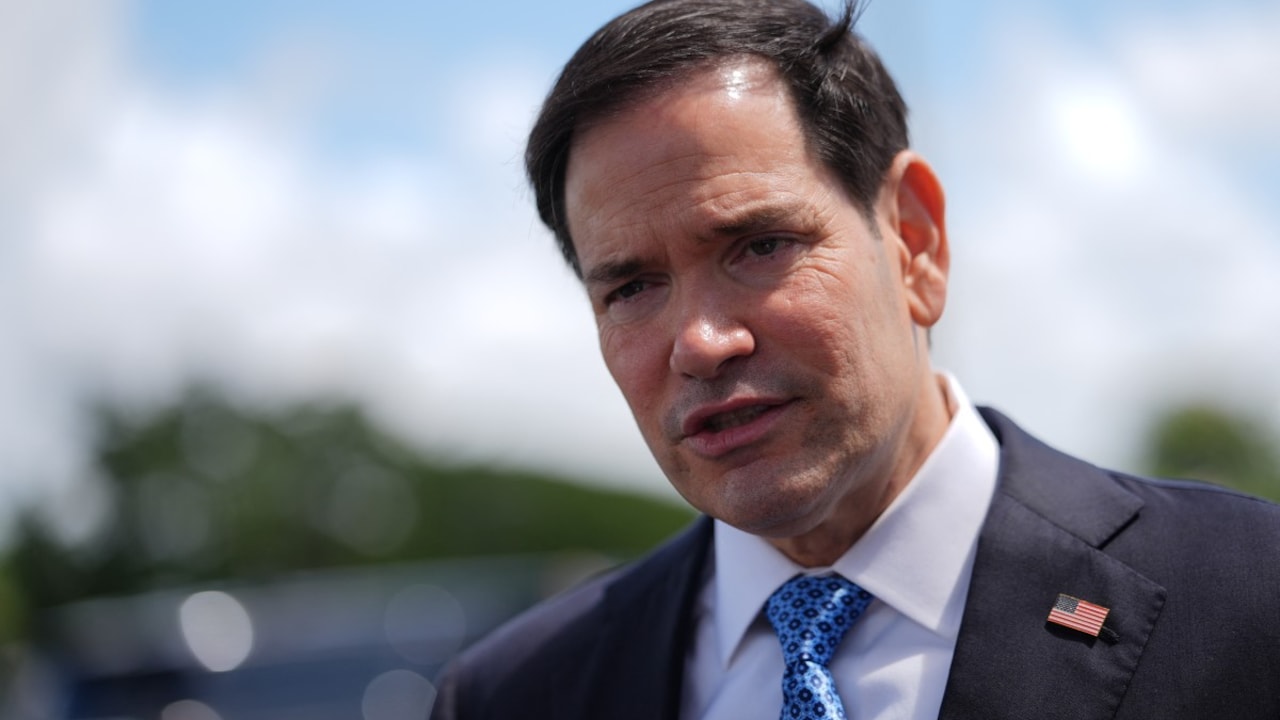
Washington is reacting to a ghost story.
When political figures posture over the Strait of Hormuz, they rely on a tired playbook: paint Iran as a rogue pirate state threatening to slap an illegal toll on global shipping, vow that the United States military will never accept it, and wrap it all in the flag of defending the free flow of commerce.
It is theater. It is economically illiterate. Worst of all, it fundamentally misunderstands how maritime power and economic warfare actually operate in the 21st century.
The lazy consensus dominating current foreign policy circles views the Strait of Hormuz as a traditional choke point governed by standard international law, where the primary threat is a sudden, overt physical blockade or an arbitrary tax on transit. This worldview assumes that clear military deterrence is the antidote.
The reality is far more uncomfortable. Iran does not need to pass an illegal toll to upend global shipping, nor would a formal toll be the mechanism they choose to leverage their position. By focusing the national security narrative on overt, comic-book-villain tactics like "charging admission" for an international strait, Western commentators miss the insidious, legalistic, and gray-zone tactics that are already shifting the balance of power in the Persian Gulf.
The International Law Blind Spot
Let us clear up the legal mechanics that the standard talking heads consistently get wrong. The Strait of Hormuz is not an international waterway in the way the high seas are. It lies entirely within the territorial waters of Iran and Oman.
Under the 1982 United Nations Convention on the Law of the Sea (UNCLOS), ships enjoy the right of transit passage through such straits. This means vessels can pass through continuously and expeditiously solely for the purpose of normal, uninterrupted transit.
Here is the twist: Iran has signed UNCLOS but never ratified it. Instead, Tehran argues it is bound only by customary international law, specifically the older 1958 Convention on the Territorial Sea and the Contiguous Zone, which grants the more restrictive right of innocent passage.
Under innocent passage, a coastal state has significantly more leeway to suspend transit if it deems a vessel harmful to its peace, good order, or security.
When American politicians declare that the US will "never accept" Iranian interference, they act as if the legal framework is settled. It isn't. Having spent two decades analyzing maritime choke points and watching commercial insurance syndicates price risk, I can tell you that Lloyd's of London underwriters care far more about this legal ambiguity than they do about political speeches.
Iran does not need to collect a literal toll at gunpoint. They can accomplish the exact same economic extraction through bureaucratic friction, mandatory environmental inspections, and targeted "safety" detentions.
The Micro-Toll of Bureaucratic Friction
Imagine a scenario where the Iranian Revolutionary Guard Corps (IRGC) does not stop ships to demand cash, but instead mandates that every commercial vessel transiting the northern lane of the strait must submit to a digital "environmental protection registry" managed by a Tehran-backed entity.
To fund this registry, ships must pay a nominal administrative processing fee. If you don't pay, your ship is flagged for an exhaustive, manual safety inspection that delays a $100 million crude carrier for four days.
That is not a toll in the eyes of international law; it is a regulatory hurdle. But to a global shipping company operating on razor-thin margins and tight delivery windows, a four-day delay is an existential financial hit.
The industry standard cost for a delayed Very Large Crude Carrier (VLCC) can easily exceed $50,000 per day in demurrage fees alone, not to mention the compounding chaos sent down the supply chain.
This is gray-zone warfare at its finest. If the US military launches strikes because Iran is enforcing an "environmental fee," Washington looks like the disproportionate aggressor. If the US does nothing, Iran establishes de facto administrative control over the world's most vital energy artery.
The political obsession with preventing an overt blockade or a blunt toll ignores the fact that Iran’s strategy is death by a thousand paper cuts.
The Illusion of Freedom of Navigation Operations
The standard policy prescription from Washington is always the same: deploy another carrier strike group, run more Freedom of Navigation Operations (FONOPs), and show the flag.
This is a tactical solution to a strategic problem, and it is failing.
Navy destroyers are exceptional at protecting warships, but they cannot escort every single commercial tanker, bulk carrier, and liquefied natural gas (LNG) vessel that transits the strait daily. Roughly 20 percent of the world's petroleum passes through this microscopic corridor. The sheer volume makes comprehensive military escorting an impossibility.
Furthermore, commercial shipping companies are inherently risk-averse. They do not operate on geopolitical principle; they operate on insurance premiums. The moment the Persian Gulf becomes a militarized convoy zone, War Risk Insurance premiums skyrocket.
During previous periods of heightened tension in the Gulf, these insurance premiums surged by up to 10 times their normal rate within a single week.
A carrier strike group sitting in the Arabian Sea does not lower insurance premiums. In fact, its very presence often signals to the market that the risk of kinetic conflict is peaking, causing insurers to raise rates further.
Washington’s muscle-flexing actually accelerates the exact economic pain it claims to prevent. The market reacts to the volatility, not the promise of protection.
Why the Energy Weapon Has Mutated
The conventional wisdom insists that any disruption to the Strait of Hormuz will trigger a global oil shock, sending crude to $150 a barrel and crippling Western economies. This threat is the primary reason the US remains entangled in the region's maritime security.
But this thesis is outdated. The global energy map has undergone a structural realignment over the last decade.
The United States is now the world’s largest producer of crude oil and natural gas. While a global price shock would certainly affect American pump prices, the US is no longer structurally dependent on Persian Gulf crude to keep its grid online.
The true vulnerability lies elsewhere. The vast majority of the crude flowing through the Strait of Hormuz goes east—to China, India, Japan, and South Korea.
| Destination Region | Approximate Percentage of Hormuz Crude | Economic Reliance Level |
|---|---|---|
| Asia-Pacific | 75-80% | Critical / Existential |
| Europe | 10-15% | Moderate / Variable |
| North America | <5% | Low / Negligible |
By acting as the unpaid security guard of the Strait of Hormuz, the United States military is effectively subsidizing the energy security of its primary geopolitical rival, China.
If Iran restricts flow or complicates transit, Beijing suffers the immediate industrial shockwave. Yet, American taxpayers continue to fund the naval presence that keeps China’s industrial engine fueled.
Shifting the burden of maritime security onto the nations that actually import the oil is the obvious, counter-intuitive move that no one in power wants to discuss. It requires admitting that our current posture is an anachronism from the 1970s.
The Downside No One Admits
If the United States were to adopt a more detached strategy—stepping back from its role as the automatic guarantor of Gulf transit—there would be immediate, brutal fallout. It is intellectual dishonesty to suggest otherwise.
In the short term, the removal of the American security umbrella would cause a massive spike in global energy markets. The immediate panic would hit consumers worldwide.
China would likely respond by expanding its own naval footprint in the Indian Ocean and the Persian Gulf, building deeper military alliances with regional actors to secure its supply lines.
The US would lose a significant amount of its traditional leverage over Middle Eastern partners like Saudi Arabia and the United Arab Emirates. If Washington isn't protecting the water, those nations will look for patrons who will.
But continuing the current policy of endless, reactive bluster every time an Iranian official mentions a toll or a restriction is worse. It leaves the US trapped in an expensive, high-risk cycle of deterrence that protects an outdated economic status quo while leaving us blind to the real legal and bureaucratic strategies being deployed against us.
Stop listening to the politicians who treat the Strait of Hormuz like a highway tollbooth. The real conflict isn't about cash collection; it is a sophisticated, gray-zone chess match over administrative jurisdiction, legal definitions, and maritime insurance manipulation.
If Washington keeps playing checkers with aircraft carriers, it will find itself locked out of the game entirely.