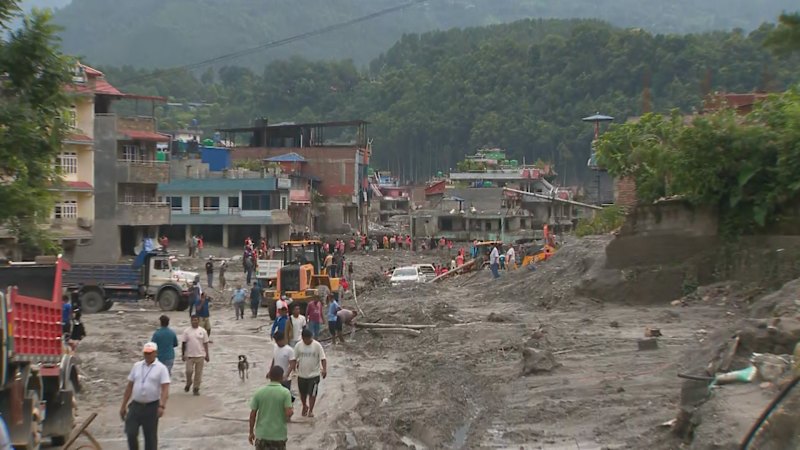
Every monsoon season, the headlines write themselves. Rushing waters tear through mountain valleys, mud swallows centuries-old villages, and weeping survivors stand on patches of raw earth where their homes used to be. The media descends with drone footage, wringing its hands over climate change, government apathy, and the tragic loss of human heritage. Then comes the predictable chorus of charity drives, emergency relief funds, and solemn pledges to rebuild every stone foundation exactly where it stood.
It is a comforting narrative. It is also an absolute catastrophe of human stubbornness.
We are pouring billions of dollars into restoring communities in locations that nature has explicitly marked as temporary. The lazy consensus says we need better retaining walls, higher dams, and faster disaster response teams. I say we need to stop fighting geography and accept when a valley tells us to leave.
The Geography Dictates the Terms
Let us look at how these disasters actually unfold, stripping away the emotional soundtrack. Valleys carved by centuries of aggressive glacial melt and seasonal cloudbursts are not picturesque residential zones waiting for a master-planned suburb. They are drainage chutes. When millions of tons of water come barreling down a narrow mountain pass, it does not care about your grandfather's title deed, your ancestral temple, or your local tourism board.
Engineers love to talk about mitigation. We hear about gabion walls, check dams, and afforestation programs. These measures work fine for standard seasonal swells. They fail catastrophically during extreme weather events because they operate on a fundamental misunderstanding of scale. You cannot engineer a permanent concrete cage for a dynamic, living watershed without eventually creating a pressure cooker. When that cage breaks, the destruction is exponentially worse than if the water had simply met no resistance at all.
I have walked through these disaster zones weeks after the cameras left. I have watched contractors haul in heavy machinery to patch up roads carved into unstable alluvial fans—gravel deposits left behind by ancient floods. Building a permanent settlement on an alluvial fan is like setting up a tent in the middle of a bowling alley and getting angry when someone rolls a strike. Yet, local governments issue building permits year after year, driven by political expediency and the romantic myth of rural permanence.
The Economics of Sentimental Suicide
Why do we keep doing it? Because abandoning a village feels like admitting defeat. It feels cold and technocratic to suggest that people should pack up their belongings and move to higher, drier ground.
Instead, we trap generations of families in a cycle of perpetual rebuilding. Think about the financial inefficiency. A community gets wiped out. Millions in public funds and international aid flow in to reconstruct houses, lay down new asphalt, and string up electrical grids. Five years later, another cloudburst hits, and the entire capital investment is washed down the river like a child's toy.
That is not community resilience. That is economic self-harm.
If we spent a fraction of those post-disaster reconstruction funds on preemptive relocation programs—building modern, climate-resilient townships in safe zones outside these vulnerable corridors—we would save thousands of lives and billions of dollars. But prevention lacks the dramatic photo-op of a politician handing out blankets in a muddy tent camp.
The Myth of Sustainable Upstream Living
Another favorite talking point of the disaster tourism circuit is that upstream deforestation is the sole culprit. Plant more trees, they argue, and the floods will magically stop.
Trees help with soil retention on moderate slopes, but they are not magical sponges capable of absorbing a month's worth of rain in four hours. When saturated topsoil slides off steep rock faces, it takes the trees right along with it. Blaming deforestation entirely for catastrophic valley floods is a convenient way to avoid the harder truth: some places were never meant to host permanent human populations at scale.
We have altered natural river paths with embankments, narrowed channels with encroachments, and built luxury resorts right up to the water's edge to maximize mountain views. When the river reclaims its floodplain—because that is what floodplains do—we act surprised.
Rewilding the Watershed
The alternative requires a radical shift in how we think about land use. We need to designate high-risk alpine valleys as ecological buffer zones rather than residential hubs. Allow seasonal grazing, manage eco-tourism with strict carry-in, carry-out rules, and ban permanent concrete construction below a certain risk threshold.
If a village is wiped out by a catastrophic flood, the government should offer fair market compensation for the land—conditional on the owners relocating outside the hazard zone forever. Do not rebuild the school there. Do not pave the road twice. Let the river have its room.
Nature does not negotiate. She does not care about your history, your heritage, or your political speeches. Until we learn to step out of the way, we will keep writing the same obituary for the same valleys, year after year.