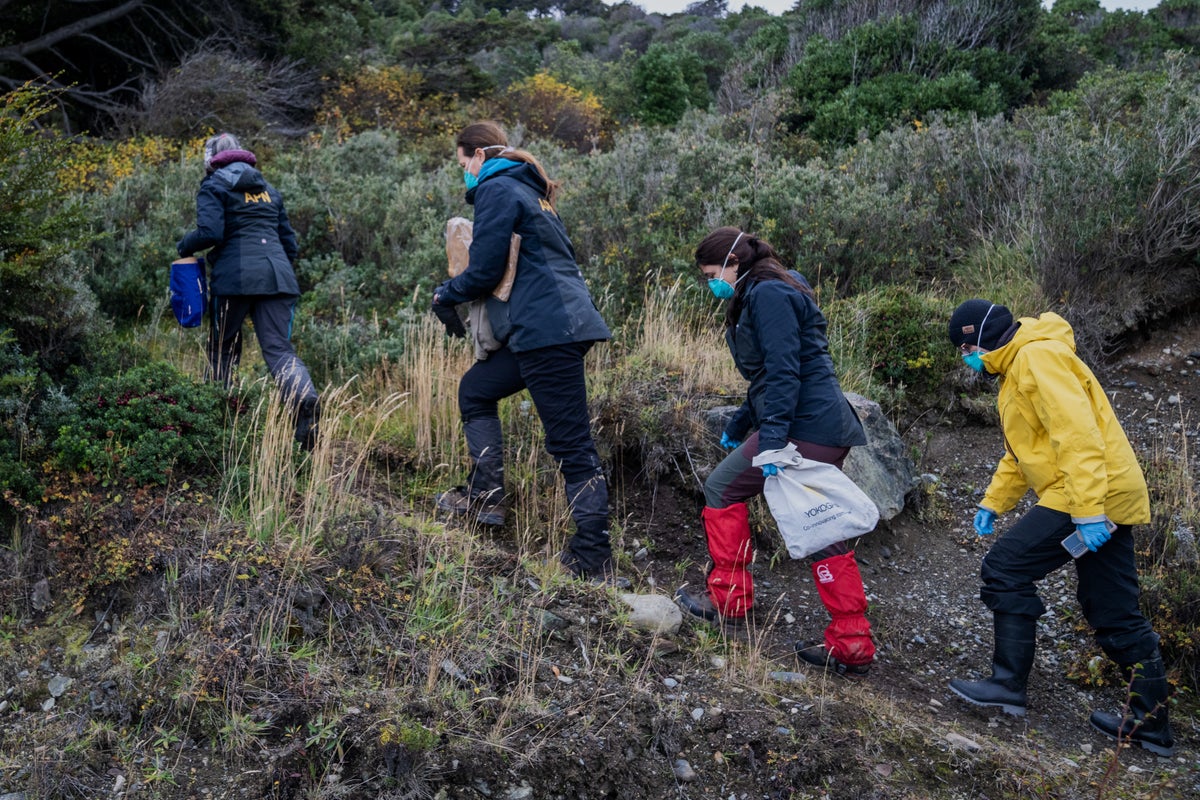
Argentine health investigators are trudging through the mud of Tierra del Fuego, snapping metal box traps shut on local rodents in a performative display of public health theater.
The state-backed Malbrán Institute has deployed a team to the outskirts of Ushuaia, the "end of the world" gateway to Antarctica. Their mission? To find out if a local subspecies of the long-tailed pygmy rice rat (Oligoryzomys longicaudatus), colloquially known as the colilargo, is harboring the lethal Andes strain of hantavirus. This sudden scramble follows a tragic outbreak aboard the MV Hondius cruise ship that killed three passengers and sickened several others.
The media is eating it up. It makes for fantastic, dramatic imagery: scientists in bright blue gloves and surgical masks heaving bags of dead rats into pickup trucks against a backdrop of snow-capped patagonian peaks.
But it is entirely the wrong way to look at the problem. Hunting for viral scapegoats in the pristine forests of Tierra del Fuego is a classic epidemiological distraction designed to protect regional tourism interests while ignoring a much more terrifying reality.
The Flawed Geopolitics of a Viral Outbreak
Local politicians and health authorities in Tierra del Fuego are practically begging the scientists to find nothing. Tourism is the lifeblood of Ushuaia. The moment a single rat tests positive for hantavirus in the province, international travel advisories will flash red, and the lucrative Antarctic cruise economy will tank.
To deflect blame, local officials are fiercely rejecting the federal government’s working hypothesis that the index cases—a Dutch couple who subsequently died—contracted the virus at an Ushuaia landfill. Instead, local authorities point out that the couple traveled through northern Patagonia, Chile, and Uruguay for four months prior to boarding.
This regional bickering misses the point entirely.
The primary question shouldn't be where the passengers breathed in the first microscopic particle of dried rodent urine. The real question is how a modern, multi-million-dollar cruise vessel became a floating incubator for a pathogen notorious for person-to-person transmission.
Why the Andes Strain Changes the Rules
Public health manuals treat hantavirus as a regional environmental hazard. In North America, the Sin Nombre strain requires you to sweep out a dusty, long-abandoned cabin to catch it. It is an isolated, dead-end infection.
The Andes virus found in southern Argentina and Chile does not play by those rules.
The Scientific Reality: The Andes strain is uniquely capable of inter-human transmission. It does not need a steady supply of rats if it finds a densely packed, closed-air environment with hundreds of trapped hosts.
Imagine a scenario where an elderly couple spends weeks hiking through the infected forests of Rio Negro or Chubut, breathes in the virus, and boards a vessel with minor, prodromal symptoms. Once inside the closed circuit of a cruise ship, the virus no longer cares about the colilargo rat population. It has a high-density human population packed into dining rooms, theaters, and corridors.
By focusing all resources on trapping 150 rats in the mud of Ushuaia, investigators are treating a systemic transit ventilation problem as a localized wildlife issue. I have seen public health departments waste millions on wildlife tracking to soothe public anxieties, while completely failing to audit the actual infrastructure where people are dying.
The Reality of Hantavirus Transmissibility
| Factor | Standard Hantavirus (e.g., Sin Nombre) | The Andes Strain (MV Hondius Outbreak) |
|---|---|---|
| Primary Vector | Rodent excreta aerosolization | Rodent excreta AND human-to-human droplets |
| Risk Environment | Rural barns, cabins, wilderness | Closed ships, hospitals, households |
| Epidemiological Focus | Pest control and eradication | Strict quarantine and HVAC filtration |
Dismantling the Climate Change Cover Story
Every major report on this outbreak leans heavily on the same lazy consensus: climate change is pushing the colilargo rat population further south into previously sub-Antarctic zones.
While it is true that milder winters allow rodent populations to expand, blaming global warming for a cruise ship outbreak is an easy out for corporate operators. It reframes a failure of onboard containment and medical screening into an act of God.
If the Malbrán Institute spends the next month processing blood samples in Buenos Aires only to find that Tierra del Fuego’s rats are perfectly clean, it changes absolutely nothing about the safety of commercial maritime travel. The vulnerability remains.
If a passenger can contract a lethal respiratory virus in northern Argentina, board a ship at the southern tip of the continent, and trigger a global contact-tracing nightmare, then the failure belongs to maritime health protocols, not the local ecosystem.
Stop Hunting Rats, Start Overhauling Fleets
If global health agencies want to prevent another MV Hondius disaster, they need to stop looking at the mud and start looking at the steel.
- Dismantle the "Clean Record" Fallacy: Just because Tierra del Fuego hasn’t recorded a hantavirus case in 30 years doesn't mean the local population is immune or the virus can't arrive tomorrow via a single backpack.
- Enforce Aggressive HVAC Standards: Cruise ships must be forced to upgrade to hospital-grade HEPA filtration systems capable of trapping viral particles, moving away from closed-loop air recycling.
- Implement Real-Time PCR Screening: Waiting for passengers to develop full-blown respiratory distress before isolating them on a vessel is an antiquated approach. Rapid molecular diagnostics for regional endemic threats must be part of pre-boarding screenings in high-risk seasons.
The obsession with trapping rats in Ushuaia is a comforting fiction. It tells the public that the threat is out there in the woods, manageable, isolated, and wild. It avoids the uncomfortable, expensive truth that the threat is actually inside the machine.