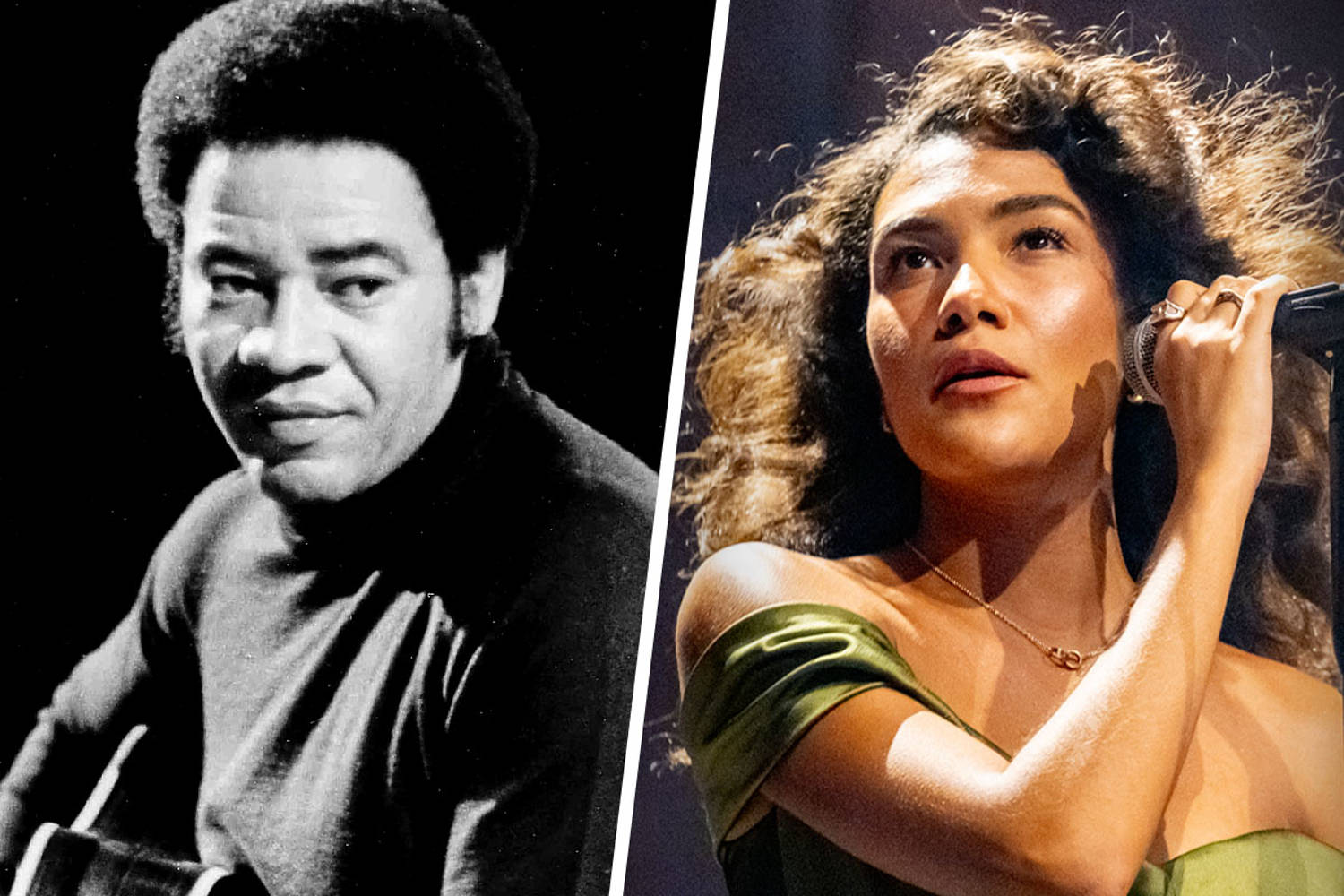
The music business has lost its collective mind, and the legal profession is happy to bleed it dry. When Mattie Music Group—the entity guarding Bill Withers’ legendary back catalog—filed a federal copyright infringement lawsuit against Olivia Dean’s camp over her track "I've Seen It," the lazy consensus immediately branded it a malicious theft. Commentators wailed about the death of originality. Armchair musicologists on social media rushed to play forensic detective, lining up waveforms to prove that a human being dared to use a similar vocal cadence to a 1981 soul standard.
It is time to stop the pearl-clutching.
The lawsuit targets Dean, Capitol Records, and Universal Music Group, alleging that her song borrows structural DNA from "Just the Two of Us". Listen to the tracks side by side, and yes, the cadence on the line "I've heard it laced in every song" rings a familiar bell. But calling this theft misunderstands the physics of modern popular songwriting. We are dealing with a finite set of notes, a shared cultural subconscious, and a legal precedent that treats musical inspiration like a felony.
The Fallacy of Absolute Ownership in Pop
For decades, I have watched copyright trolls and litigious estates turn popular music into a minefield. The benchmark set by the disastrous Blurred Lines verdict ruined modern composition by making vibe and groove legally protectable assets. Music doesn't exist in a vacuum. Bill Withers did not invent the emotional architecture of soulful reflection; he built upon the blues and jazz traditions that preceded him. Ralph MacDonald, William Salter, and Withers crafted a masterpiece, but treating every descending vocal pattern or melancholic phrasing as locked intellectual property turns every songwriter into a potential criminal defendant.
Pop music relies on a continuous conversation with the past. When an artist absorbs the records of their childhood—spinning Withers, Marvin Gaye, or Aretha Franklin—those melodies become part of their internal hard drive. To demand that creators completely purge these foundational frequencies from their brains is like telling a novelist they cannot use a common sentence structure because someone else used it first in 1981.
The Financial Incentive to Sue Late
Look at the timeline of the Olivia Dean dispute. "I've Seen It" is a standout cut from her critically acclaimed album The Art of Loving. The record went gold, she swept up accolades, and the song became a staple of her live performances. Yet, Mattie Music Group claims they only discovered the alleged infringement months down the road.
Let us be entirely pragmatic about how this works. Publishing companies rarely rush to court when a track is an underground indie release failing to move units. They wait until the economic upside materializes. Once a song turns into a commercial juggernaut, the legal machinery kicks into gear. It is a retrospective tax on success, disguised as the noble protection of a dead artist’s legacy. Withers passed away in 2020, and while his estate has every right to manage his assets, transforming standard stylistic reverence into a courtroom cash grab threatens every young artist attempting to write soulful music today.
The Real Cost to Creativity
The downside to my perspective is simple: yes, interpolations and direct homages should ideally be cleared upfront to avoid bad blood and administrative headaches. If Dean and her production team recognized the nod to Withers, clearing it as an interpolation would have saved them a federal lawsuit.
However, forcing creators to operate under the constant terror of litigation changes the final product. It flattens innovation. Artists terrified of getting sued stop taking risks, stop leaning into classic tonalities, and retreat into sterile, mathematically optimized soundscapes that cannot trigger a copyright claim.
Stop treating musical
Stop Pretending Every Chord Progression is a Crime Syndicate
entertainment, celebs
Another week another copyright lawsuit that treats music theory like a restricted patent office. The legal machinery is grinding into gear over Olivia Dean and her track I've Seen It drawing fire for allegedly tracing the blueprint of Bill Withers and Grover Washington Jr. absolute soul standard Just the Two of Us.
Cue the internet lawyers. Cue the self-appointed forensic musicologists crawling out of the woodwork to overlay audio waveforms and shout about minor seventh chords as if Grover Washington Jr. invented geometry.
Let us state the uncomfortable truth right out of the gate. Every single pop song released in the last fifty years is a remix of something written by people who died before the invention of the electric bass.
The lazy consensus in these lawsuits always leans on the same tired premise. If a listener can hum melody B over the rhythm of melody A, somebody committed grand larceny. This logic ignores how human memory works, how genre conventions operate, and how the architecture of popular music has functioned since Tin Pan Alley.
Music operates on a finite set of building blocks. Twelve notes. A handful of standard chord progressions that populate thousands of tracks. When you write a neo-soul or R and B cut with a smooth, walking bassline and a descending vocal cadence, you are swimming in a pool built by thousands of writers before you. You are not stealing water; you are swimming in the ocean.
Look at the mechanics of the claim. The argument usually points to a specific contour, a rhythmic syncopation, or a vibe. A vibe is not intellectual property. A mood is not copyrightable. If we start handing out monopolies on the feeling of a rainy afternoon jazz-inflected groove, the entire genre of modern soul closes down by Friday.
I have spent decades watching artists get dragged through expensive legal purgatory because litigators confuse standard harmonic vocabulary with specific compositional theft. It is a racket. Major labels and estate holders watch the charts for any rising star whose syncopation hits a nostalgic nerve, and they cash in on the anxiety of originality.
Originality in modern songwriting is a myth peddled to high school seniors taking their first music appreciation class. True innovation in audio is rare. What matters is texture, lyric, delivery, and emotional honesty. Olivia Dean sings with a distinct British soul cadence that belongs entirely to her current generation, anchored in a lineage that includes Amy Winehouse and Sade. Bill Withers did not invent the concept of sounding melancholy over a crisp snare hit.
Let us look at the actual notes. Just the Two of Us relies on a classic ii-V-I-VI progression sequence that powers half the jazz standards in the standard fake book. If we allow estates to lock down standard harmonic motion, we are heading toward a dystopian future where nobody can write a soulful bounce without paying a toll to a copyright holding corporation from the nineteen-eighties.
The real question people should be asking is why our legal system treats art like a hostile corporate takeover instead of a continuous conversation.
When you penalize an artist for inhabiting a genre space, you punish them for participating in culture. Culture is iterative. It is a giant game of telephone where the message gets distorted, cleaned up, polished, and thrown back out into the world.
Stop weaponizing nostalgia against working musicians. Let people write their tunes, groove on their inherited chord charts, and build something new out of old bones.
The next time someone tells you a modern track stole the soul of a classic, ask yourself if they are actually listening to the music or just reading a spreadsheet designed to extract settlement money.
Decline the panic. The chord progression belongs to everyone.