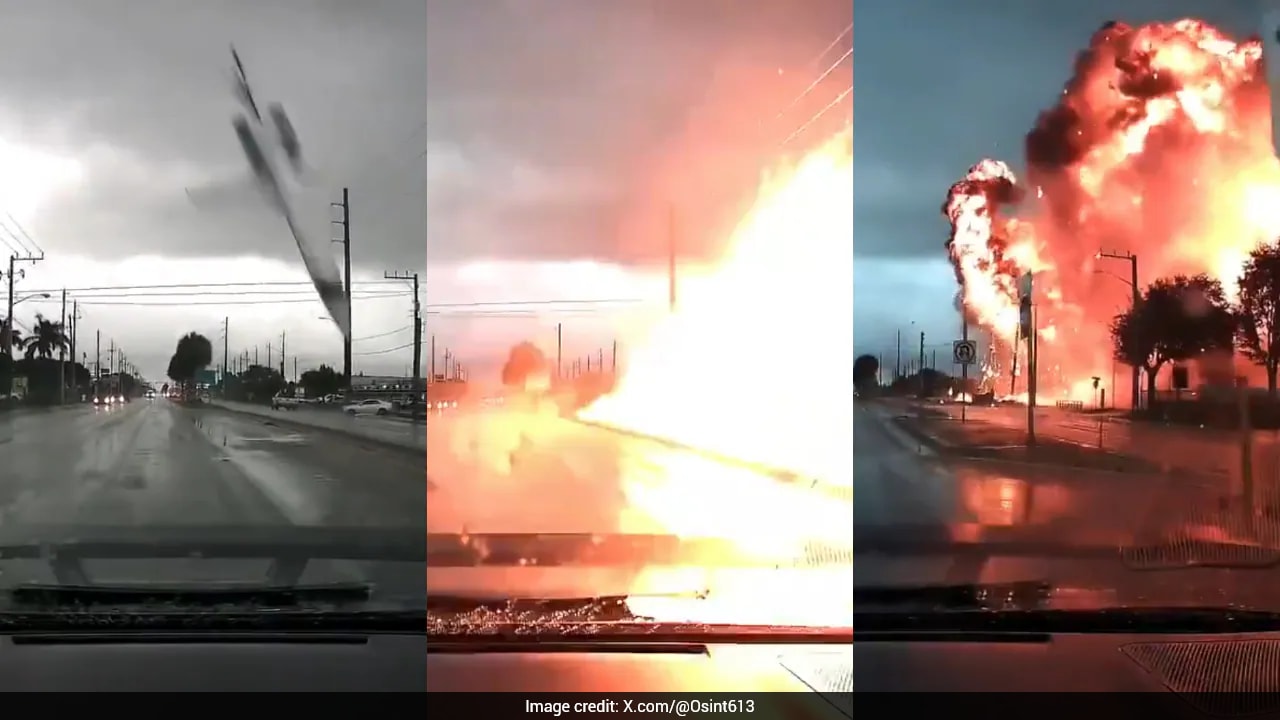
The aviation press loves a gruesome transcript. Nothing drives clicks quite like publishing the final, panicked profanities of a doomed flight crew seconds before impact. When a Bombardier Challenger 600 crashed onto Interstate 75 near Naples, Florida, in February 2024, the media vultures waited patiently for the National Transportation Safety Board to release the cockpit voice recorder transcript. The second those words hit the public docket—"Holy f**k, we're out of time"—every outlet on the internet ran the exact same lazy, sensationalist headline.
They treated those seven words as the story. They framed the tragedy as a dramatic Hollywood thriller where brave pilots fought a sudden, insurmountable mechanical monster until the clock ran out.
That narrative is pure garbage. Worse, it actively makes flying less safe.
When journalists and armchair analysts fixate on the final ten seconds of cockpit audio, they completely obscure the actual chain of events that killed people. In aviation safety, the last words on a recorder are almost never the revelation. They are merely the predictable, agonizing noise of a human brain hitting a wall that was built ten minutes earlier. If you want to understand why twin-engine business jets fall out of the sky onto Florida highways, you have to ignore the dramatic soundbites and look at the mundane, systemic failures that happen long before anyone starts swearing.
The Laziness of Cockpit Audio Journalism
Mainstream coverage of the Naples crash followed a tired, predictable script. Report the dual-engine failure. Quote the terrifying final words from the cockpit voice recorder. Mention that two people died while three miraculously walked away from a burning fuselage on I-75. Wrap it up with a vague nod to the ongoing federal investigation.
This approach satisfies morbid curiosity while teaching the public nothing. It treats an aviation accident like a lightning strike—a sudden, unavoidable act of God met with raw human emotion.
In reality, modern commercial and corporate jets do not simply fall out of the sky out of nowhere. The Bombardier Challenger 600 is a proven, workhorse airframe powered by General Electric CF34 turbofans—the same engine family that reliably hauls millions of regional airline passengers every single day. Having one engine fail on approach is a rare, high-workload emergency that pilots train for every six months in a simulator. Having both engines roll back simultaneously at low altitude, miles short of the runway, is a statistical anomaly so extreme it borders on the impossible unless something fundamentally wrong occurred with the fuel supply or the human management of the aircraft.
Yet, when the NTSB docket drops, the public conversation immediately collapses into voyeurism. People dissect the tone of the captain's voice. They argue over whether the pilots sounded calm or panicked. They treat the cockpit voice recorder as a dramatic script rather than what it actually is: a diagnostic tool meant to reveal breakdowns in Crew Resource Management, checklist discipline, and systems comprehension.
I have spent years reviewing accident dockets, sitting in full-motion Level D simulators, and watching seasoned pilots make catastrophic mistakes under pressure. The pattern never changes. The media looks at the impact crater; safety professionals look at the mundane decisions made thirty miles back. By turning a pilot's final moment of existential terror into viral clickbait, the press trains the public to ask the wrong questions entirely.
Why Pilots Run Out of Time Before They Run Out of Altitude
To understand what actually happens when a crew realizes they are "out of time," you have to understand the brutal physics of energy management in a swept-wing jet.
A business jet like the Challenger 600 is sleek, heavy, and clean. It is designed to slice through thin air at 41,000 feet with minimal drag. That aerodynamic efficiency becomes a liability when both engines quit at low altitude. Without thrust, a jet does not float like a Cessna 172. It becomes a heavy glider with the glide ratio of a falling brick—roughly 10 to 1 or 12 to 1 in a clean configuration, and drastically worse once you drop the landing gear and extend the flaps.
At 3,000 feet above the ground, a pilot facing a dual-engine flameout has roughly two to three minutes before the aircraft meets the dirt. That is not enough time to troubleshoot. It is not enough time to pull out a paper quick-reference handbook and read through a forty-step checklist.
Here is the counter-intuitive truth that aviation outsiders miss: by the time a pilot says "we're out of time," the crash has already happened. The aircraft is still flying, the wings are still generating lift, and the altimeter is still unwinding, but the energy deficit is mathematically unrecoverable.
Let us run a quick thought experiment to illustrate the trap. Imagine a scenario where a crew is descending toward an airport, configured for landing, burning through their checklist items. Suddenly, both engines lose power. In a simulator, pilots expect this. Their hands are hovering near the thrust levers, their minds are primed for an engine failure, and they execute memory items in three seconds flat.
In the real world, startle effect hijacks the human nervous system. Cognitive tunneling sets in. The brain refuses to accept that both engines—independent systems designed with massive redundancy—have died at the exact same moment. The crew spends ten, fifteen, maybe twenty precious seconds staring at the engine instruments, verifying the warnings, and trying to process the impossible. During those twenty seconds, airspeed bleeds off. To keep the wings from stalling, the pilot pushes the nose down, trading altitude for speed. If the landing gear is already down, the drag acts like a parachute strapped to the tail. Every second spent trying to restart a dead engine is a second not spent flying the airplane to a survivable forced landing.
When the Naples crew realized they could not make the runway at Naples Municipal Airport and aimed for the open concrete of Interstate 75, they were no longer piloting an airplane. They were managing a controlled crash. The profanity on the tape wasn't a failure of composure; it was an accurate, real-time mathematical assessment of altitude versus distance.
The Dangerous Myth of the "Hero Pilot"
Whenever a plane comes down on a highway or a river and people survive, the public immediately reaches for the "Miracle on the Hudson" template. We love a hero story. We want to believe that superior stick-and-rudder skill saved the day when technology failed.
This obsession with pilot heroism is the single biggest blind spot in modern aviation safety.
Look at the mechanics of what actually saves lives in a low-altitude emergency. It is rarely superhuman flying skill at the final second. It is almost always mundane, unsexy discipline ten minutes earlier—or, conversely, a total breakdown of that discipline that caused the emergency in the first place.
In the aviation industry, we talk constantly about the Swiss Cheese Model, developed by psychologist James Reason. Every layer of defense in aviation—maintenance procedures, fuel planning, pre-flight inspections, cockpit checklists, automated warnings—is a slice of Swiss cheese. Each slice has holes (weaknesses). A catastrophic accident only happens when the holes in every single slice line up, allowing a hazard to pass straight through.
When you focus on the dramatic cockpit audio from the final thirty seconds, you are staring at the very last slice of cheese. You are ignoring the four slices behind it.
Consider what precedes a dual-engine failure in a corporate jet. Unlike major airlines, which operate under strict Part 121 regulations with massive dispatch departments, redundant maintenance oversight, and rigid flight-time limits, private and charter operations (operating under Part 91 or Part 135) often face immense pressure to get the mission done. A wealthy owner wants to leave now. A charter client needs to make a meeting in Florida. The schedule is tight.
In that environment, tiny shortcuts creep in:
- Rushed pre-flight walkarounds where fuel contamination or panel latches get missed.
- Fuel management errors where crossfeed valves are left in the wrong configuration, starving one side of the aircraft while the other tank remains full.
- High-speed, rushed approaches where the crew falls behind the airplane, skipping verbal callouts to save time.
- Over-reliance on automation that masks a developing mechanical or fuel-starvation issue until the engines physically flame out.
None of that makes for a viral headline. Nobody clicks on an article titled "How Improper Fuel Crossfeed Management and Rushed Approach Briefings Create Energy Deficits." Everybody clicks on "Holy F**k, We're Out Of Time."
By turning the pilots into tragic action heroes battling a sudden crisis, the media lets the broader industry off the hook. It shifts scrutiny away from operational culture, maintenance tracking, and the subtle human factors that actually put airplanes in impossible positions.
The Uncomfortable Truth About Cockpit Voice Recorders
If you ask the average person what a Cockpit Voice Recorder is for, they will tell you it exists to find out what went wrong after a crash. That is only half true. In practice, the public release of CVR transcripts has become a massive obstacle to actual safety improvements.
Here is the dirty secret inside the aviation industry: pilots hate the public weaponization of cockpit audio, and it actively undermines cockpit communication.
The entire foundation of modern aviation safety is Crew Resource Management (CRM). Developed in the late 1970s after a string of preventable disasters—most notably the 1977 Tenerife airport disaster where 583 people died because a junior co-pilot was afraid to challenge an authoritative captain—CRM relies on total psychological safety in the cockpit. A first officer must feel completely comfortable speaking up, questioning the captain, voicing doubts, and admitting confusion before a minor error snowballs into a fatal mistake.
Now, imagine you are a pilot sitting in that seat today. You know that if anything goes wrong, every single word you utter—every moment of hesitation, every curse word, every half-formed thought—will be transcribed by federal investigators, leaked to the press, and dissected by millions of people on social media who have never flown anything more complex than a paper airplane.
How does that affect behavior? It makes crews guarded. It encourages sterile, defensive posturing rather than raw, honest communication. Pilots start performing for the tape instead of working the problem.
Even worse, releasing raw transcripts without the accompanying audio or full flight-data context creates massive distortion. Text on a screen strips away cadence, workload context, and simultaneous cockpit alarms. When you read "Holy f**k, we're out of time" in black-and-white print, it reads like sheer panic. If you actually listen to a trained crew in a high-stress simulator scenario, you often hear profanity delivered in a flat, matter-of-fact tone—simply verbal punctuation as they push the yoke forward and commit to an off-airport landing.
I will admit the downside to keeping CVR data completely locked away from the public: transparency matters. Families of victims deserve to know what happened to their loved ones, and public trust in federal agencies like the NTSB requires open dockets. Hiding the truth behind closed doors breeds conspiracy theories and protects negligent operators.
The answer is not secrecy; it is competence in how we consume and report the data. When we treat a transcript like a sensationalist movie script rather than a forensic engineering record, we corrupt the very tool designed to keep us alive.
Answering the Questions You Should Actually Be Asking
When a private jet crashes onto a major interstate, the public immediately floods search engines with predictable questions. Most of those questions are built on flawed assumptions about how airplanes work. Let us dismantle them right now.
"Why didn't the pilots just glide the plane to a nearby field?"
Because a business jet is not a glider, and Florida real estate is not an open prairie. At low altitude, a twin-engine jet with dead engines drops at roughly 2,000 to 3,000 feet per minute. If your engines fail at 2,000 feet, you have less than sixty seconds before ground contact. You cannot turn around—a 180-degree teardrop turn at low altitude bleeds off so much energy that you will stall and spin into the ground before you finish the turn. You can only land roughly straight ahead within a narrow cone of visibility. In densely populated coastal Florida, straight ahead usually means houses, power lines, canals, or a six-lane highway. Choosing I-75 was not a lucky guess; it was likely the only patch of clear, flat ground within the aircraft's microscopic glide cone.
"Aren't private jets supposed to fly safely on one engine?"
Yes, every multi-engine jet certified under modern transport rules is legally required to climb out and land safely if one engine fails at the most critical moment of flight. That certification assumes the other engine is working properly and has clean, pressurized fuel flowing into it. When both engines fail simultaneously, you are no longer dealing with an engine problem. You are dealing with a common-mode failure—something shared by both engines. That list is very short: catastrophic fuel exhaustion, severe fuel contamination (like water or microbial growth), catastrophic bird strikes into both intakes, or a fundamental flight-deck error where the wrong switches or valves were manipulated.
"Are private jets less safe than commercial airlines?"
Yes, statistically, by a massive margin. People assume that paying $10,000 an hour for a private charter buys them the pinnacle of aviation safety. It buys them convenience and luxury, not airline-level safety redundancy. Major U.S. airlines operate under Part 121 regulations, which mandate rigorous dispatch oversight, continuous maintenance tracking, strict crew rest rules, and mandatory Flight Operations Quality Assurance (FOQA) programs that monitor every single flight's data for subtle deviations. Private jets operating under Part 91 (personal/corporate use) face a fraction of that regulatory scrutiny. You can have a billionaire's jet maintained by a single contract mechanic and flown by two pilots who spent all day waiting in a lounge before flying exhausted at midnight. The hardware is incredible; the operational guardrails are vastly thinner.
"Could automated flight systems have prevented the crash?"
Automation is a double-edged sword that often makes emergencies worse. Modern flight decks are brilliant at reducing workload during normal operations, which lures pilots into complacency. When an unusual failure occurs—like an uncommanded thrust rollback—automation often disconnects abruptly, dumping a high-drag, out-of-trim airplane into the hands of pilots who have spent the last three hours monitoring screens rather than physically flying. You cannot code your way out of an energy deficit at 1,500 feet.
How to Actually Read an Aviation Accident Report
If you want to stop falling for sensationalist aviation coverage and understand what really brings down aircraft, stop reading the headlines about the cockpit voice recorder. Wait for the final NTSB probable cause report—which typically takes 12 to 24 months—and look at four specific sections that journalists routinely ignore:
- The Flight Data Recorder (FDR) Parameter Plots: Ignore what the pilots said and look at what the airplane did. Look at the fuel flow graphs, N1/N2 turbine speeds, and control surface inputs. If both fuel flow lines drop to zero simultaneously while the fuel quantity gauges still show thousands of pounds remaining, you have found the smoking gun—a fuel delivery or contamination issue, not a random engine failure.
- The 72-Hour Crew History: Look at what the pilots were doing three days before the crash. How much sleep did they get? How many time zones did they cross? Were they rushing to beat a curfew or accommodate a VIP passenger's schedule change? Fatigue and self-induced schedule pressure kill far more people than mechanical defects.
- Maintenance Logbook Discrepancies: Check the squawk sheets from the previous thirty days. Engines rarely die without warning. Usually, there were subtle signs—a recurring fuel filter bypass light, an erratic oil pressure reading, or a recent maintenance sign-off on a fuel system component that was reassembled improperly.
- Standard Operating Procedure (SOP) Adherence: Compare what the crew did on that specific flight against the manufacturer's published checklist. Did they brief the approach? Did they verify fuel balance before descent? Accidents are almost always the result of minor, normalized deviations that stacked up until there was no margin left.
The next time a jet goes down and the media splashes the crew's final curse words across your screen, recognize it for what it is: cheap theater masquerading as news. Those final words tell you nothing about why the airplane stopped flying, nothing about the systemic cracks that allowed the failure to happen, and nothing about how to prevent the next crash.
Stop reading the last page of the transcript and pretending you understand the story. Look at the fuel gauges, check the maintenance logs, and examine the decisions made ten minutes before anyone realized they were out of time.


