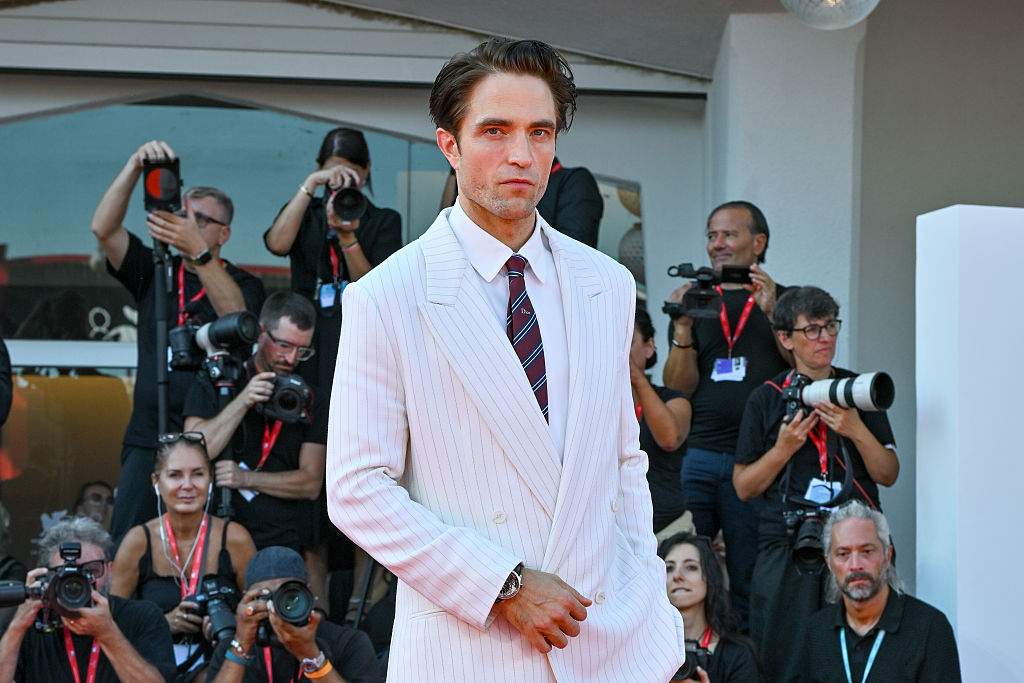
Every few months, a recycled press release dressed up as breaking news convinces millions of gullible readers that Robert Pattinson has officially signed on to play James Bond.
It happened again this week. Outlets desperate for programmatic ad revenue ran screaming headlines declaring the former Twilight and The Batman star as the confirmed successor to Daniel Craig. They recycled the exact same anonymous "studio insider" quotes, slapped a tuxedo photo over a generic template, and waited for your clicks.
Here is the cold, hard truth: Robert Pattinson is not James Bond. Worse, the entertainment press running these victory laps is fundamentally misunderstanding how Eon Productions, Amazon MGM Studios, and A-list talent deals actually operate.
If you are debating whether Pattinson can pull off a shaken martini, you are asking the wrong question entirely. The real story is not who is wearing the tuxedo. The real story is why a multi-billion-dollar intellectual property has been paralyzed for years—and why no actor of Pattinson’s caliber would ever sign the contract Eon Productions demands.
The Anatomy of a Clickbait Echo Chamber
Let’s pull back the curtain on how Hollywood rumor mills manufacture certainty out of thin air.
I have spent over fifteen years watching entertainment trade publications and aggregation sites play telephone with casting announcements. When an outlet claims an actor is "confirmed" without a joint press release from Eon Productions and Amazon MGM, you are not reading journalism. You are reading search engine optimization disguised as reporting.
Consider the mechanics of these viral Bond hoaxes:
- The Betting Odds Illusion: UK bookmakers like Ladbrokes or William Hill adjust their odds based on tiny, localized flurries of bets—sometimes triggered by a single viral TikTok or Reddit thread. Entertainment writers then cite those shifting odds as "evidence" that casting is imminent.
- The "Meetings" Fallacy: Producers Barbara Broccoli and Michael G. Wilson routinely take general meetings with dozens of actors, directors, and writers. A forty-five-minute coffee in London gets leaked to a tabloid, mutating into "final-stage contract negotiations" within forty-eight hours.
- The Quote Recycling: Journalists pull old interviews where an actor gives a polite, media-trained answer about respecting the franchise. Suddenly, a three-year-old soundbite becomes "Pattinson breaks his silence on 007 role."
This lazy consensus thrives because audiences want closure. Daniel Craig’s exit in No Time to Die left a massive vacuum at the top of global cinema. Nature abhors a vacuum, and digital media abhors an unanswered search query. So, they invent an answer.
Why Eon Productions Would Never Cast Robert Pattinson
Even if we strip away the fake headlines and look purely at studio strategy, Pattinson makes zero business sense for Eon Productions.
To understand why, you have to understand the specific, rigid economics of the James Bond franchise. Unlike Marvel or DC, where actors sign multi-picture deals with room to shoot indie darlings in between, playing James Bond is an all-consuming corporate absorption.
The 15-Year Handcuffs
Barbara Broccoli has explicitly stated on record that casting James Bond is not about finding someone for one movie. It is a ten-to-fifteen-year commitment.
Look at Daniel Craig’s tenure: Casino Royale released in 2006; No Time to Die hit theaters in 2021. Across those fifteen years, Craig made five Bond films. Every single one required grueling six-month shoots across multiple continents, followed by relentless global press tours, brand tie-ins with Omega, Aston Martin, and Heineken, and months of physical rehabilitation from on-set injuries.
Now look at Robert Pattinson’s career trajectory since 2012. After surviving the Twilight industrial complex, Pattinson spent a decade deliberately dismantling his heartthrob image. He worked with auteurs like David Cronenberg, Robert Eggers, Claire Denis, and the Safdie brothers. Even when he returned to franchise filmmaking with Matt Reeves’ The Batman, he chose a director-driven, gritty noir take that allowed him freedom between installments.
Why on earth would a fiercely independent actor who fought tooth and nail to escape franchise captivity voluntarily lock himself into a fifteen-year corporate straightjacket? He wouldn't.
The Star Power Paradox
There is a fundamental rule in Eon Productions’ playbook that casual observers always miss: James Bond makes the star; the star does not make James Bond.
Look at the historical data across sixty-plus years of 007:
- Sean Connery: A former bodybuilder and television actor with minor film credits prior to Dr. No (1962).
- George Lazenby: A literal car salesman and model with zero feature acting credits before On Her Majesty’s Secret Service (1969).
- Roger Moore: Known primarily for British television (The Saint, The Persuaders!) before Live and Let Die (1973).
- Timothy Dalton: A respected Shakespearean stage actor with modest mainstream box office pull prior to The Living Daylights (1987).
- Pierce Brosnan: Best known for the TV detective series Remington Steele before GoldenEye (1995).
- Daniel Craig: A critically acclaimed character actor (Layer Cake, Munich) who was famously mocked by the British press as "James Bland" when cast in 2005.
Notice the pattern? Not a single James Bond was a mega-watt, global box-office titan at the moment of casting.
Casting Robert Pattinson—an actor who has already led two massive global franchises (Twilight and Batman) and starred in Christopher Nolan’s Tenet—violates Eon’s core casting DNA. When an audience watches Pattinson on screen, they see Robert Pattinson. Eon needs an actor who can disappear into the tux, someone whose personal brand doesn't overshadow the 007 intellectual property.
Dismantling the "People Also Ask" Myths
When rumors like this explode, search engines fill up with predictable questions from confused fans. Let’s tear down the faulty premises behind the most common queries circulating right now.
"When will Robert Pattinson’s first James Bond movie come out?"
It won't. As of late 2026, Eon Productions has not announced a director, a screenwriter, a production start date, or a lead actor for Bond 26. In major studio filmmaking, a tentpole action movie requires roughly 18 to 24 months from the start of principal photography to theatrical release. Even if Eon announced a cast tomorrow morning, you would not see a frame of footage in theaters until late 2028 at the absolute earliest. Anyone selling you a release window right now is lying.
"Did Amazon force Eon to cast a big name like Pattinson?"
This misconception stems from Amazon’s $8.5 billion acquisition of MGM in 2022. Analysts assumed Amazon would immediately bully Eon Productions into churning out Bond content like a streaming assembly line.
Those analysts failed to read the corporate bylaws. While Amazon MGM Studios holds distribution rights and co-financing stakes, Eon Productions retains ironclad creative control over the James Bond franchise. Barbara Broccoli and Michael G. Wilson hold final veto power over casting, scripts, directors, and release strategies. Amazon cannot force Pattinson—or anyone else—into the role without Eon's explicit sign-off. And as insiders have reported for years, friction between Amazon’s data-driven streaming executives and Eon’s traditional theatrical ethos is precisely why development has moved at a glacial pace.
"Isn't Pattinson too old to start a Bond run now?"
Born in May 1986, Pattinson is currently 40 years old. By the time a hypothetical Bond 26 actually hit theaters, he would be 42 or 43.
While Roger Moore took over at 45 and Pierce Brosnan debuted at 42, the physical demands of modern action cinema have changed drastically. Audience expectations post-John Wick and Mission: Impossible require actors to perform punishing, high-impact stunt choreography. Eon has repeatedly indicated they want a younger actor—ideally in his early-to-mid thirties—who can age into the role over four or five films without needing a stunt double every time he jogs up a flight of stairs. At 40, Pattinson is already past the demographic sweet spot Eon is targeting for a complete franchise reboot.
The Nuance Everyone Misses: The "Anti-Bond" Audition
To be fair to the people pushing the Pattinson narrative, there is a grain of truth buried beneath the clickbait. If we ignore that nuance, we fall into the exact same trap as the lazy bloggers.
Why does Pattinson’s name keep surfacing in serious film circles alongside Bond? Because of Tenet.
In Christopher Nolan’s 2020 espionage thriller, Pattinson played Neil—a charming, impeccably tailored, Oxford-educated intelligence operative who drinks Diet Cokes instead of martinis and effortlessly steals every scene from the protagonist. Nolan has never hidden his obsession with the James Bond franchise, and Tenet was widely recognized by critics and industry insiders as Nolan’s personal audition tape to direct a 007 film.
In that context, Pattinson playing Neil was essentially a proof-of-concept for what a Nolan-directed Bond movie could look like. That is where the speculation originates. Film Twitter saw Pattinson in a bespoke suit alongside Christopher Nolan and connected dots that simply do not exist in reality.
The Counter-Argument: What If Eon Pivots to a One-Off?
Let’s acknowledge the one scenario where my thesis breaks down.
What if Eon Productions abandons its sixty-year business model? Imagine a scenario where Broccoli and Wilson decide that the traditional multi-film, fifteen-year actor contract is dead. Instead, they pivot to a prestige, anthology-style model: hiring an A-list director like Christopher Nolan or Denis Villeneuve and an A-list star like Robert Pattinson for a single, standalone period piece set in the 1960s, completely divorced from continuity.
If Eon ever tore up its rulebook to pursue a one-and-done prestige model, Pattinson would suddenly become the frontrunner overnight.
The problem? There is zero evidence Eon has any interest in diluting its core formula. Bond is not an art-house experiment; it is a consumer products juggernaut built on brand consistency. A one-off anthology confuses global casual audiences and complicates long-term luxury sponsorship deals. Until Eon proves otherwise, betting on a radical corporate pivot is pure fantasy.
How to Spot Fake Casting News Before You Share It
You do not need an insider source at Pinewood Studios to filter out garbage entertainment journalism. Next time your social feed erupts with "confirmed" casting news for James Bond, Marvel, or Star Wars, run it through a simple three-step verification protocol:
- Check the Trades First: Real, locked-in studio casting is broken exclusively by the major Hollywood trade publications—Variety, The Hollywood Reporter, or Deadline—or announced directly via official studio channels (such as the official
@007accounts). If the story originates from a UK tabloid, a pop-culture blog, or an "X" aggregator account with a blue checkmark, treat it as fiction. - Look for the Magic Words: Legitimate casting reports use precise legal and industry terminology: "in talks to," "in final negotiations," or "tapped to star." Clickbait articles use vague, non-committal hedging buried in paragraph four: "reportedly lined up," "tipped to take over," or "sources claim."
- Follow the Calendar: Major casting announcements are timed to maximize shareholder value and media oxygen—typically ahead of CinemaCon, San Diego Comic-Con, or a studio's quarterly earnings call. Random Tuesday afternoon "confirmations" from obscure websites are strictly ad-farming operations.
The next James Bond will not be revealed through a leaked rumor on a third-tier entertainment blog, and he will not be a 40-year-old actor currently committed to The Batman universe. When Eon Productions finally makes its move, it will be a carefully choreographed, globally televised press event featuring a relative unknown stepping out of an Aston Martin.
Until you see that official podium, close the tab. You’re being played for clicks.


