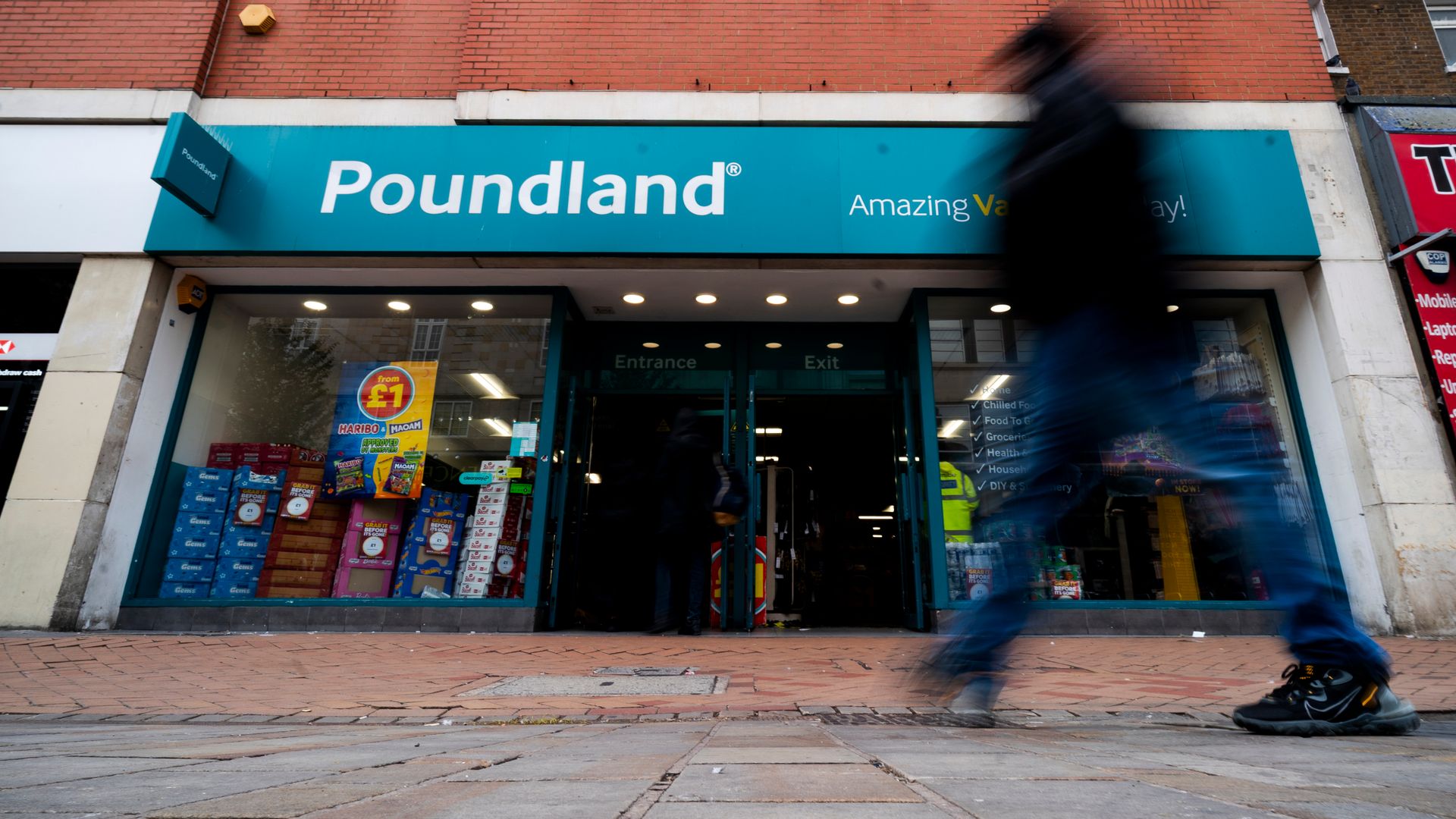
Every few months, a legacy British retailer marches into Westminster, wrings its hands in front of a government minister, and warns of an existential funding squeeze. This week, it is Poundland’s turn at the lectern. The headlines dutifully regurgitate the corporate line: rising wage bills, punitive business rates, and stubborn supply chain inflation are choking off the capital needed to keep high streets alive.
Buyers, analysts, and commentators nod along in sympathetic unison. They treat this narrative as economic gospel.
They are completely missing the point.
When Poundland executives complain about a "funding squeeze" during ministerial talks, they aren't describing a macroeconomic tragedy. They are describing the inevitable mathematical collision between an obsolete retail model and the realities of modern capital allocation. Calling it a funding crisis is a convenient euphemism for a broken unit-economics engine that no longer generates enough free cash flow to self-fund its own survival.
If you want to understand why high street discounters are begging politicians for breathing room, stop looking at Treasury tax policies. Start looking at the balance sheet mechanics they hope you ignore.
The Myth of the Benevolent Discounter
The lazy consensus in retail journalism goes like this: value retailers like Poundland are the heroic defenders of the cash-strapped consumer, operating on razor-thin margins out of pure civic duty, and any government policy that raises their operating costs is a direct attack on working families.
That is a fairy tale. Discount retail is not a charity; it is a high-velocity volume business predicated on aggressive working capital management and strict cost discipline.
I have sat in boardrooms where retail executives blame minimum wage hikes and commercial property taxes for margin compression while quietly ignoring the fact that their store estate is bloated, their inventory turn has slowed to a crawl, and their pricing architecture has lost all coherent identity. When a retailer’s internal return on invested capital drops below its cost of debt, management suddenly discovers a passion for public policy advocacy.
Consider what Poundland actually is today. It is no longer a single-price-point disruptor. Years ago, abandoning the strict £1 ceiling was hailed as a necessary evolution to protect gross margins against inflation. In practice, turning a single-price discounter into a multi-price convenience general store destroyed its primary psychological moat. Once you sell items at £1.50, £3, and £5, you are no longer competing in a category of one. You are competing directly against Tesco, Aldi, Lidl, B&M, and Home Bargains—operators with vastly superior scale, fresher supply chains, and far tighter operational execution.
You cannot blame a government minister because shoppers realized they can get better quality groceries at Aldi for the same price without stepping over cardboard boxes in a cramped high street unit.
What "Funding Squeeze" Actually Means in Corporate Finance
Let’s strip away the PR vocabulary and define the terms precisely. In corporate finance, a genuine funding squeeze occurs when a solvent, profitable enterprise with strong unit economics cannot access external credit markets due to systemic liquidity freezes—think autumn 2008 or March 2020.
That is not what is happening in the UK discount sector.
When retail bosses tell ministers they face a funding squeeze, they mean one of three specific things:
- Parent Company Capital Rationing: Poundland does not exist in a vacuum; it sits under the umbrella of Pepco Group, a pan-European retail conglomerate listed in Warsaw. Pepco’s institutional shareholders do not care about sentimental attachments to British high streets. They care about EBITDA margins and return on capital employed. When Pepco looks across its portfolio and sees higher returns in Central and Eastern Europe—where Pepco-branded clothing and homeware stores print cash with lower labor overhead—capital naturally flows east, not toward struggling UK high street leases. Poundland isn't starved of global funding; it is losing an internal capital allocation beauty contest.
- Working Capital Trap: Discount retail relies on negative working capital—selling inventory to consumers for cash before paying suppliers 60 or 90 days later. That magic trick works brilliantly when like-for-like sales are growing. The moment footfall stalls or inventory sits unsold in distribution centers, the flywheel reverses. Cash gets trapped in slow-moving stock, and credit insurers start tightening terms for suppliers. Suddenly, the business needs external cash just to keep shelves stocked.
- The Lease Liability Overhang: High street retailers signed decades-long, upward-only rent agreements in an era before e-commerce and out-of-town retail parks permanently altered footfall patterns. Even after landlords slashed rents during the post-pandemic restructuring wave, occupying hundreds of legacy high street footprints remains wildly inefficient compared to the out-of-town retail park model perfected by B&M and Home Bargains.
Blaming Westminster for a funding squeeze when your corporate parent is reallocating capex to higher-yielding European markets is elite-level misdirection.
Dismantling the High Street Lobbying Playbook
Whenever retail executives knock on the door of the Department for Business and Trade, you can predict the exact talking points before the kettle boils. Let’s look at the standard complaints and dissect why they fail basic scrutiny.
"Business rates are killing physical retail."
Business rates in the UK are undeniably archaic, disproportionately punishing physical square footage while online warehouses pay a fraction per pound of revenue. Every serious economist from the Institute for Fiscal Studies to the Resolution Foundation agrees the system needs overhaul.
However, business rates are not a surprise weather event. They are a known, fixed variable in every store opening pro-forma. B&M European Value Retail and TJ Morris (owner of Home Bargains) operate under the exact same UK business rates regime, pay the exact same National Living Wage, and navigate the exact same energy markets. Yet both have consistently delivered robust operating margins and relentless store rollouts. Why? Because they prioritized large-format, out-of-town retail parks with free parking, high basket sizes, and ruthless SKU discipline, rather than clinging to fragmented high street footprints with high shrinkage and low average transaction values.
"National Insurance and minimum wage hikes make expansion impossible."
Labor is the largest controllable expense on a retailer's P&L. When statutory wage floors rise by nearly 10% alongside employer National Insurance contributions, low-margin businesses feel immediate pain.
Yet complaining about wage inflation in retail is like complaining about gravity. Structural labor shortages in Western economies guarantee that entry-level wages will continue outpacing headline inflation for the foreseeable future. If your business model only works when store staff are paid poverty wages that require state benefits to top up their income, your business model is structurally insolvent. The winners in value retail—Aldi and Lidl being the gold standard—solved this two decades ago by paying the highest hourly rates in the sector while demanding extreme productivity per labor hour through simplified store layouts, shelf-ready packaging, and minimal SKU counts.
"Without government relief, high streets will become boarded-up wastelands."
This is the ultimate political hostage-taking tactic. Retail lobbies know that no politician wants local newspapers running photos of shuttered storefronts in marginal constituencies. So they frame corporate bailouts—whether through tax holidays, rate caps, or regulatory carve-outs—as community preservation.
In reality, propping up uncompetitive retail formats with tax breaks does not save the high street; it freezes it in amber. It prevents commercial property valuations from clearing at a market rate that would allow independent cafes, experiential venues, healthcare clinics, and residential conversions to take over those spaces. Keeping zombie retail footprints alive through artificial policy crutches simply delays creative destruction while transferring taxpayer wealth directly to commercial landlords and private equity sponsors.
The Uncomfortable Truth About Value Retail Economics
To understand why Poundland is feeling the heat, imagine a scenario where two identical high street stores open across the street from each other.
Store A stocks 4,000 carefully curated items, turns its inventory 14 times a year, keeps backroom storage under 10% of total floor space, and uses automated replenishment so staff spend 80% of their hours serving customers or restocking high-velocity lines. Store B stocks 9,000 overlapping items across five different price tiers, runs manual stock checks, suffers 3% inventory shrinkage from disorganized aisles, and relies on frequent seasonal clearance markdowns to clear dead stock.
Even if both stores generate £3 million in annual top-line revenue, Store A throws off free cash flow while Store B begs its parent company for working capital injections.
Poundland’s fundamental challenge isn't Westminster; it is operational complexity. Over the past five years, the chain has absorbed dozens of former Wilko units, integrated chilled and frozen food rollouts across hundreds of stores, expanded apparel offerings under the Pep&Co banner, and constantly tweaked price architectures. Every one of those initiatives adds supply chain friction. Chilled food requires expensive refrigeration capex, tighter shelf-life management, and higher waste write-offs—the exact opposite of ambient dry goods that can sit on a pallet for six months without spoiling.
When you layer low-margin chilled groceries onto a high-rent high street footprint during a period of rising labor costs, you don't need a conspiracy in Whitehall to explain why cash gets tight. Arithmetic does the job on its own.
What Retail Leaders Should Actually Be Doing
If I were advising the board of a legacy value retailer facing margin compression and tight capital markets, I would tell them to cancel their trips to Westminster and lock themselves in an operational war room. Lobbying ministers yields photo opportunities and vague task forces; fixing unit economics yields actual cash.
Here is what real turnaround discipline looks like:
- Slash SKU Count by 30% Immediately: Complexity is the silent killer of discount retail. Every slow-moving SKU ties up warehouse space, complicates store-level replenishment, and cannibalizes shelf space from top-decile sellers. Look at Aldi: roughly 1,800 core SKUs compared to 30,000 in a traditional supermarket. Brutal assortment pruning instantly frees up trapped working capital.
- Exit Unprofitable High Street Leases Ruthlessly: Stop subsidizing vanity footprints. If a high street store cannot generate a double-digit store-level EBITDA contribution after accounting for realistic labor and shrinkage costs, put it on the closure list or force the landlord into a turnover-based rent agreement. A smaller, cash-generative estate beats a sprawling, cash-burning empire every single time.
- Treat Shrinkage as an Existential Threat: Retail theft and administrative stock loss have surged across the UK, routinely eating 2% to 4% of top-line sales in urban discount stores. In a business operating on a 4% or 5% net margin, a 2% shrinkage rate wipes out half your profit. Investing in targeted store-layout redesigns, high-value item security, and tighter back-door receiving controls delivers an immediate, guaranteed return on investment that no government policy can match.
- Stop Chasing Supermarket Categories: Selling fresh produce, chilled dairy, and frozen meals requires world-class cold-chain logistics and massive daily footfall to prevent spoilage. Stick to high-margin ambient household goods, health and beauty, seasonal impulse buys, and core pantry staples where discount retailers hold a genuine sourcing advantage.
The Downside of Cold-Blooded Realism
Admitting that retail struggles are largely self-inflicted carries an obvious uncomfortable consequence: if companies follow pure capital discipline, store closures accelerate in the short term. High streets get messier before they get healthier. Thousands of legacy retail jobs disappear as operators consolidate into larger, more automated out-of-town hubs.
Politicians hate that reality because electoral cycles run on four-year clocks, while structural economic transitions take a decade. Corporate executives hate it because admitting strategic missteps invites shareholder revolts and executive turnover. It is far easier for both sides to sit across a polished mahogany table in Whitehall, blame external headwinds, and pretend that a minor tweak to commercial tax relief will magically restore 2012 margins.
Capital markets, however, do not negotiate with press releases. Equity analysts and credit providers look straight past ministerial summits to examine cash conversion cycles, like-for-like volume growth, and lease-adjusted leverage ratios.
Stop Subsidizing Yesterday’s Business Models
The next time you read a headline about retail bosses warning ministers of an impending funding squeeze, translate it accurately. They are not telling you that capitalism is broken or that tax policy has made commerce impossible. They are telling you that the bill for years of strategic drift, over-expansion, and operational bloat has finally come due—and they would very much like the British taxpayer to pick up the tab.
Let the market clear. Let disciplined operators take market share, let bloated estates shrink to sustainable footprints, and let high street real estate reprice to reflect twenty-first-century demand.
The high street does not need another round of ministerial sympathy; it needs executives who fix their own P&Ls instead of asking the government to pad them.