The mainstream media is incredibly easy to bait. Give them a headline containing the names of Donald Trump’s inner circle, a whiff of financial self-dealing, and a mysterious foreign leak, and they will run with it blindly.
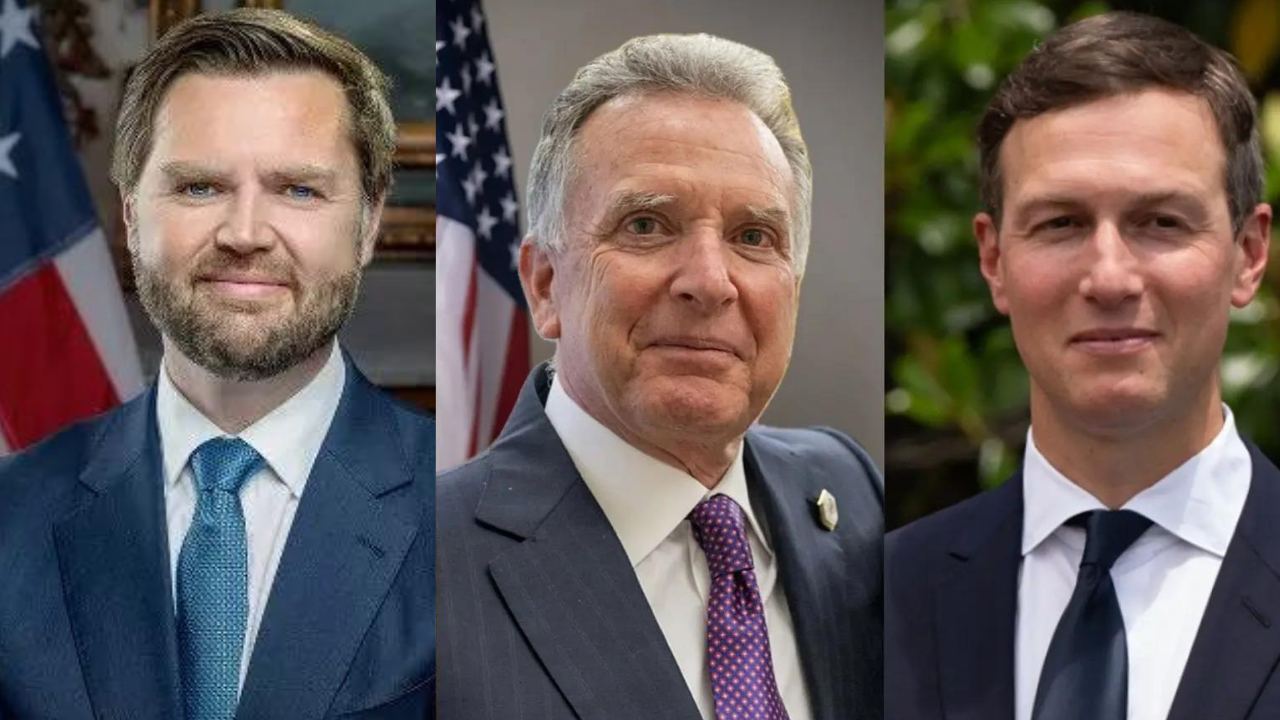
The recent reports stemming from a "private message" sent by Iranian negotiators to US Vice President JD Vance are a masterclass in this gullibility. According to these leaks, Iranian officials claimed that Middle East envoy Steve Witkoff and presidential advisor Jared Kushner have been using insider information from delicate diplomatic peace talks to front-run global markets, pocketing a staggering $9 billion in profits. Even more bizarrely, Tehran demanded a 50% split of these supposed spoils—requesting a neat $4.5 billion wire transfer as a condition for peace.
Instead of laughing this extortionate fanfiction out of the room, commentators have treated it as a serious ethical crisis. They are asking the entirely wrong questions. They want to know if Kushner and Witkoff are violating federal conflict-of-interest rules.
They should be asking how a sovereign nation became so desperate that it tried to crowd-fund its failing economy using a conspiracy theory.
The Hilarity of the Four Point Five Billion Dollar Invoice
Let us look at the sheer math of the Iranian demand. Tehran claims to have documented proof that individuals close to the US administration manipulated global oil and equity markets during the wartime volatility, yielding $9 billion. They then formally requested that $4.5 billion of this total be "allocated to the Iranian side" through intermediaries.
Think about this logically. If you genuinely believe your diplomatic counterparts are corrupt, war-profiteering market manipulators who are actively destroying the prospects of peace, you do not ask to become their business partner. You do not ask for a 50-50 split.
You ask for a split only when you are completely broke.
The reality of Iran’s economic state in 2026 is grim. Decades of sanctions, combined with the extreme costs of direct military escalation with the US and Israel, have pushed the country to the brink of financial collapse. Let us look at the actual data:
- The International Monetary Fund expects the Iranian economy to contract by a massive 6.1% this year.
- Average consumer-price inflation is spiraling toward 68.9%.
- Wages are worthless, the currency is in freefall, and the state is rapidly running out of foreign exchange reserves.
This "market manipulation" accusation is not a serious legal filing. It is an invoice wrapped in a conspiracy theory. It is a desperate, cash-strapped regime attempting a high-stakes shakedown to secure liquid capital under the guise of "restitutions."
The Wedge Strategy Playing JD Vance Against the Loyalists
The second layer of this Iranian gambit is a classic psychological operation designed to split the US negotiating team. Iranian officials have gone out of their way to praise JD Vance, calling him a "more sober, professional, and realistic" negotiator, while painting Kushner and Witkoff as destructive, greedy amateurs.
This is Diplomacy 101, executed with the subtlety of a sledgehammer. By flattering the Vice President and suggesting they would prefer to negotiate with him alone, Tehran is trying to construct a wedge between the populist, America-first wing of the administration and the high-flying real estate moguls of the president's inner circle.
I have watched corporate boardrooms and sovereign entities try this exact play for decades. When you cannot get the deal you want from the tough, unyielding negotiators, you try to bypass them. You identify who you think is the "reasonable" one, massage their ego, and tell them that if they could just get rid of their annoying colleagues, a historic agreement could be signed tomorrow.
But Vance is not biting, and neither should the public. The idea that Vance would operate on a separate diplomatic track, completely independent of the president's primary envoys, is a fantasy.
Why the Nine Billion Dollar Trading Claim is Financially Illiterate
To believe that Kushner and Witkoff managed to pull $9 billion out of the markets based on diplomatic leaks requires a fundamental misunderstanding of how global commodities and equity markets operate.
Yes, geopolitical headlines cause volatility. When conflict escalates in the Strait of Hormuz, oil prices spike. When a ceasefire is rumored, they drop. But turning that volatility into a guaranteed, multi-billion-dollar payday is not as simple as placing a bet on an app.
1. Market Liquidity and Slippage
To clear billions of dollars in profit from short-term geopolitical moves, you must trade in massive size. If a private entity or a network of individuals tried to put on options or futures positions large enough to yield $9 billion in net profits, they would move the market simply by entering the trade. The sheer volume would trigger alerts at every major exchange, regulatory body, and clearinghouse in the world.
2. The Counterparty Problem
Who is taking the other side of these massive, perfectly timed trades? In highly volatile markets, market makers widen their spreads and cut down on risk. You cannot quietly slip billions of dollars of directional risk into the crude futures market without someone noticing the massive footprint.
3. The Flawed Premise of Certainty
Diplomatic negotiations are notoriously fluid. A deal can look 99% done in Switzerland at noon and fall apart by 2:00 PM over a single word. If someone were trading billions of dollars on "inside knowledge" of these talks, they would be taking existential risks. One sudden tweet or missile strike could wipe out their entire capital base.
The Iranian claim assumes that these envoys have total control over the chess board. In reality, the Middle East is far too chaotic for any single insider to reliably trade the news with 100% accuracy.
The Real Danger of Taking the Bait
By focusing on the spectacular, movie-plot accusation of war profiteering, the media is letting Iran dictate the narrative. This is exactly what Tehran wants.
If the conversation is centered on whether Kushner leaked information to Netanyahu, or whether Witkoff is looking at real estate plays in a post-conflict Gulf, then the pressure is off Iran. The world stops talking about Iran's collapsing domestic economy, its funding of regional proxies, and its nuclear ambitions. Instead, we get mired in a domestic political circus about Washington cronyism.
It is time to stop playing along.
The Trump administration’s team is not in Switzerland to run a hedge fund. They are there because they represent the raw transactional power of the United States. Iran’s bizarre attempt to send Vance a bill for $4.5 billion of "stolen market profits" is not proof of American corruption. It is proof that the economic pressure is working, the regime is starving for cash, and they are desperately trying to trade conspiracy theories for hard currency.
Do not fall for the distraction. The deal on the table is not about splitting trading profits. It is about total capitulation, and Tehran knows it.
For a deeper dive into how this geopolitical drama is unfolding in real-time, this report on Iran's negotiation preferences breaks down why Tehran is desperately trying to sideline Kushner and Witkoff in favor of Vance.