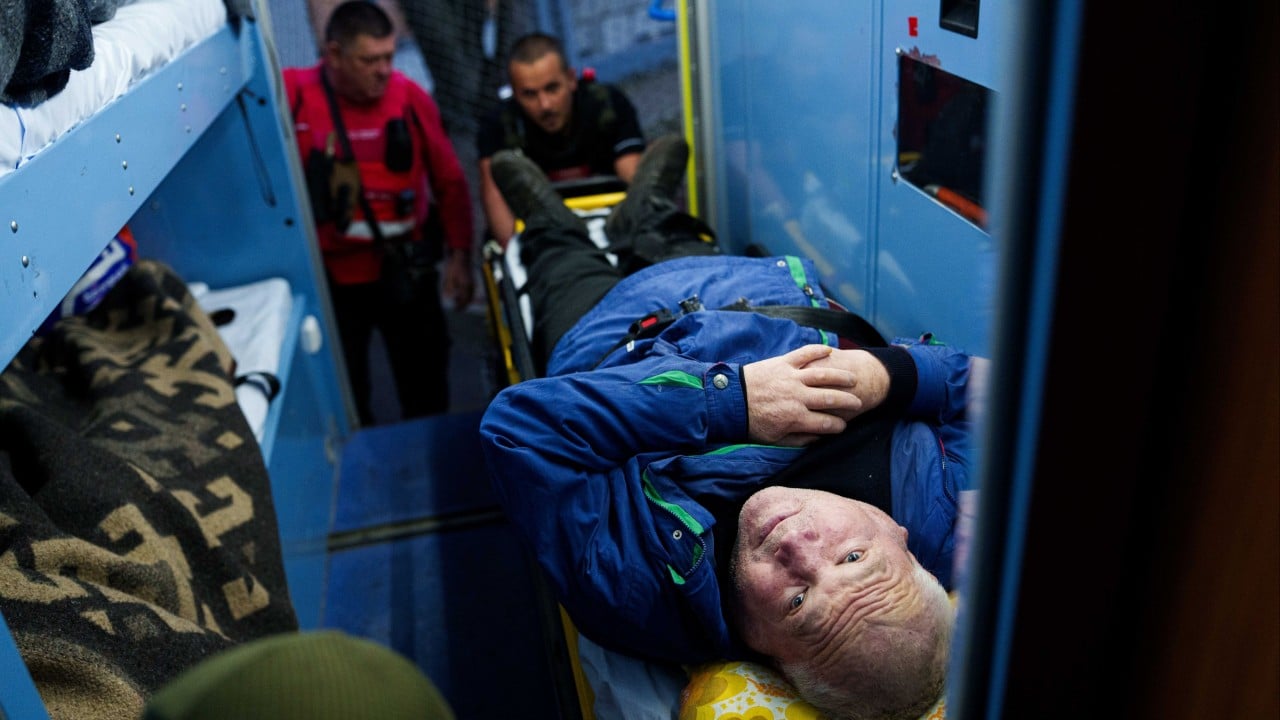
Humanitarian corridors in active war zones are rarely acts of mercy. They are tactical pauses disguised as charity.
When news broke of a localized Russia-Ukraine truce for Oleshky—a flooded, battered town sitting on the Russian-occupied left bank of the Dnipro River in Kherson Oblast—the international press reacted right on cue. Headlines framed the temporary ceasefire as a diplomatic breakthrough. Analysts praised the sudden arrival of food and medicine for starving residents. Everyone applauded the brief silence of the artillery.
They missed the entire point.
If you have spent any time tracking modern siege warfare, urban logistics, or frontline negotiations in Eastern Europe, you recognize this playbook immediately. A 48-hour or 72-hour localized ceasefire in a contested gray zone does not solve a humanitarian crisis. It subsidizes the occupier, resets frontline artillery positions, and turns basic human survival into a bargaining chip for future military leverage.
Celebrating a temporary aid drop in Oleshky while ignoring the mechanics of why those residents are starving in the first place is lazy journalism. Worse, it actively obscures how modern armies weaponize deprivation.
The Lie of the Localized Ceasefire
Let us strip away the diplomatic euphemisms and look at the geography of Oleshky.
Sitting directly across the Dnipro River from Ukrainian-held Kherson city, Oleshky became a focal point of devastation long before this truce. Following the destruction of the Kakhovka Hydroelectric Power Plant dam in June 2023, floodwaters submerged massive swaths of the town. Supply lines vanished. Clean water disappeared. Basic medical infrastructure collapsed under water and artillery fire.
For months afterward, the remaining civilian population—largely elderly, immobile, or unable to afford the bribes required to evacuate deeper into occupied territory—lived under total logistical strangulation.
Now, enter the localized truce.
The mainstream narrative treats a humanitarian corridor as a neutral zone where politics and warfare temporarily evaporate so good people can hand out flour and insulin. That is a fantasy. Under International Humanitarian Law (IHL), specifically the Fourth Geneva Convention, an occupying power holds the explicit, non-negotiable legal duty to ensure the food and medical supplies of the population under its control.
When Russia agrees to a "truce" to let external aid trickle into Oleshky, Moscow is not making a generous concession. It is outsourcing its legal obligations under the Geneva Convention to international charities and Ukrainian volunteers while extracting tactical benefits in return.
Every hour the guns go quiet along that specific sector of the Dnipro gives occupying forces uninterrupted time to:
- Rotate exhausted infantry units out of flooded trenches without taking drone strikes.
- Repair damaged electronic warfare (EW) nodes and communication relays.
- Re-mine secondary riverbanks and reinforce defensive bunkers.
- Map the exact routes, vehicles, and personnel used by humanitarian convoys.
I have watched this exact cycle play out across multiple conflict zones over the last fifteen years, from the besieged suburbs of Damascus to the frozen contact lines of the Donbas between 2014 and 2022. Every single time aid agencies celebrate a micro-truce as a "confidence-building measure," the belligerent holding the ground uses the quiet window to harden its perimeter. Three days later, the shelling resumes with higher accuracy, and the civilians are right back in the basement—only now, the occupier knows who has supplies and where they live.
Why Conventional Aid Models Fail in Contested River Zones
To understand why the Oleshky truce is structurally broken, you have to look at the mechanics of gray-zone logistics.
In a standard natural disaster, aid organizations flood the zone with heavy trucks, establish central distribution hubs, and scale up rapidly. In a contested riverine frontline like the lower Dnipro, that model is suicide. Both sides operate dense networks of reconnaissance drones, thermal optics, and loitering munitions. Nothing moves on the left bank without being tracked in real time.
When a truce is negotiated for a place like Oleshky, the operational parameters are ruthlessly restricted:
- Micro-Quantities Over Systemic Relief: Convoys are capped at a handful of light vans or boats. You cannot feed thousands of trapped civilians for a month with three vanloads of shelf-stable rations. You are delivering a weekend's worth of calories to people facing months of isolation.
- The Zero-Accountability Distribution Gap: Once aid crosses the contact line or enters an occupied municipality, independent monitors rarely maintain eyes on the final mile. Local occupation administrations routinely confiscate high-value medical supplies—tourniquets, broad-spectrum antibiotics, trauma kits—for military field hospitals, leaving basic bandages and expired canned goods for civilians.
- The Psychological Pacification Effect: A sudden burst of media coverage around a "successful aid mission" relieves international pressure on the besieging force. Diplomats check a box. News cycles move on to the next crisis. The slow-motion starvation resumes off-camera.
Imagine a scenario where a landlord locks tenants in a basement, cuts off the water main for six months, and then agrees to let a Red Cross worker slide two cases of bottled water through the mail slot on a Tuesday afternoon—provided the neighbors agree not to call the police until Friday. Nobody in their right mind would praise the landlord for facilitating a humanitarian breakthrough. Yet when states do this along a riverbank with heavy artillery, foreign policy commentators call it progress.
Dismantling the Myths Around War Zone Aid
If you search for news on the Oleshky truce, you will immediately run into a wall of predictable questions from readers trying to make sense of the headlines. Almost all of them are built on flawed premises.
Does a humanitarian truce mean peace talks are getting closer?
No. In fact, localized humanitarian truces often signal the exact opposite: military entrenchment.
When armies prepare for a prolonged stalemate or an upcoming offensive on an adjacent axis, they frequently agree to hyper-local ceasefires to stabilize secondary fronts. By freezing the Oleshky sector for 48 hours, commanders clear civilian bottlenecks that might otherwise complicate artillery targeting or troop movements. Treating a tactical pause as a precursor to a diplomatic settlement confuses battlefield housekeeping with political compromise.
Why don't international organizations just force their way in?
Because international organizations have no armies, and neutrality requires consent.
Organizations like the International Committee of the Red Cross (ICRC) and the United Nations Office for the Coordination of Humanitarian Affairs (OCHA) operate strictly on the basis of negotiated access. If they cross a frontline without explicit security guarantees from both Russian and Ukrainian commanders, their staff get blown up by mines or FPV drones, and their entire global mandate collapses. They are not cowards; they are bound by the physics of modern warfare. The mistake is expecting neutral mediators to solve a problem created by deliberate military policy.
Is some aid better than no aid at all?
On an individual human level, yes. If you are a 78-year-old diabetic in Oleshky whose insulin ran out four days ago, a single vial delivered during a 24-hour ceasefire is the difference between life and death. Nobody with a conscience argues against saving that person's life.
On a strategic and systemic level, however, intermittent micro-truces create a lethal dependency loop. When civilians receive just enough food to survive another ten days, many decide to stay in their homes rather than risk a perilous evacuation. They anchor themselves to an active kill zone. Two weeks later, when the next storm hits or the next artillery duel erupts, those same civilians are still trapped in the crossfire.
The Uncomfortable Truth About Weaponized Scarcity
Military theorists have studied siege logistics for centuries, from Carl von Clausewitz to modern urban warfare analysts at the Modern War Institute at West Point. One principle remains absolute: control over calories and clean water is a weapon system just as potent as a 155mm howitzer.
In occupied territories along the Dnipro, scarcity serves three concrete military objectives:
- Coercive Passportization: When residents cannot access food, pensions, or medicine through normal channels, occupation authorities tie basic survival packages to administrative compliance. Want a sack of flour and a winter heating subsidy? Show a Russian passport. Refuse to take one, and you are invisible to the distribution network.
- Demographic Clearing: Starvation and infrastructure collapse force the working-age population to flee, leaving behind a hollowed-out ghost town where partisan resistance becomes nearly impossible to sustain. An empty city is much easier to garrison than a restless one.
- Information Warfare: By tightly controlling when and how aid enters a town like Oleshky, the occupying force stages the visuals. State media cameras roll as crates are unloaded, projecting an image of order and benevolence to domestic audiences while external journalists are barred from entering independently.
When coverage of the Oleshky truce focuses purely on the heartwarming moment boxes are handed to grateful residents, it plays directly into that information operation. It treats starvation as an unfortunate weather event rather than an engineered policy.
The Downside of Rejecting Micro-Truces
A sharp critique requires honesty about the alternatives. If we reject the celebratory narrative around localized humanitarian truces, what is the actual cost of refusing them?
The answer is brutal: immediate, preventable civilian deaths.
If Ukrainian forces or international bodies refuse to negotiate micro-truces on the grounds that Russia will exploit the pause militarily, the people currently trapped in Oleshky bear 100% of the immediate cost. You cannot ask a starving grandmother to sacrifice her last meal to deny a Russian squad three hours of trench maintenance. That is a moral calculus no democratic government or humanitarian agency can survive.
Furthermore, refusing localized truces hands Moscow an effortless propaganda victory. It allows Russian diplomats at the UN Security Council to claim they offered a humanitarian window and Kyiv slammed the door shut.
This is the fundamental trap of asymmetric humanitarianism. One side follows the rules of public accountability and civilian protection; the other side treats civilians as human shields and logistical leverage. Every choice available to the defenders is a bad one.
What Actually Works in Contested Siege Zones
If 48-hour aid truces are tactical Band-Aids that benefit the occupier, how do you actually protect civilians in a gray zone like Oleshky without subsidizing the enemy's defense?
You stop optimizing for temporary aid delivery and start optimizing for permanent civilian extraction and decentralized survival.
1. Prioritize One-Way Evacuation Corridors Over Aid Drops
Bringing food into a kill zone prolongs the crisis. Moving people out of the kill zone ends it. Diplomatic pressure from Brussels, Washington, and the UN should not be wasted negotiating 48-hour pauses for three trucks of flour. Every ounce of diplomatic leverage should focus on establishing monitored, one-way evacuation corridors that allow remaining civilians to exit occupied left-bank settlements into third-party countries or Ukrainian-controlled territory without undergoing predatory "filtration" camps.
2. Mandate Third-Party Digital Auditing on All Aid
If aid must go in, end the honor system. International donors funding UN and NGO operations in contested regions must tie funding to verifiable, end-user tracking—serialized medical packaging, tamper-evident seals, and mandatory post-distribution verification protocols. If an occupying authority blocks independent verification of who received the trauma kits and generators, the funding stops immediately.
3. Shift to Decentralized, Low-Signature Supply Networks
Large, publicized truces give the enemy time to prepare. Historically, the most effective relief in besieged areas comes from decentralized, micro-logistics networks—local volunteer groups operating low-signature boats, off-road vehicles, and covert cash transfers that allow residents to buy existing goods locally without waiting for a diplomatically brokered convoy. Cash transfers via digital banking networks, where connectivity still exists, move faster than trucks and cannot be easily confiscated at a military checkpoint.
4. Name the Legal Violator in Every Headline
Stop writing passive-voice headlines about "starving residents helped by truce." Civilians in Oleshky are not starving because of geography; they are starving because an occupying military power is violating Article 55 of the Fourth Geneva Convention. Reframing the narrative from "humanitarian miracle" to "documented war crime temporarily paused" changes the diplomatic accountability structure overnight.
Stop Applauding the Cage Door Opening an Inch
The next time a localized ceasefire makes headlines in Kherson, Zaporizhzhia, or Donetsk, ignore the press releases praising diplomatic cooperation. Look at the map instead.
Ask who controls the roads leading into the town. Ask why the residents needed emergency food drops in an agricultural region that used to feed half of Europe. Ask what the artillery batteries were doing during the 48 hours the trucks were unloading.
A truce that feeds a prisoner for two days while reinforcing the walls of the cell is not a humanitarian victory. It is just maintenance on the prison.