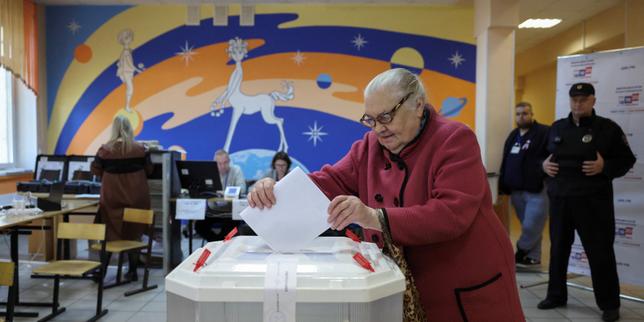
Every election cycle brings a predictable ritual of Western journalism. Correspondents fly into Moscow or monitor feeds from European capitals, filing identical dispatches about forced workplace voting, barred opposition names, and police cordons outside polling stations. They conclude with righteous indignation that the exercise is a hollow charade, a failed imitation of Western democracy that fools nobody.
This diagnosis is comforting. It is also dangerously wrong.
Treating Russian electoral mechanics as a clumsy, failed attempt at a Western-style democratic contest is an intellectual cop-out. It assumes the Kremlin is trying to win a popularity contest by our rules and failing through corruption. In reality, the Kremlin is playing an entirely different sport. Electoral authoritarianism does not survive by mimicking Western pluralism; it survives by converting the ballot box into a diagnostic instrument of state capacity, elite synchronization, and societal compliance mapping.
If you think Vladimir Putin stages national votes because he is insecure about his approval ratings or because he genuinely believes foreign observers will validate the math, you fundamentally misunderstand how power is concentrated, measured, and exercised in a managed political system.
The Fallacy of the Failed Democracy
Mainstream analysis suffers from a baseline teleological bias: the persistent belief that every political system on earth is evolving, however clumsily, along a linear path toward Western liberal democracy. When a system diverges, analysts label it broken, corrupt, or fraudulent.
This misses the operational core of modern hybrid regimes. Political scientists who study electoral authoritarianism—scholars like Ora John Reuter and Regina Smyth—have documented extensively that elections in these states serve distinct internal functions that have little to do with peaceful transfers of executive power.
The primary audience for a Russian presidential election is not the editorial board of a European newspaper or the State Department in Washington. The audience is the domestic administrative machine: regional governors, municipal bureaucrats, corporate heads, security chiefs, and millions of state-dependent citizens.
For this internal audience, the election functions as a massive, synchronized stress test. It measures how effectively the vertical of power can command resources, mobilize personnel, and enforce discipline down to the smallest district commission. A high turnout combined with a decisive margin is not designed to trick the domestic opposition into believing everyone loves the incumbent. It is designed to signal to every regional potentate and bureaucratic faction that the center retains absolute administrative grip.
When you evaluate the process purely through the lens of electoral integrity, you miss the entire architecture of control being constructed beneath the surface.
Administrative Mobilization Versus Crude Stuffing
The lazy consensus paints a picture of ballot boxes being stuffed wholesale by frantic regime agents in dark rooms. While localized irregularities and crude manipulations certainly occur, relying on raw, heavy-handed fraud as the primary explanation ignores how sophisticated administrative mobilization actually operates.
Consider the mechanics of workplace-linked mobilization. In state-funded sectors, healthcare, education, and large industrial enterprises, employees face structured expectations regarding participation. This is rarely executed through cartoonish coercion at gunpoint. Instead, it operates through an intricate web of career incentives, performance metrics, and professional dependency. Department heads are given turnout quotas. Those quotas cascade downward through local hierarchies.
To an outside observer, this looks like forced voting. To the regime, it is a loyalty test masquerading as a civic duty. It forces individuals to actively participate in the ritual of state validation. Compliance requires physical action: walking to the precinct, casting the ballot, and registering the data. By participating in the ritual, even under administrative pressure, citizens are pulled into a behavioral loop of complicity.
Furthermore, political elites use this process to signal their own competence to Moscow. A regional governor who delivers high turnout and strong numbers proves their administrative muscle. A governor who stumbles faces swift removal or marginalization. The election is an internal jobs fair and performance review rolled into one.
Information Control and the Fear of Coordination
Why go to such lengths to restrict opposition candidates and manage the information space if the outcome is predetermined anyway? This is where mainstream reporting frequently trips over its own feet.
Analysts often ask: if the incumbent is already popular, why ban rivals or restrict independent election monitors? The contradiction vanishes once you understand the primary existential threat to an authoritarian equilibrium: political coordination.
Autocrats do not fear individual discontent. Discontent is a constant background radiation in any society. What autocrats fear is focal points—moments or figures that allow disparate, atomized grievances to crystallize into a unified, coordinated opposition movement capable of challenging state power.
Elections provide a natural focal point. They create a shared calendar, a national conversation, and a concrete deadline. If unmanaged, an election can transform latent dissatisfaction into active mobilization.
By heavily filtering who gets on the ballot and systematically starving independent monitoring networks of legal access, the regime suppresses the formation of actionable opposition coordination. Observers from domestic watchdog groups like Golos have long detailed the mechanisms of exclusion, but viewing these exclusions merely as signs of weakness misreads the strategy. Exclusion is preemptive friction. It is designed to raise the transaction costs of political resistance so high that collective action becomes functionally impossible for the average citizen.
The Hidden Vulnerabilities of Manufactured Consensus
Every system has structural liabilities, and this architecture of managed consensus is no exception. By praising the regime's operational sophistication, we must not ignore its blind spots.
The fatal flaw of a feedback loop built entirely on administrative compliance is epistemic distortion. When subordinate bureaucrats know their careers depend on delivering glowing electoral results, they have a powerful incentive to manufacture not just the votes, but the data itself. Over time, reality distortion sets in. Reports sent upward become sanitized. Local friction points are smoothed over on paper to avoid displeasing superiors.
This creates a dangerous information vacuum at the top. The autocrat and his inner circle risk governing based on telemetry that has been massaged by middle management to look pristine. When a genuine crisis hits—whether economic strain or regional administrative failure—the shock is magnified because the monitoring mechanisms were designed to project absolute harmony rather than accurate diagnostic truth.
This is the hidden tax of electoral engineering. You buy short-term stability and elite synchronization at the cost of long-term strategic blindness. The regime survives by managing reality, but eventually, reality refuses to be managed.
The Real Verdict
Stop evaluating authoritarian political systems against a utopian checklist of Western liberal ideals that even mature democracies struggle to meet. When you dismiss Russian elections as a mere farce or a collection of clumsy procedural violations, you underestimate the resilience of bureaucratic control and the complex mechanics of modern state survival.
The ballot box in Moscow is not an instrument of democratic choice. It is a mirror reflecting the operational capacity of the state, a mechanism for enforcing elite discipline, and an ongoing audit of societal compliance. Until Western analysts stop projecting their own political grammar onto a regime speaking an entirely different dialect, they will continue waking up surprised by a world they refuse to understand.


