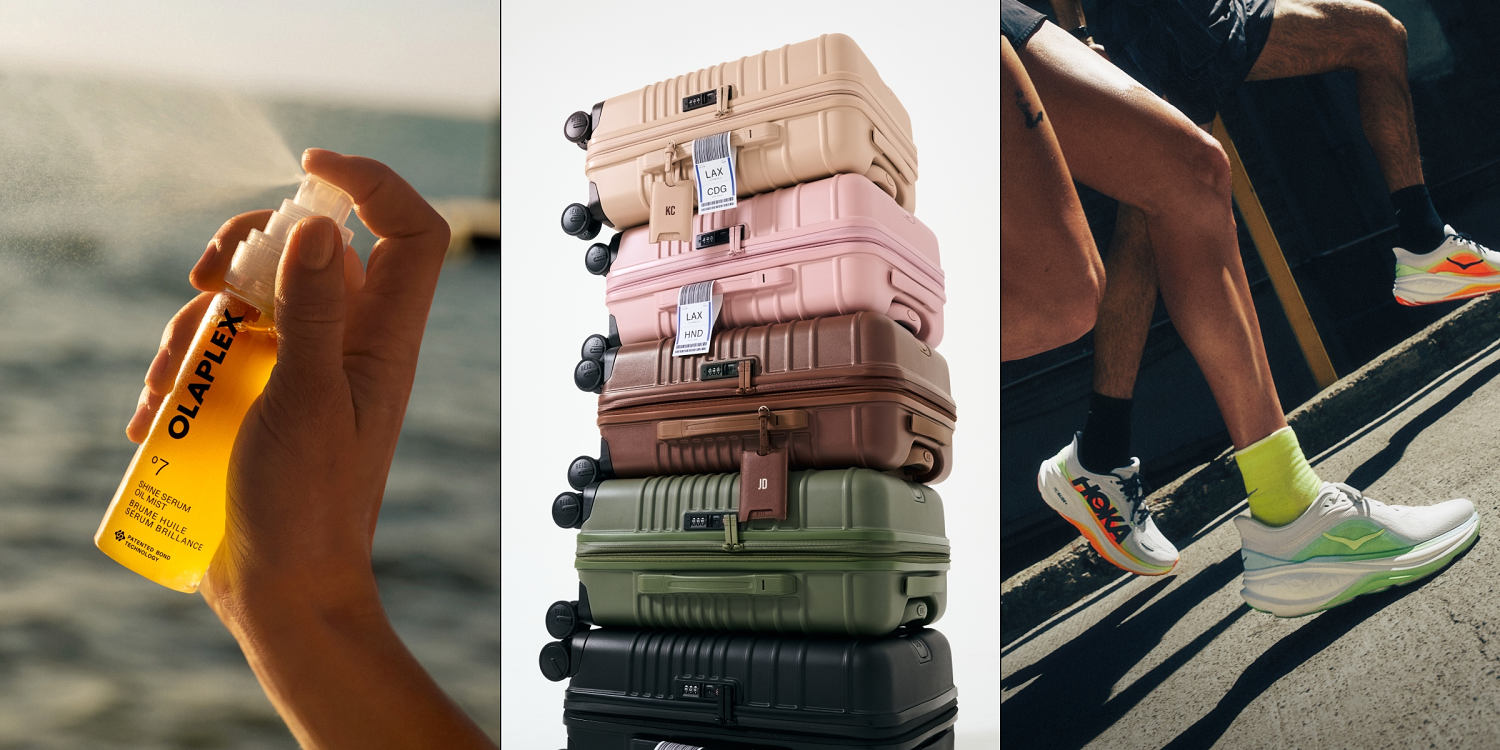
Every July, editorial teams across the internet align in a coordinated ritual of corporate stenography. They compile massive, bloated directories of "must-have" summer gear, slapping names like Hoka, Béis, and Olaplex onto lists of fifty-odd items designed to convince you that your current possessions are obsolete.
It is a lie.
The monthly product cycle exists to feed a hungry supply chain, not to solve your actual lifestyle problems. The modern consumer has been conditioned to treat shopping as a seasonal software update. If you do not buy the new variant, you are somehow running outdated hardware. But when you look beneath the marketing veneer of these heralded July releases, you find regressions in engineering, flawed biomechanics, and chemical theater marketed as advanced science.
The Cushioned Lie of Maximalist Shoes
The running world has fallen victim to a soft, marshmallowy delusion. The release of the Hoka Clifton 11, the Clifton Pro, and competitors like the Saucony Paramount Max is met with universal praise from lifestyle publications that evaluate footwear by how "bouncy" it feels during a walk to a coffee shop.
The consensus claims that more foam equals less impact. This sounds like simple physics: put more cushion between a heavy object and a hard surface, and the forces must dissipate.
The human body does not work like a simple drop test.
Decades of biomechanical research reveal a phenomenon known as the shoe cushioning paradox. When you run on a surface that is highly cushioned, your brain detects the instability. To keep you upright, your central nervous system signals your leg muscles to stiffen.
A landmark study published in Scientific Reports analyzed runners using highly cushioned maximalist shoes versus standard shoes. The researchers discovered that running in highly cushioned footwear actually alters your natural spring-like mechanics, leading to a 10.7% increase in ground reaction force impact peaks and a 12.3% increase in loading rates.
Because your body is trying to find solid ground through two inches of ethylene-vinyl acetate (EVA) or PEBA foam, you strike the ground harder. You are not floating on clouds. You are slamming your joints into the pavement with stiffer limbs, bypassing your ankle and knee's natural shock-absorption mechanisms.
Furthermore, research out of Oregon State University Cascades tested female runners before and after a 5K run. They found that maximalist shoes significantly increased vertical ground reaction forces and loading rates compared to traditional neutral shoes. The very shoes sold to protect your joints from injury are actually predisposing you to stress fractures and tendonitis by dulling your proprioception.
When brands release shoes like the Clifton Pro or the Saucony Paramount Max with even thicker foam stacks to "push your pace," they are asking your musculoskeletal system to perform a high-speed balancing act on unstable platforms.
- Muscle Atrophy: Thick, rockered soles take over the work of your intrinsic foot muscles and Achilles tendon. Over time, your feet weaken.
- Ankle Eversion: The elevated stack height acts as a lever arm. If you land slightly off-center, the rotational force on your ankle is amplified, increasing the risk of lateral ankle sprains and medial tibial stress syndrome (shin splints).
If you want to run faster and avoid injury, stop buying thicker foam. Your foot is an elegant piece of engineering. Do not smother it in a marshmallow.
Béis and the Regression of Over-Engineered Travel Gear
The travel gear industry has shifted from focusing on industrial design to chasing lifestyle aesthetics. Béis recently overhauled its highly visible "Weekender" bag. The marketing framing of this redesign is a masterclass in spin: they removed the internal metal frame, swapped the heavy leather bottom for canvas, and claimed it is now "improved" because it is slightly lighter.
They took out the structural integrity of the bag, replaced premium materials with cheaper textiles, and sold it to you as an upgrade for the same $118 price tag.
Let us look at the actual physics of carrying weight.
A travel bag without an internal frame is simply a sack. When you fill a frameless, soft-sided canvas bag to its capacity, the bag sags in the middle. This shifting center of gravity pulls down directly on your shoulder strap, concentrating the entire load onto a single point of your trapezius muscle.
The original bag’s metal frame served a vital purpose: it distributed the weight evenly across the footprint of the bag, keeping the load stable when resting on top of a rolling suitcase. Removing the frame makes the empty bag lighter on a retail scale, but it makes the packed bag feel significantly heavier and more awkward on your body.
The founder’s quote defending the weight of the bag is incredibly revealing:
"As I've said, if you fill a plastic bag with a lot of heavy items, that too is going to be heavy."
This is an admission of structural failure. The entire point of buying a specialized, expensive travel bag over a plastic grocery bag is that the specialized bag should employ ergonomics and structural engineering to make heavy loads feel lighter.
If your premium travel gear behaves identically to a plastic bag under load, you are not buying a piece of travel equipment. You are buying a prop for an airport terminal photoshoot.
Olaplex and the Chemistry of Broken Disulfide Promises
The beauty industry lives on proprietary, trademarked pseudo-science. The newest darling of the summer market is the Olaplex No. 4CURL Bond Shaper Hydrating Curl Shampoo. It promises to repair, define, and "strengthen curls from within" using their patented bond-building technology.
To understand why this is a scientific stretch, we have to look at basic biochemistry.
Your hair is made of keratin, a dead protein structure held together by three types of bonds: hydrogen bonds, salt bonds, and disulfide bonds. Disulfide bonds are the strongest. They give your hair its structural strength and determine whether your hair is straight, wavy, or curly.
Olaplex's active ingredient, Bis-Aminopropyl Diglycol Dimaleate, is designed to find single sulfur hydrogen groups and link them back together to reform broken disulfide bonds. This chemical process works incredibly well as a salon-grade, leave-in treatment (like their original No. 3) when left on damp hair for 30 minutes to an hour.
Applying this same active ingredient to a shampoo that is designed to wash away in 90 seconds is chemically ineffective.
- Surfactant Interference: Shampoos are formulated with surfactants (cleansing agents) designed to bind to oils and dirt to strip them away when rinsed. These highly active surfactants surround the active bond-building molecules, preventing them from penetrating the hydrophobic cuticle of the hair shaft during a quick wash.
- Contact Time: Chemical reactions require time. A fast rinse does not allow Bis-Aminopropyl Diglycol Dimaleate to locate, align with, and reform covalent disulfide bonds in dead keratin cells.
So why does your hair feel softer after using it? Because the formula is packed with heavy cationic polymers and silicones that coat the exterior cuticle of the hair. It acts as a temporary spackle, smoothing down the rough edges of your hair fiber.
This is not "bond-shaping from within." It is cosmetic makeup for your hair fiber that washes down the drain during your next shower. You are paying premium chemical prices for standard cosmetic coaters.
The Economics of the False Upgrade Cycle
Why do media companies and brands push these monthly updates so aggressively? Because they are locked in a mutual survival pact.
Brands need constant novelty to keep their search engine optimization metrics high and to justify their venture capital valuations. Editorial outlets need affiliate link commissions to survive declining ad revenues. They cannot tell you to keep using the shoes, bags, and hair products you bought last year, because there is no margin in content that advises you to buy nothing.
| Product | The Hype | The Reality | The Better Alternative |
|---|---|---|---|
| Hoka Clifton 11 | "Marshmallow cushion protects joints" | Increases leg stiffness, causing harder heel-strikes and joint strain | Moderate cushioning with a wider footbed to allow natural toe splay and foot activation. |
| Béis Weekender Redesign | "Lighter weight and better canvas body" | Sagging, frameless construction that concentrates weight on your shoulder | A structured duffel with internal support or a lightweight, polycarbonate rolling carry-on. |
| Olaplex No. 4CURL | "Rebuilds disulfide bonds in a quick wash" | Active ingredients are washed away before they can bond; relies on silicone coaters | Save your money for targeted, high-contact-time leave-in treatments and use a basic, gentle shampoo. |
Dismantling the "New Is Better" Fallacy
If you want to escape this cycle, you must change the fundamental question you ask when reading product roundups.
Instead of asking, "Which of these new products is the best upgrade?" you must ask, "What structural compromise did the manufacturer make to hit this production deadline?"
Every monthly "drop" is a compromise. To get the Clifton 11 to market, Hoka did not discover a revolutionary new physics principle; they simply altered the foam density and increased the stack height. To update the Weekender, Béis did not invent a weightless material; they removed structural components to cut assembly costs and save weight. To launch a curl shampoo, Olaplex did not rewrite organic chemistry; they put a proven active ingredient into a delivery system that renders it useless.
The products you bought six months ago are not obsolete. The only thing that has changed is the marketing copy.
Unstrap your wallet. Ignore the July list. Let the inventory gather dust in the warehouse. Your feet, your shoulders, your hair, and your bank account will thank you.