The Pipe Isn't Broken, Your Management Strategy Is
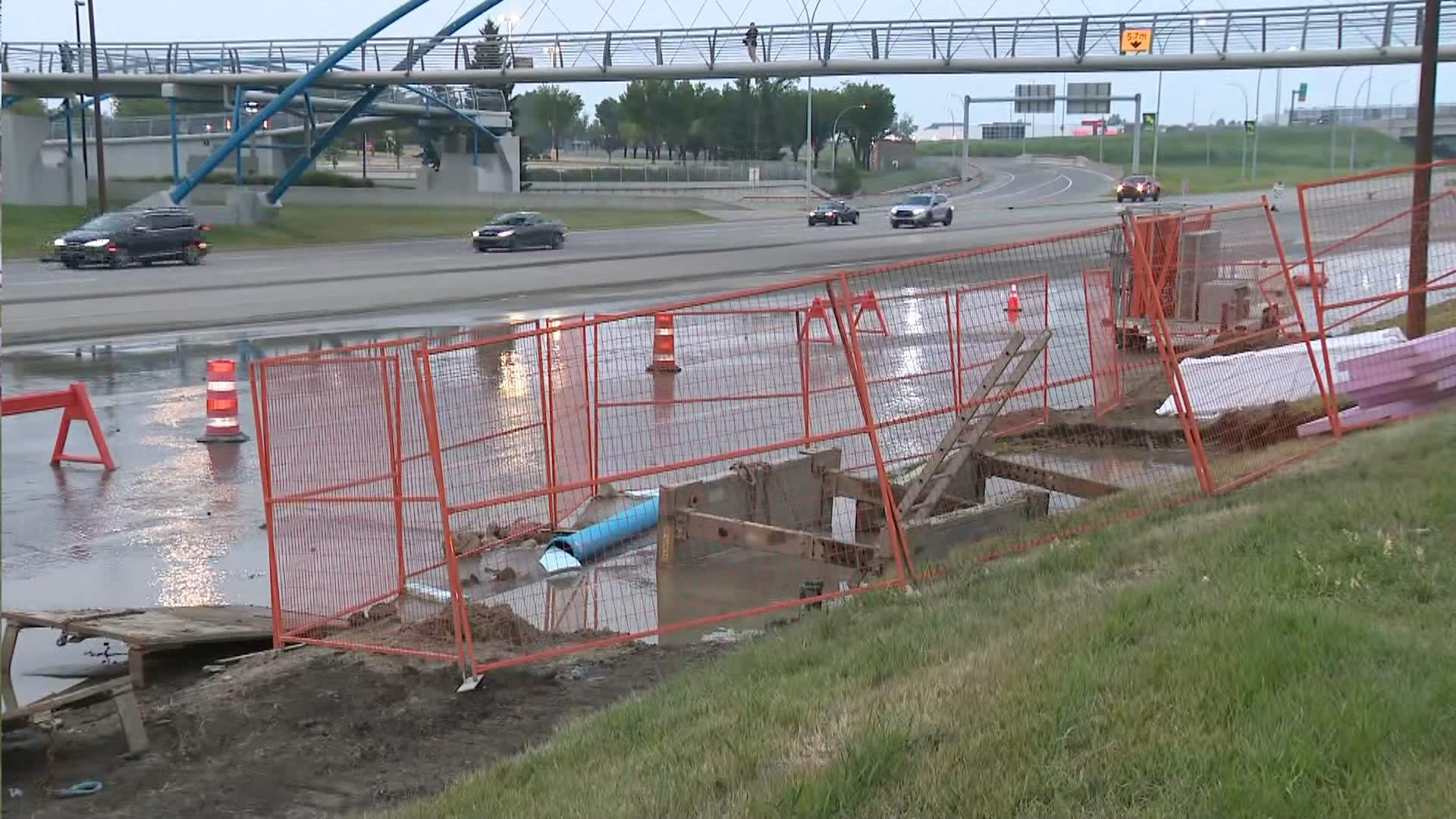
Every time a municipal water main ruptures, media outlets run the exact same script. They feature panicked local officials standing next to a muddy crater, lamenting "aging infrastructure" and begging higher levels of government for billions in emergency capital funds. The public nods along, accepting the narrative that buried iron pipes simply have an expiration date and that emergency repairs are an inevitable tax on modern civilization.
This framing is completely wrong. For a more detailed analysis into similar topics, we recommend: this related article.
Civil engineering departments across North America have turned "aging infrastructure" into a convenient scapegoat for what is actually a failure of system management, risk modeling, and asset maintenance strategy. When a major water transmission line fails, it is almost never a sudden, unpredictable act of god caused by a pipe simply getting old. It is the predictable outcome of treating high-consequence distribution networks like passive plumbing instead of dynamic asset portfolios.
I have spent decades watching municipal authorities burn millions of dollars in reactive crisis management while ignoring the basic operational principles that private logistics networks and industrial chemical plants use daily. If an airline managed its fleet the way cities manage their water mains, planes would be falling out of the sky every Tuesday—and the CEO would blame the gravity. For additional details on this development, extensive reporting can also be found on Al Jazeera.
The Myth of the Structural Lifespan
The core misunderstanding driving the current public narrative is the belief that cast iron and prestressed concrete cylinder pipes (PCCP) have a hard, predictable lifespan after which they simply collapse.
They do not.
Pipes do not fail because of a calendar year. They fail because of specific, measurable stresses:
- Transient pressure surges (water hammer) caused by improper valve operation and rapid pump cycling.
- Corrosive soil chemistry that strips protective coatings when cathodic protection systems are neglected.
- Unmonitored wire snapping in prestressed concrete structures, which can be tracked continuously via acoustic sensors years before a catastrophic blowout occurs.
Thought Experiment: Imagine running a commercial trucking fleet without ever checking tire pressure, rotating tires, or balancing wheels, and then expressing shock when a blowout flips a rig on the highway. Blaming the age of the rubber is absurd. You killed the tire through operational neglect.
Cities regularly allow industrial operators to slam valves shut, creating hydraulic shockwaves that travel through miles of pipe, weakening joints and fracturing aging concrete cores. Then, when the structural wall finally gives out three months later, the city communications team releases a statement about "forty-year-old infrastructure reaching the end of its life."
It is a failure of operational control masked as asset exhaustion.
Why "Fixing" the Pipe Costs 10x More Than Preveting the Break
When a major feeder main fails, the direct repair cost is the smallest line item on the real invoice. The true expense lives in the secondary damage: flooded commercial districts, business interruptions, emergency boil-water advisories, and the astronomical rush-rates paid to heavy contractors summoned at midnight on a holiday weekend.
| Cost Element | Reactive Emergency Repair | Proactive Asset Optimization |
|---|---|---|
| Contractor Rates | 300% Premium (Emergency Dispatch) | Standard Scheduled Rates |
| Traffic & Local Business Impact | High (Unplanned closures, loss of commerce) | Low (Planned off-peak rerouting) |
| System Integrity Risk | High (Sudden depressurization invites contamination) | Low (Controlled isolate-and-bypass) |
| Data Collection Value | Zero (Scrambling to slap on a collar) | High (Continuous condition monitoring) |
Municipalities consistently choose the most expensive possible way to maintain their networks because capital budgets for replacement are politically easier to request than operational budgets for continuous monitoring. A Mayor can cut a ribbon in front of a shiny new $100 million pipe project. No politician gets a photo opportunity for spending $500,000 on transient pressure monitoring devices and acoustic leak detection software.
This perverse incentive structure rewards catastrophic failure and penalizes silent, effective prevention.
Dismantling the "People Also Ask" Propaganda
"Why do water mains break so often in winter?"
The standard answer is that cold ground contracts and snaps the iron. The actual answer is that utility operators fail to manage temperature-induced stress combined with poor soil bedding. When water temperature drops, water density and viscosity change, altering system hydraulics. If your pipe snaps because the ground got cold, the pipe was already compromised by unaddressed micro-fractures and improper backfill compaction during its original installation. The cold is merely the trigger, not the cause.
"How much will it cost to replace all aging water pipes?"
This is the wrong question entirely. Replacing every aging pipe in North America would bankrupt every major municipality without actually solving the problem. Freshly installed pipes fail at alarming rates when subjected to the same mismanaged hydraulic transients and unmitigated soil corrosion that destroyed their predecessors. The goal should not be total replacement; it should be precision intervention based on real-time stress telemetry.
How to Actually Fix the Grid (Without Bankrupting the City)
If municipal leaders actually wanted to solve this problem instead of using it to pitch infrastructure bonds, they would immediately pivot to a three-step operational overhaul.
1. Kill the Hydraulic Transients First
Install high-frequency pressure sensors across the entire network to detect water hammer events in real-time. Identify the automated valves, commercial users, or pumping stations generating pressure spikes and force operational compliance immediately. Eliminating transients can extend the remaining useful life of an existing pipe network by decades without replacing a single foot of underground iron.
2. Deploy Non-Destructive Continuous Monitoring
Stop guessing where the pipe is thin. Fiber optic acoustic cables and free-swimming leak detection probes can map internal wire breaks and wall thinning across kilometers of main line without interrupting service.
[Continuous Acoustic Monitoring]
       │
       ▼
[Detect Internal Wire Snaps / Micro-Leaks]
       │
       ▼
[Isolate & Target Micro-Repairs]
       │
       ▼
[Prevent Catastrophic Blowout]
By pinpointing the specific 20-foot segment of a 5-mile pipeline that is actually failing, crews can perform targeted slip-lining or carbon-fiber wrapping for a fraction of the cost of a full line replacement.
3. Reform the Procurement and Maintenance Mandate
Public works departments must strip emergency repair budgets to the bone and reallocate those capital funds into predictive maintenance contracts with strict performance SLAs. If a contractor is paid to maintain uptime rather than paid by the hour to dig emergency holes, the economic alignment shifts from reactive panic to quiet, relentless system optimization.
The Hard Truth About System Resilience
There is a downside to this approach that industry insiders rarely want to admit. Transitioning from a brute-force replacement model to a high-precision maintenance model requires a level of engineering sophistication and data literacy that most public works departments currently do not possess. It requires firing up complex hydraulic models, managing massive streams of IoT telemetry, and holding commercial water consumers accountable for how they draw from the system.
It demands actual management instead of passive oversight.
Until taxpayers stop accepting "old pipes" as an acceptable excuse for dry taps and flooded streets, city councils will continue to scramble, pay premium rates for emergency concrete, and watch the exact same water mains explode again five years later.
Stop paying for emergency craters. Demand real system operations.