Every time a car crashes into a public gathering space, the collective response follows a predictable, useless script. We clutch our pearls, demand harsher penalties for the driver, and treat the incident as a grotesque moral failing of an individual. We treat the symptom while completely ignoring the structural disease.
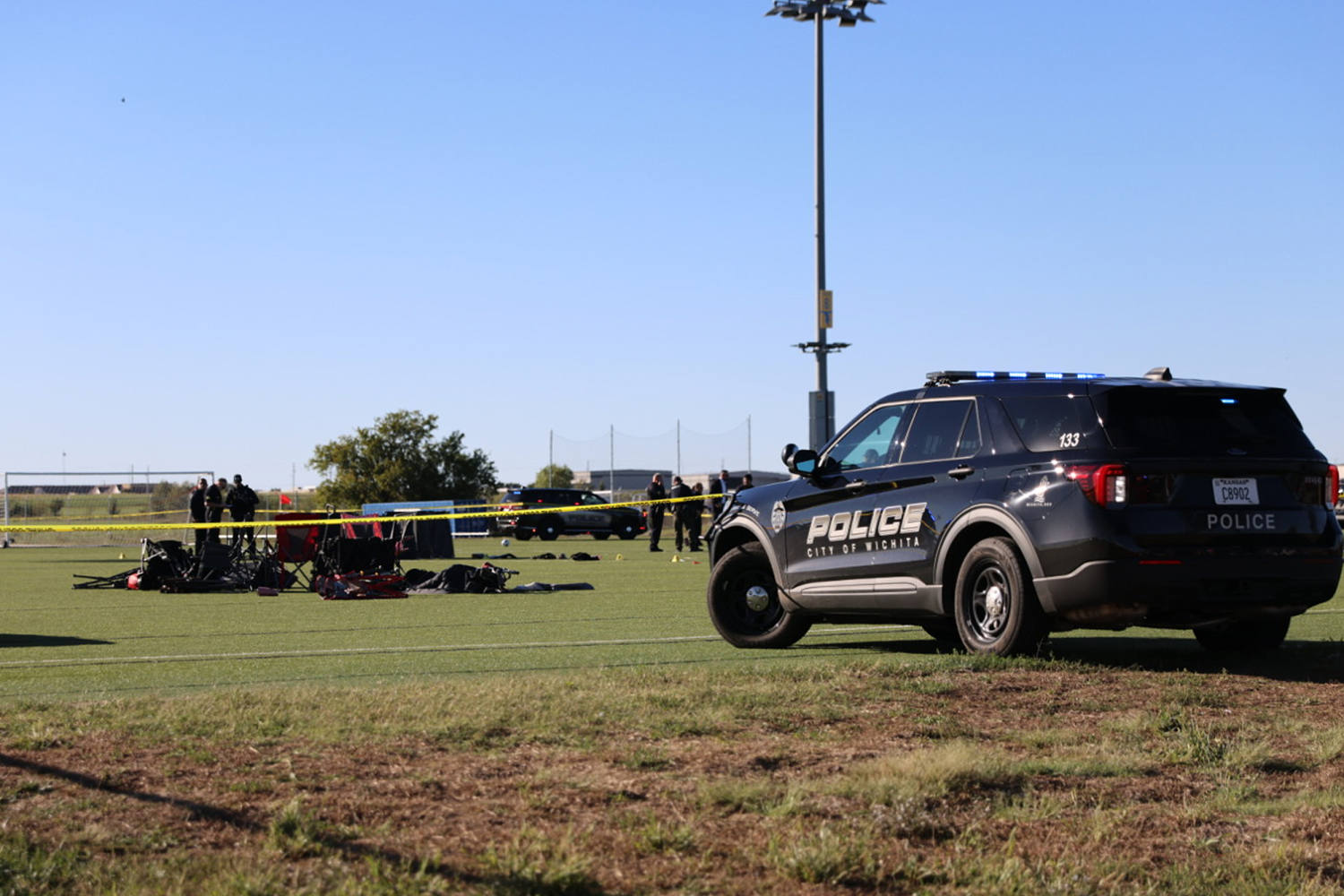
The tragic incident in Wichita, Kansas, where a vehicle plowed into a youth soccer game, killing a boy and a man and injuring ten others, triggered the usual chorus of shock and calls for localized traffic enforcement. This reaction is lazy. It assumes that our public recreation areas are inherently safe and that human error is simply an unfortunate anomaly we must tolerate.
That assumption is lethal.
For decades, municipal planners have treated sports fields as afterthoughts, dumping community recreation spaces wherever cheap dirt exists. Often, that means directly adjacent to high-speed arterial roads with nothing more than a strip of mowed grass and a fragile chain-link fence standing between speeding multi-ton steel machines and children kicking a ball.
We do not have a driver accountability problem in these specific scenarios. We have an infrastructure design crisis.
The Myth of the Protected Perimeter
Drive past almost any suburban youth sports complex this weekend. You will see hundreds of families gathered around unshielded fields. You will see cars parked twenty feet from the sideline, separated only by a painted concrete curb that would not stop a rogue shopping cart, let alone an SUV traveling at forty miles per hour.
Municipal planners hide behind the excuse of cost and zoning convenience. They drop soccer fields, Little League diamonds, and public parks right up against major thoroughfares to maximize footprint efficiency. Then, when a medical emergency, a distracted driver, or a mechanical failure turns an asphalt road into a bowling alley, we act surprised.
Blaming the operator of the vehicle satisfies our emotional need for immediate villainy. It lets city councils off the hook. It allows urban planners to avoid retrofitting our cities with the physical bollards, grade-separated barriers, and set-backs that are standard in dense, safety-first urban centers across the globe.
If you put a playground or a sports field fifty feet from a moving traffic lane without structural fortification, you have built a hazard zone. You have engineered a disaster waiting for a timestamp.
The Engineering Reality We Refuse to Face
Physics does not care about your zoning board approvals. A standard mid-size crossover SUV weighs roughly four thousand pounds. At thirty miles per hour, the kinetic energy unleashed upon impact is catastrophic. A chain-link fence is an acoustic divider, not a retention wall. A standard turf curb is a ramp, not a barricade.
If we applied the same safety logic to commercial buildings that we apply to youth sports fields, we would let delivery trucks park right outside plate-glass storefronts with zero structural pylons. We do not do that for commercial real estate. We protect downtown coffee shops and government offices with heavy steel bollards and concrete planters.
Yet, we leave children sitting on aluminum bleachers fifty feet from oncoming traffic with nothing between them and disaster except a painted yellow line.
This is negligent design disguised as community planning.
When cities approve fields next to high-velocity roads without heavy-duty kinetic barriers, they are making a silent economic calculation. They are betting that drivers will stay on the asphalt. That gamble costs lives.
Redefining Public Space Security
We need to stop talking about driver education as the primary defense for public safety. Education fails when a driver suffers a sudden cardiac event, a diabetic blackout, or a severe distraction. Systems must be designed to absorb human failure without catastrophic human cost.
First, municipalities must mandate a minimum setback of one hundred feet between any active recreation zone and any roadway with a speed limit exceeding twenty-five miles per hour.
Second, every existing field adjacent to high-traffic corridors must be retrofitted with rated kinetic crash barriers. We need steel-reinforced concrete planters, earth berms, and heavy traffic bollards capable of stopping an out-of-control vehicle dead in its tracks.
Third, parking lots adjacent to sports fields must be reconfigured so that parked vehicles face away from the playing surfaces. Too many tragedies occur simply because a driver mistakes the accelerator for the brake while pulling into a front-row parking spot facing the touchline.
Stop calling these incidents freak accidents. Stop waiting for the next tragedy to draft superficial resolutions. Redesign the perimeter or get out of the way of people who actually understand safety engineering.