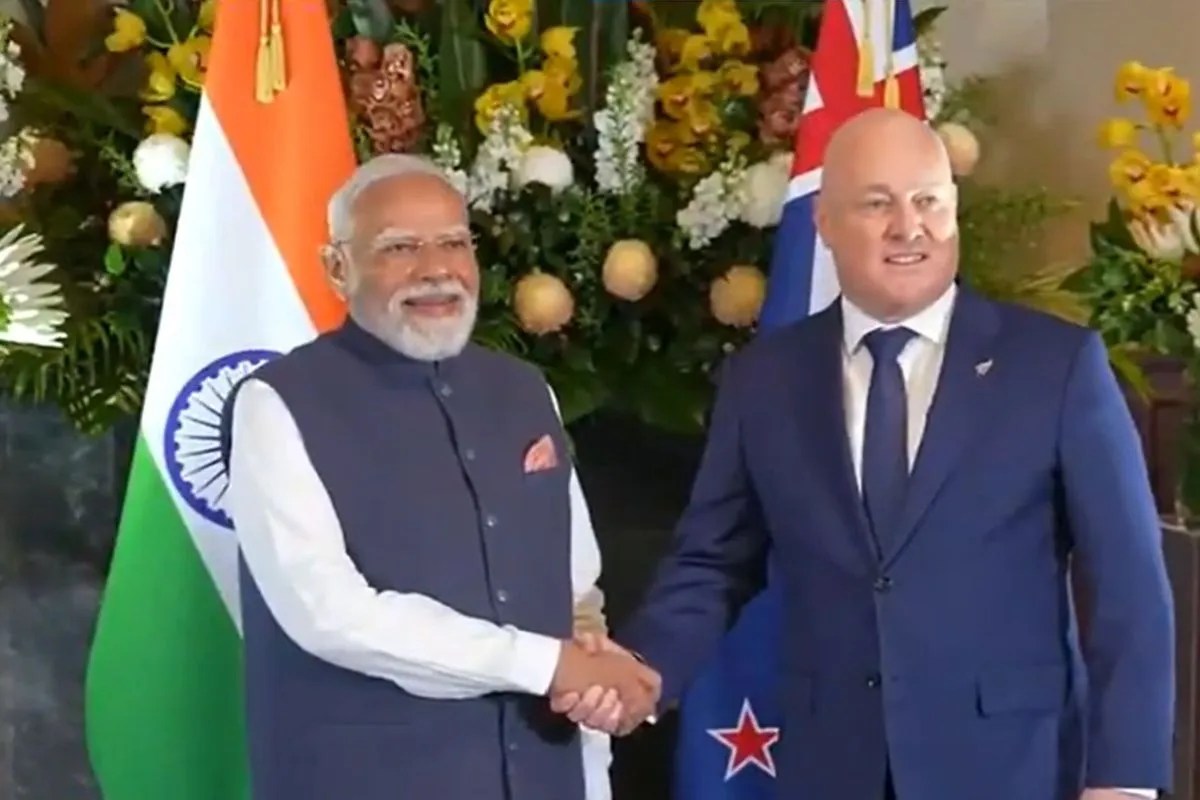
Politicians shaking hands in front of flags and declaring a "historic milestone" is the oldest trick in the diplomatic playbook. When Indian Prime Minister Narendra Modi and New Zealand Prime Minister Christopher Luxon talk up the momentum of an India-New Zealand Free Trade Agreement, the media immediately prints the press release. They treat a photo-op as a finalized economic treaty.
They are wrong. A comprehensive, zero-friction trade agreement between these two specific nations is not just difficult. Under current political realities, it is mathematically impossible.
If you are banking on a sudden flood of duty-free New Zealand dairy into Mumbai supermarkets or frictionless work visas for Indian IT workers in Auckland, you are ignoring the brutal mechanics of bilateral trade.
Here is the truth nobody in the diplomatic corps wants to say out loud.
The Structural Mismatch
Trade agreements work when economies are complementary. India and New Zealand possess economies that actively antagonize each other's domestic political survival.
New Zealand is an agricultural export engine. Roughly 80 percent of its exports are primary sector goods. The crown jewel is dairy. They need new, massive markets to absorb their milk powder, butter, and cheese, especially as they try to diversify away from heavy reliance on Chinese consumption.
India is the world's largest milk producer. But India's dairy sector is not run by massive corporate conglomerates. It is sustained by an estimated 80 million rural households. Most of these farmers own two or three cattle. They operate on razor-thin margins. They also represent a massive, unified, and highly reactive voting bloc.
Do the math.
No Indian government, regardless of its parliamentary majority, will eliminate tariffs on New Zealand dairy. Opening that door means bankrupting millions of domestic farmers to appease a trading partner whose entire population is smaller than a single neighborhood in New Delhi. I have watched trade negotiations implode over far less. Remember November 2019? India walked away from the Regional Comprehensive Economic Partnership (RCEP) at the eleventh hour. The primary reason was the threat of cheap agricultural and dairy imports from nations like New Zealand and Australia flooding the domestic market.
The structural mismatch has not changed since 2019. The optics have just received a fresh coat of paint.
The Migration Contradiction
If New Zealand wants agricultural access, India wants service sector mobility. India's primary export strength lies in human capital and IT services. For India, a successful FTA involves relaxed visa regimes, mutual recognition of professional qualifications, and the easy movement of skilled labor.
New Zealand is currently in a phase of aggressive immigration recalibration. Infrastructure strains, housing shortages, and domestic political pressure have forced Wellington to tighten the tap on incoming foreign workers. New Zealand wants Indian capital and Indian students paying high international tuition fees. They are far less enthusiastic about granting the frictionless professional mobility India demands in return.
You cannot have a modern, 21st-century free trade agreement where one side refuses to budge on agriculture and the other side refuses to budge on labor mobility. That is a standoff, not a milestone.
What Actually Happens Next
Stop asking when the full Free Trade Agreement will be signed. Start asking what will be sacrificed to produce a document that can be legally called an agreement.
The consensus assumes an all-or-nothing treaty. The reality is that both sides will engage in an elaborate exercise of lowering expectations while keeping the rhetoric high.
Here is the exact playbook both governments will execute:
- The Early Harvest Illusion: Instead of a comprehensive FTA, they will push for an "Early Harvest Scheme." This is trade diplomacy speak for picking the low-hanging fruit and ignoring the actual structural problems.
- Exclusion Lists: India will demand massive exclusion lists. Dairy and wheat will be walled off entirely. New Zealand will agree, realizing that zero access to India's agricultural market is the unavoidable price of admission to the broader Indo-Pacific strategic alliance.
- Sector-Specific Wins: New Zealand will get tariff reductions on non-threatening items. Think kiwifruit, premium wine, and specialized forestry products. India will get marginally better processing times for specific corporate visas and defense technology cooperation.
- The Strategic Wrapper: The agreement will be heavily padded with language about maritime security, defense cooperation, and supply chain resilience. This distracts from the thin economic substance.
The Geopolitical Reality
Why bother with the charade at all? If the economic gains are this thin, why are Modi and Luxon investing the political capital?
Because this is not about trade. It is about geography.
New Zealand has realized that its economic dependency on Beijing is a massive strategic vulnerability. They need an anchor in the Indo-Pacific that counterbalances Chinese influence. India needs reliable, democratic partners in the Pacific rim to secure critical maritime routes and counter the exact same influence.
Wellington knows they will never get the dairy access they truly want. New Delhi knows they will not get the visa access they demand. Both sides are entirely fine with this. The "FTA" is just the required entry fee to lock in a defense and strategic partnership.
Business leaders planning supply chain operations based on the promise of an impending India-New Zealand free trade utopia are making a critical error. The tariffs on sensitive goods are staying exactly where they are.
Trade agreements are drafted by economists but signed by politicians. Economics demands open borders. Politics demands survival. When the two clash, politics wins every single time. Plan your business strategy accordingly.