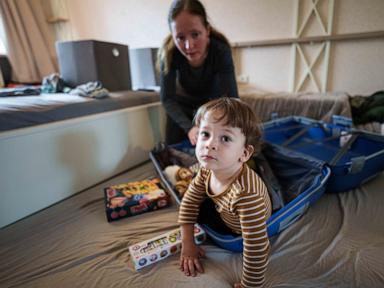
The Western media loves a binary tragedy.
Every autumn since 2022, newsrooms across London, New York, and Berlin dust off the exact same template. They find a family in Kyiv or Kharkiv, highlight the shattered power grid, tally the megawatts lost to Russian missile strikes, and frame the coming months as an agonizing binary choice. Stay and freeze, or leave and become a refugee.
It makes for heartbreaking television. It also completely misunderstands how millions of Ukrainians actually operate, survive, and make decisions in a prolonged war of attrition.
Framing the winter crisis as a simple question of "stay or leave" is lazy journalism. It reduces an entire nation of thirty-plus million people to passive victims waiting around to see if their radiators turn on. Worse, it ignores the brutal economic, psychological, and logistical realities that have turned the "stay or leave" debate into an obsolete relic of 2022.
For the vast majority of Ukrainians, leaving is no longer on the table. And staying isn't a heroic act of defiance—it is a calculated, hyper-localized engineering and financial problem.
The Myth of the Winter Exodus
When energy infrastructure takes a beating, armchair analysts immediately predict a massive wave of winter migration toward the European Union. They look at the math—billions of dollars in grid damage, rolling blackouts stretching into twelve-hour blocks—and assume human behavior follows a simple thermodynamic equation. Cold house equals packed bags.
History and actual migration data tell a completely different story.
During the winter of 2022–2023, when Russia first targeted the Ukrainian power grid systematically, the predicted tidal wave of millions of new refugees never materialized. According to data from the United Nations High Commissioner for Refugees (UNHCR) and the International Organization for Migration (IOM), cross-border movements fluctuated, yes, but the mass exodus stayed firmly in the realm of media speculation.
Why? Because leaving a war zone isn't a weekend trip. It is an expensive, legally fraught, and permanently life-altering transaction.
Let's look at the mechanics of actually leaving Ukraine right now:
- The Demographic Lock: Men aged 18 to 60 are largely barred from leaving the country under martial law. For millions of women, leaving means fracturing their families indefinitely. After nearly three years of war, the psychological toll of separation outweighs the physical misery of a cold apartment.
- The European Fatigue Factor: In 2022, Europe rolled out the red carpet. Temporary protection directives were fresh, housing subsidies were generous, and municipal shelters had space. Fast forward to today, and the host countries are tightening their belts. Countries like Germany, Poland, and the Czech Republic have steadily restructured benefits, introduced stricter employment requirements, and faced severe housing shortages. Moving to Warsaw or Berlin with zero savings and three kids is no longer a guaranteed safety net; it is a fast track to poverty.
- The Sunk Cost of Survival: Those who wanted to leave, and had the financial means to do so, left years ago. Those who remained—or those who returned—have spent the last two years adapting their lives to wartime conditions. You do not abandon a job, a business, or an elderly parent just because the elevator stops working and you have to haul water up eight flights of stairs.
I have spent enough time analyzing crisis logistics and speaking with municipal planners on the ground in Eastern Europe to recognize the disconnect. Foreign correspondents parachute into Kyiv for ten days, stay in a hotel with a massive diesel generator, and write about the impending collapse of civilian morale. Meanwhile, the guy running the auto repair shop three blocks away has already wired his garage to an array of lithium-iron-phosphate batteries and an inverter, and he isn't going anywhere.
The Decentralization of Survival
The mainstream narrative treats Ukraine's energy grid like a single light switch. If Moscow bombs enough thermal power plants, the switch flips off, and the country goes dark.
This misses the most significant infrastructural shift happening in Europe today. Ukraine is undergoing the fastest, most chaotic, and most effective energy decentralization in modern history.
When centralized Soviet-era power plants become targets, the market adapts. It has to. Over the past two years, Ukrainian businesses and households have imported hundreds of thousands of generators, EcoFlow power stations, Starlink terminals, and solar panels. The Ukrainian government eventually eliminated import duties and VAT on energy equipment, turning every hardware store and logistics company into an emergency grid supplier.
Consider the difference between a centralized grid and a distributed micro-grid:
| Feature | Centralized Soviet Grid (The Target) | Distributed Wartime Network (The Reality) |
|---|---|---|
| Vulnerability | High. A few missiles take out power for millions. | Low. You cannot target ten million individual battery banks. |
| Repair Speed | Months or years for specialized turbines. | Hours or days for local inverters and solar arrays. |
| Control | State-run monopolies. | Individual homeowners, condos (OSBBs), and local businesses. |
| Resilience | Brittle under kinetic attack. | Degrades gracefully; power drops in blocks, not nationwide. |
Take the example of Ukrainian condominium associations, known as OSBBs. Across cities like Lviv, Kyiv, and Odesa, apartment buildings have pooled resident funds—often utilizing municipal co-financing programs—to install industrial-grade battery backups, solar arrays on roofs, and backup generators specifically to keep water pumps and heating circulation running during blackouts.
Does this solve the macro-level deficit of gigawatts needed for heavy industry? No. Heavy metallurgy and manufacturing still take a massive hit when the grid goes down.
Does it keep families from freezing to death in their apartments? Yes.
By focusing entirely on the macro-level destruction of state power plants, mainstream articles completely miss the micro-level resilience built by the citizens themselves. They aren't sitting in the dark waiting for Western aid packages to fix a transformer; they are bypassing the grid entirely.
The Real Choice Is Internal, Not International
If "stay in Ukraine or flee to Europe" is the wrong question, what is the actual dilemma facing Ukrainians?
It is urban density versus rural autonomy.
In a modern city, a blackout isn't just an inconvenience; it is a cascading failure of basic physics. When the power goes out in a 22-story Soviet-era panel building (panelka) in Kyiv's Troieshchyna district, three things happen immediately:
- The water stops. Municipal pumps lose pressure, meaning upper floors lose running water within minutes.
- The sewage backs up. No water means toilets cannot flush. Within 48 hours, high-rise living becomes a sanitation crisis.
- The heat dies. Centralized district heating relies on electric pumps to push hot water through the radiators. Even if the local boiler house is burning gas, the heat never reaches the 15th floor without electricity.
Now contrast that with a private house in a village outside Zhytomyr, or a dacha in the Kyiv region.
In a rural or suburban setting, survival decouples from state infrastructure. You have a well with a manual pump or a small generator. You have a wood-burning stove (burzhuyka) or a solid-fuel boiler. You have a cellar stocked with jarred vegetables, potatoes, and preserved meats—a cultural habit that predates the war by centuries and suddenly looks like peak tactical prepping.
The real migration happening in Ukraine isn't across the Polish border. It is from the 18th floor of urban high-rises to grandma's house in the countryside.
Imagine a scenario where a family of four in Kharkiv faces a week-long blackout in January at minus-fifteen degrees Celsius. They don't pack suitcases for Munich. They throw their battery packs, winter coats, and canned food into the trunk of a 15-year-old Skoda and drive forty kilometers to a village where they can burn birch logs for heat.
Mainstream journalists rarely cover this because it doesn't fit the dramatic border-crossing photojournalism trope. Yet, this internal shuffling between urban apartments and rural properties is the primary pressure valve keeping the Ukrainian population inside the country.
The Hidden Economics of "Staying"
There is another uncomfortable truth that polite Western commentary avoids: for many, staying is a financial necessity because leaving destroys their earning power.
Ukraine has maintained a remarkably functional digital economy throughout the war. Banking apps like Monobank, state services via Diia, and delivery networks like Nova Poshta operate with a speed and efficiency that puts most Western European bureaucracies to shame. A software developer, a remote customer service agent, or a small e-commerce business owner in Ukraine pays a fraction of the taxes and living costs they would face in Germany or the UK.
If a Ukrainian woman leaves for Western Europe, she immediately enters a high-cost-of-living environment where her Ukrainian salary—if she can even keep her job—evaporates on rent and groceries. If she relies on state subsidies, she sacrifices her financial independence and career trajectory.
Staying in Ukraine, even with rolling blackouts and air raid sirens, allows people to retain their social status, their professional networks, and their financial autonomy.
To be brutally honest, there is a massive downside to this calculus, and pretending it doesn't exist would be dishonest. Staying carries a severe, non-negotiable tax on human health and safety.
- Physical Risk: No amount of battery backups will stop a ballistic missile. Living in frontline cities like Kharkiv, Zaporizhzhia, or Odesa means accepting a baseline probability of sudden, violent death every time you go to sleep.
- Chronic Stress: Living in a constant state of hyper-vigilance—monitoring Telegram channels for MiG-31 takeoffs, sleeping in corridors, dealing with sleep deprivation—wrecks the human endocrine and cardiovascular systems. Doctors in Ukraine are already seeing massive spikes in stress-induced illnesses, strokes, and premature aging among civilians.
- Educational Deficit: Millions of Ukrainian children have spent years learning remotely, interrupted by air raids and power cuts. Staying means accepting that your child's education is being compromised in real time.
Ukrainians know these costs intimately. They weigh them every single day. They don't need foreign commentators framing their reality as a binary choice between freezing or fleeing, as if they haven't already done the math.
How to Actually Analyze Wartime Resilience
If you want to understand what will actually happen in Ukraine this winter, stop reading human-interest pieces about people buying candles. Look at the metrics that actually dictate urban survivability and civilian endurance.
- Natural Gas Storage Levels: Electricity gets all the headlines because blackouts are visible. Gas is what actually keeps people alive. As long as Naftogaz maintains sufficient underground gas storage and the distribution pipelines remain intact, municipal boiler houses can still generate heat—provided local backup power keeps the pumps moving.
- Telecom Battery Autonomy: When the power goes out, cell towers die within hours unless they are upgraded with lithium batteries and generators. If people lose cellular data, they lose air raid alerts, banking access, and communication with family. Watch the uptime of Kyivstar and Vodafone; when the cell network collapses, panic follows.
- Transformer and Substation Repair Times: Don't count the missiles fired; measure the time it takes Ukrenergo crews to restore grid stability after a strike. The speed of repair is the ultimate metric of institutional competence.
- The Black Market Exchange Rate and Fuel Prices: Panic shows up in currency exchange booths and gas station queues long before it shows up at border crossings. If the hryvnia holds steady and diesel remains available at the pump, the population is absorbing the shock.
Stop Treating Civilians Like Chess Pieces
The fundamental flaw in the "stay or leave" narrative is that it treats war as a spectator sport where civilians are passive victims swept around by geopolitical weather.
It misses the fierce, stubborn agency of people defending their right to exist in their own homes. People do not abandon their entire lives just because a dictator tries to turn off their lights. They buy a generator, insulate their windows with plastic film, move to the first floor, and adapt.
The question facing Ukrainians this winter isn't whether they will stay or leave. They already answered that question years ago. The only question left is how much discomfort they are willing to endure to ensure Russia's energy terror fails—and history has already shown the answer is far more than Moscow, or the Western media, ever calculated.