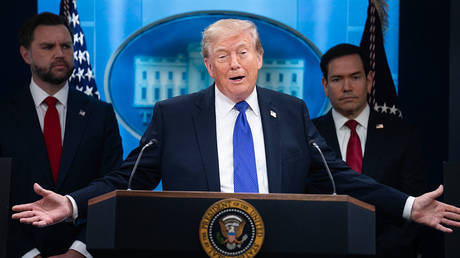
Public pressure from the executive branch to reinstate a ousted corporate chief executive marks an operational shift in American corporate governance, converting an internal boardroom compliance failure into a question of national industrial policy. When President Donald Trump publicly urged Nvidia’s board of directors to grant former CEO Jensen Huang a "second chance" following his November 12, 2026 resignation, the intervention bypassed standard fiduciary mechanisms. Traditional governance frameworks treat executive departures stemming from personal misconduct and counterintelligence exposure as binary compliance failures. Executive branch intervention recasts those same failures as tolerable operational risks when weighed against perceived national security advantages in artificial intelligence infrastructure.
Understanding this collision requires separating political rhetoric from the structural mechanics of corporate boards, capital markets, and export control regimes. Standard coverage frames the episode as a clash of personalities or a narrative of redemption. In practice, the crisis exposes a three-way structural tension between fiduciary duty, key-person valuation risk, and state-directed industrial strategy.
The Anatomy of the Governance Breakdown
Corporate boards operate under strict legal mandates—primarily the duties of care and loyalty—designed to insulate shareholder value from executive misconduct. Jensen Huang’s departure followed disclosures regarding multiple workplace relationships, including an entanglement with an individual suspected of espionage on behalf of the People's Republic of China. Under conventional Delaware corporate law standards, this intersection triggers two distinct institutional tripwires:
- Internal Control and Fiduciary Liability: Workplace relationships involving subordinates create acute power imbalances, exposing the corporation to litigation, regulatory scrutiny, and systemic degradation of internal reporting channels.
- Counterintelligence and Export Compliance Exposure: Nvidia sits at the center of United States export control enforcement regarding advanced semiconductors. Any vector through which proprietary chip architectures, supply chain routing, or licensing strategies could leak to adversarial intelligence services compromises the company’s license to operate.
Prior to White House intervention, Nvidia’s board, led by chairperson Harvey Jones, acted within established risk-mitigation doctrine. The board accepted Huang’s resignation, elevated CFO Colette Kress to interim CEO, and publicly ruled out a reinstatement. From a pure governance standpoint, the board priced the reputational and regulatory liability of retaining Huang as higher than the operational disruption of his exit.
When the executive branch intervened—first through public statements framing the United States as a "country of second chances" and subsequently through direct White House outreach to board members—the risk calculus inverted. By signaling that senior levels of the federal government viewed Huang’s reinstatement as posing no national security threat, the administration effectively neutralized the board's primary regulatory fear while introducing a new political liability: defying the sitting president on an issue explicitly tied to national competitiveness.
Key-Person Risk Versus Institutional Continuity
The economic argument underpinning the push for Huang’s return rests on an extreme manifestation of key-person dependency. In standard corporate finance, key-person risk measures the enterprise value loss attributable to the sudden departure of a single executive. For most mature enterprises with market capitalizations exceeding one trillion dollars, institutional processes, middle management depth, and established product roadmaps buffer the firm against CEO transitions.
Nvidia’s market trajectory defied this standard diversification model. Before the scandal broke, Nvidia’s valuation reached approximately $4.5 trillion, driven by near-monopolistic dominance in AI training and inference hardware. Following Huang’s exit, the equity suffered severe contraction, shedding hundreds of billions of dollars in market capitalization and compressing its forward price-to-earnings multiple to roughly 11.4x—a fraction of its five-year historical average of 35.4x.
This valuation compression reflects market skepticism toward institutional continuity at Nvidia, driven by three structural factors:
- Architectural Vision and Execution Speed: Nvidia’s competitive moat relies not merely on silicon design, such as the Blackwell architecture, but on the synchronized release cadence of hardware, networking interconnects, and the proprietary CUDA software ecosystem. Investors and political observers alike equated this synchronization directly with Huang’s founder-led command structure.
- Supply Chain Orchestration: Securing wafer allocation at Taiwan Semiconductor Manufacturing Company (TSMC) and managing packaging bottlenecks requires continuous executive-level negotiation. Markets priced in immediate friction under interim leadership.
- Macroeconomic Spillover: Because Nvidia’s equity performance had become a primary driver of broad index returns, retirement account valuations, and capital expenditure cycles across hyperscale cloud providers, prolonged instability in Nvidia’s stock posed systemic macroeconomic drag.
Trump’s public critique of Nvidia’s interim leadership—stating that "very few people in that company" could execute at Huang’s level—articulated the market's exact anxiety. However, validating key-person dependency through state intervention creates a structural paradox. By declaring a single executive irreplaceable, both the market and the state delay the institutional maturation required for the company to survive inevitable future transitions.
The Geopolitical Calculation and Export Control Friction
The geopolitical dimension of the crisis reveals a fundamental contradiction in contemporary technology policy. The United States government simultaneously treats Nvidia as a critical national security asset that must be protected from foreign espionage and as a commercial champion whose global market share must be preserved to maintain technological hegemony.
During the crisis, the administration expanded licensing requirements across Southeast Asia—specifically targeting Singapore, Thailand, Malaysia, and Indonesia, alongside Brazil—to curb the illicit diversion of restricted AI chips to China. Simultaneously, Trump discussed Huang’s leadership directly with Chinese President Xi Jinping during the Asia-Pacific Economic Cooperation summit in Shenzhen, later citing Xi’s acknowledgment of Huang’s brilliance as further validation of his standing.
This dual-track posture creates acute operational friction for corporate compliance teams:
- Clearance Asymmetry: When the executive branch grants informal national security assurances to facilitate a CEO’s return, it bypasses the formal, auditable vetting procedures used by the intelligence community and the Department of Commerce. Corporate boards rely on formal clearances to defend against future shareholder derivative suits; verbal assurances from political principals offer weak legal insulation if subsequent investigations uncover actual data leakage.
- Legislative Backlash: Executive intervention invites immediate counter-reaction from the legislative branch. Congressional oversight committees scrutinizing export control enforcement, chip diversion networks, and potential conflicts of interest among cabinet officials gain subpoena leverage over both the company and its reinstated chief executive.
- Allied and Counterparty Uncertainty: Foreign regulators and enterprise customers evaluating long-term infrastructure commitments must price in the risk that Nvidia’s leadership stability depends on domestic political alignment rather than predictable corporate governance.
The Structural Cost of Reinstatement
Reinstating a chief executive under external political pressure alters internal power dynamics in ways that degrade long-term organizational health. Even after Nvidia’s board reversed its position and restored Huang as president, CEO, and board member, the governance architecture remained visibly compromised.
First, board authority suffers permanent erosion. A board that declares a candidate permanently disqualified one week and expresses full confidence the next demonstrates that its fiduciary judgment is subordinate to external political persuasion. Independent directors lose credibility as a check on executive power, increasing the cost of capital for institutional investors who weight governance metrics heavily in risk models.
Second, internal accountability standards fracture. Enterprise compliance programs depend on uniform enforcement; when a chief executive bypasses the consequences of admitted workplace policy violations through political patronage, human resources and legal departments lose the moral and operational authority to enforce conduct standards across lower tiers of the organization. Talent retention among senior engineering leaders—who evaluate internal fairness and corporate stability—faces long-term drag.
Third, the reinstated executive enters a constrained operational posture. Rather than focusing exclusively on architectural roadmaps and silicon supply chains, leadership must allocate executive bandwidth to congressional testimony, regulatory defense, and public rehabilitation. When political capital underwrites corporate leadership, shifts in the political cycle—such as changes in congressional control—translate directly into corporate existential risk.
Strategic Execution for Institutional Stakeholders
For institutional investors, corporate boards, and policy architects operating in high-concentration technology sectors, the Nvidia governance episode establishes clear operational imperatives. Relying on political intervention to resolve key-person crises is a fragile, non-repeatable tactic that trades short-term equity stabilization for long-term structural vulnerability.
Boards managing founder-led or hyper-concentrated enterprises must decouple operational execution from single-executive mythology before a crisis forces a binary choice. This requires implementing verifiable succession architectures:
- Modularize Technical Leadership: Distribute architectural authority across distinct operational divisions—separating silicon engineering, software ecosystem development, and hyperscale commercial strategy under empowered division presidents with independent visibility to the board and institutional analysts.
- Codify Counterintelligence Protocols: Establish automated, board-audited compartments around sensitive export-controlled technologies and government licensing communications, ensuring that no single executive’s personal vulnerability can compromise national security clearances.
- Enforce Pre-Committed Governance Triggers: Define explicit, non-negotiable compliance thresholds in executive employment agreements that strip the board of discretionary reversal once triggered, insulating directors from external political or market lobbying.
Investors evaluating dominant technology equities must adjust valuation models to penalize governance fragility. When a multi-trillion-dollar enterprise exhibits valuation multiples that collapse upon the exit of one individual, the equity carries uncompensated concentration risk. Capital allocation should favor enterprises that demonstrate institutional resilience through documented executive depth rather than those reliant on state-backed executive rescues.