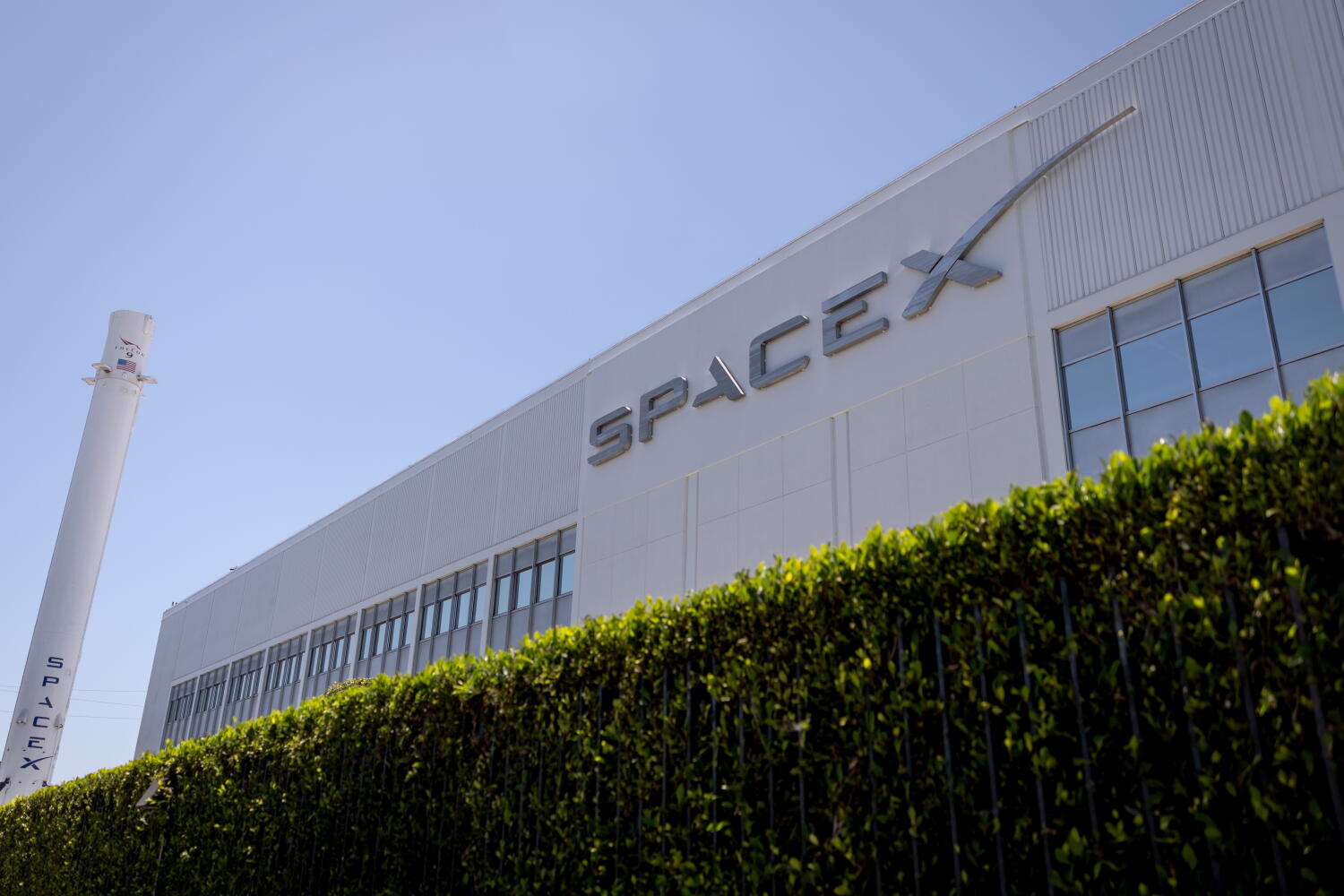
Elon Musk wants to smash SpaceX and Tesla together into one giant company. Honestly, on paper, the pitch sounds wild enough to work. Rockets, satellites, electric cars, robotaxis, humanoid robots, and AI supercomputers all under one roof. Following SpaceX's massive June 2026 IPO and Musk's public comments about special board committees studying a combination, traders started pricing in a historic megadeal worth roughly $3.5 trillion to nearly $5 trillion.
Don't pop the champagne yet.
A SpaceX and Tesla merger isn't just a bold engineering vision. It's a math problem, a governance headache, and a geopolitical trap all rolled into one. Even if Musk thinks the two companies would be better together, getting millions of shareholders, regulators, and foreign governments to sign off is a completely different beast.
Why Elon Musk Wants a SpaceX and Tesla Merger
To understand the push for a SpaceX and Tesla merger, you have to look at how Musk's empire shifted between 2025 and 2026. SpaceX went public in June 2026 at a roughly $1.77 trillion IPO valuation—the biggest public debut in stock market history—and already carries AI assets inside its orbit through xAI, which was folded into SpaceX's broader structure and rebranded under SpaceXAI / SpaceX Super Intelligence. Meanwhile, Tesla has been pivoting hard away from being "just" an automaker, phasing out older models like Model S and Model X while pouring attention into autonomous robotaxis, Cybercab production, and the Optimus humanoid robot.
Musk's core argument is vertical integration at an absurd scale. Think about what happens when one organization builds the AI models, runs massive compute clusters, designs custom chips, manufactures autonomous vehicles and robots, and controls orbital launch and connectivity.
During his October 2026 earnings remarks and DealBook Summit appearance later in November, Musk pointed to overlapping engineering and infrastructure priorities. Software for superintelligence, custom silicon, chip manufacturing ambitions like Terafab, robotics, and orbital compute or high-mass space transport all feed into one another.
From a bull's perspective, separating them creates friction. Why negotiate intercompany deals, argue over transfer pricing, or split engineering talent when you can pool capital and move faster?
Yet there's a catch that bulls often gloss over. Combining two hyper-valued growth stories doesn't automatically fix their individual bottlenecks. SpaceX still has to scale launch cadence, expand Starlink commercially, and turn massive AI ambitions into sustainable profits. Tesla still has to prove autonomous driving at scale, ramp Optimus production toward Musk's ambitious targets, and defend margins in a competitive EV market.
A bigger balance sheet helps fund capital expenditures. It doesn't repeal physics or unit economics.
The Brutal Voting Math Inside Tesla
Here's the detail most casual observers miss. Musk doesn't just need a majority of votes cast at Tesla. Under Tesla's charter rules, a merger requires approval from more than 50% of all outstanding Tesla shares.
That changes everything. When a company requires a majority of all outstanding shares rather than a majority of votes present, every abstention or non-vote acts like a "no."
Retail investors hold a huge chunk of Tesla stock, and retail turnout is notoriously uneven. Even when a proposal wins more "yes" votes than "no" votes, apathy or missed ballots can kill it. Back in 2025, for example, a non-binding proposal on Tesla investing in xAI had more votes in favor than against, yet hundreds of millions of abstentions sunk it under that exact math.
SpaceX isn't a rubber stamp either. Musk holds super-voting control at SpaceX, which gives him huge sway on that side of the table, but public and institutional SpaceX shareholders will still care deeply about dilution and valuation fairness.
Swap Ratios, Dilution, and Who Actually Wins
If SpaceX buys Tesla in an all-stock transaction—which several Wall Street analysts view as the most likely structure—the fight immediately shifts to the exchange ratio. How many SpaceX shares do you get for each Tesla share, and what kind of premium do Tesla holders demand to say yes?
Analysts have floated wide valuation numbers depending on premiums and market prices:
- Some analysts have estimated a combined enterprise value around $3.5 trillion, while bullish commentators like Wedbush's Dan Ives have pointed toward figures closer to $5 trillion if Tesla is priced at a substantial premium.
- Bank of America analyst Alexander Perry has noted how sensitive ownership splits are to the deal premium—a higher premium for Tesla shareholders shrinks the slice left for SpaceX holders.
- Meanwhile, skeptical voices on Wall Street, including fund manager Gary Black, have warned that heavy share issuance and dilution could pressure shares after a deal if expectations run ahead of near-term earnings.
Here's what I've seen happen time and again in mega-mergers: the headline deal premium is rarely the whole story. If a stock surges on merger hype or gets paid in volatile high-multiple shares, post-deal digestion can be rough. Both SpaceX and Tesla trade on massive future expectations rather than backward-looking cash flows. Merging two high-expectation stocks doesn't reduce multiple risk; sometimes it concentrates it.
Even Musk has pushed back against treating the deal as a sure thing. He has explicitly noted that assuming a merger is guaranteed overstates where things stand, especially while independent board committees evaluate terms.
China, Washington, and the Governance Minefield
Suppose the board committees strike a deal and the shareholder math works out. The political and regulatory obstacles still look formidable.
First, consider China. Tesla relies heavily on China both as a major manufacturing hub and a critical market. SpaceX, by contrast, operates rocket launch systems, defense-adjacent capabilities, and Starlink satellite networks that sit right in the middle of U.S.–China strategic competition. Putting a major automotive manufacturing footprint in China under the same corporate roof as SpaceX's space and satellite infrastructure creates obvious leverage points for Beijing.
Second, there's U.S. political and regulatory scrutiny. Lawmakers across the spectrum have already raised questions about concentrating vital communications, space launch, transportation, and AI infrastructure under one billionaire's control. As CBS News and other outlets have covered, combining these businesses raises sharp questions about market power, national security, and corporate governance.
Third, shareholder litigation and governance won't vanish overnight. Even though Tesla reincorporated in Texas—where certain shareholder suit rules are stricter than in Delaware—any megadeal involving a controlling visionary and overlapping board ties invites intense scrutiny from institutional governance groups and minority shareholders.
Illustrative example: Imagine a retail investor holding 200 shares of Tesla who ignores proxy mailers because they don't plan to sell anyway. Under a majority-of-all-outstanding-shares threshold, that quiet indifference functions as a vote against the merger—multiplied across millions of small accounts, it becomes one of the hardest hurdles in corporate finance.
What Actually Matters If You're Watching This Deal
Don't get sucked into daily rumor whiplash every time a new analyst note drops. A deal could move quickly or drag out—and even if talks advance, nothing is final until formal terms are published and voted on.
If you want to track this smartly without falling for hype:
- Watch the board committee disclosures and proxy filings, not just headlines. Real deal mechanics—swap ratios, collar terms, break fees, and voting thresholds—show up in formal filings and committee updates.
- Evaluate SpaceX and Tesla on their standalone fundamentals first. Ask yourself whether you'd want to own SpaceX's launch/Starlink/AI trajectory and Tesla's autonomy/robotics/EV business on their own merits. Never buy a stock purely on merger arbitrage rumor unless you understand the underlying asset.
- Pay attention to dilution and voting mechanics. Check how much new equity would be issued in an all-stock structure and remember that Tesla's share-count voting rule makes turnout decisive.
- Factor in geopolitical exposure. Keep an eye on U.S. regulatory signals and how Chinese operations interact with space and satellite assets.
If you hold either stock—or plan to—review your position sizing today so a surprise deal announcement or a stalled vote doesn't catch your portfolio off guard.


