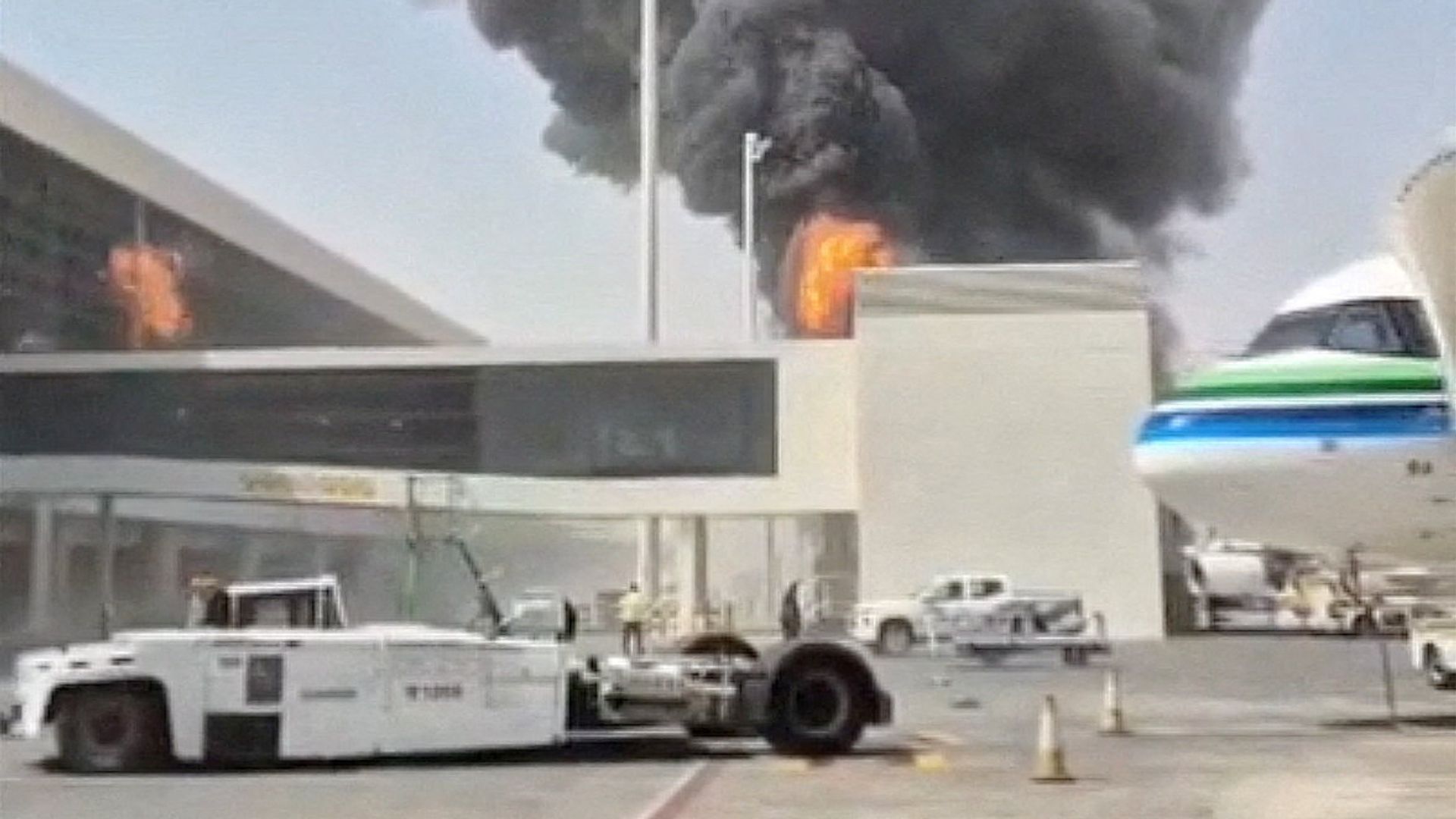
Government advisories warning against all but essential travel to Saudi Arabia compress complex, localized risk distributions into a single binary switch that fails travelers, insurers, and corporate mobility teams. The operational blueprint below deconstructs how diplomatic risk warnings are constructed, maps the causal chains that standard reporting overlooks, separates verified structural mechanisms from educated hypotheses, and establishes a decision framework for evaluating movement into the Kingdom under elevated threat conditions.
Why Standard Travel Advisory Reporting Fails Decision-Makers
Conventional coverage of a Foreign, Commonwealth and Development Office (FCDO) or equivalent state warning treats a government notice as a monolithic verdict on safety. A headline stating that officials advise against all but essential travel encourages two distorted reactions: panic cancellations across non-sensitive sectors or false confidence driven by skepticism toward diplomatic bureaucracy. Neither reaction reflects how threat probability actually behaves across geography, time, and traveler profile.
A sovereign advisory is a legal and diplomatic instrument designed to manage state liability, consular exposure, and bilateral signaling. When a foreign ministry shifts its posture on Saudi Arabia, the text usually aggregates regional spillover risks, aviation or maritime disruptions, cross-border projectile or drone threats, civil security enforcement, and domestic stability indicators into broad prose. Because the advisory must cover an entire sovereign territory—spanning major urban centers, Red Sea and Persian Gulf corridors, border governorates, and mega-project zones—it averages together wildly different risk profiles.
Averaging across space and activity is the core analytical flaw in standard coverage. A commercial executive flying into Riyadh for a two-day headquarters meeting faces a very different set of operational variables than a leisure traveler driving along a southern border road or an engineer stationed near critical energy or port infrastructure. Standard articles rarely separate threat generation (the external or internal actor capable of causing harm), exposure vectors (airspace closures, road interdiction, infrastructure strikes, detention or legal friction), and consequence severity (physical injury, stranded transit, policy voiding, or reputational fallout).
Without separating those layers, readers cannot tell whether an advisory reflects an imminent, high-probability attack inside a city or a precautionary escalation triggered by regional military tension, airspace routing shifts, or intelligence of heightened regional friction.
The Architecture of Risk in Saudi Mobility
To evaluate travel into Saudi Arabia rigorously, treat mobility risk as a function of four interacting dimensions rather than a single "safe" or "unsafe" label.
Geographic Asymmetry and Corridor Sensitivity
Saudi Arabia is a continental-scale jurisdiction where operational risk is sharply uneven. Urban commercial hubs such as Riyadh and Jeddah possess dense security apparatus, layered air defense coverage around key nodes, and established international aviation and hospitality infrastructure. By contrast, border zones, remote transit corridors, and strategic coastal or energy installations carry distinct exposure profiles depending on the regional security environment at any given moment.
The first operational bottleneck in any regional escalation is rarely a direct street-level incident in a major city; it is corridor fragility. Regional tensions frequently manifest first through Notices to Air Missions (NOTAMs), flight rerouting, temporary airspace closures across neighboring states, or sudden shifts in maritime insurance and shipping lanes. A traveler can be physically unharmed yet operationally stranded for days if hub-and-spoke aviation connections fracture.
Institutional and Legal Friction
Travel risk is not limited to kinetic threats or regional conflict. Entry rules, sponsorship or visa conditions, local speech and public conduct laws, digital communication norms, and administrative procedures create a separate layer of friction. When diplomatic tension rises or security posture tightens, checkpoints, border inspections, and regulatory enforcement often become more rigid and less predictable.
For foreign nationals, the practical consequence is asymmetric leverage: a minor administrative misstep, unauthorized photography near sensitive facilities, or an ill-judged social media post carries higher friction when security services are on heightened alert. Standard travel articles mention local laws in passing but fail to connect legal exposure to heightened security enforcement cycles.
Insurance and Duty-of-Care Triggers
A government advisory against all but essential travel acts as a contractual tripwire across corporate travel management and personal travel insurance. Many standard retail policies exclude or restrict coverage when a traveler enters a destination against official government advice, unless a specific rider is purchased in advance. Corporate duty-of-care policies similarly shift trips from routine approval to executive sign-off, mandatory security briefings, or outright suspension.
This creates a second-order compliance trap. A traveler may focus on physical safety while overlooking that a sudden policy exclusion leaves medical evacuation, trip interruption, or emergency repatriation unfunded. In high-cost jurisdictions or complex medical scenarios, financial exposure can exceed the direct disruption of a delayed flight.
Information Asymmetry During Escalations
During acute regional flare-ups, open-source reporting lags behind operational reality while social media amplifies rumors, recycled footage, and speculative maps. Official advisories are cautious by design and often lag behind rapid tactical shifts—or remain elevated for weeks after immediate kinetic triggers subside while diplomatic assessments catch up.
The second limitation of relying solely on headline advisories is latency. Diplomatic language moves on bureaucratic review cycles, whereas aviation routing, corporate security advisories, and local ground conditions can shift within hours.
Facts Versus Educated Hypotheses in Threat Assessment
A rigorous analysis must keep verified mechanics separate from informed projections.
Verified Structural Mechanisms
- Advisories alter insurance and corporate policy mechanics: Travel insurance underwriting and corporate risk matrices explicitly reference government advisory tiers when determining coverage validity and duty-of-care escalation.
- Regional escalations impact aviation and transit first: Conflict or military posturing in the broader Middle East routinely triggers airspace restrictions, fuel or routing penalties, and schedule volatility before or instead of localized ground incidents inside major Saudi cities.
- Security enforcement tightens during elevated alert periods: Heightened national security posture increases visible policing, checkpoint scrutiny, and intolerance for ambiguous behavior near infrastructure, diplomatic quarters, or public gatherings.
- Essential vs. non-essential framing is a triage filter: Governments use "all but essential travel" to draw a line between mission-critical economic, diplomatic, or family obligations and discretionary tourism or routine visits.
Educated Hypotheses
- Prolonged advisories accelerate corporate reliance on localized intelligence: When state warnings remain active over extended periods, multinational firms with commercial stakes in Saudi Arabia are likely to rely more heavily on private risk intelligence, local security partners, and dynamic route-level assessments rather than static government tiers alone.
- Discretionary tourism absorbs the sharpest demand shock: Leisure and casual event travel is far more price- and risk-elastic than sovereign-linked business, energy, or infrastructure work, meaning advisory escalations disproportionately suppress non-essential arrivals even when core business travel continues under tighter controls.
- Bilateral diplomatic signaling shapes tone and timing: Shifts in advisory wording may partly reflect broader diplomatic calibration between London and Riyadh—balancing citizen protection against commercial and strategic ties—rather than a uniform increase in ground danger across every municipality.
Tactical Decision Framework for Travelers and Operators
Rather than treating an advisory as an automatic stop sign or ignoring it, apply a sequential evaluation before committing time, capital, or personnel.
- Define "Essential" in concrete operational terms. Separate discretionary convenience from high-consequence necessity. A trip is operationally essential only if postponing or substituting it (via remote work or regional hub reassignment) causes material harm that outweighs elevated contingency costs.
- Audit insurance and corporate policy clauses line by line. Confirm whether the policy invalidates medical, evacuation, or cancellation cover when traveling against FCDO or home-government advice, and verify whether a specific endorsement restores protection.
- Map exact origin-to-destination transit routing. Identify every airspace corridor, transit hub, and ground transfer leg. Favor direct routings with flexible rebooking terms over multi-stop connections through volatile regional transit points.
- Establish a pre-departure and in-country check-in protocol. Set scheduled communication intervals, verify embassy registration options, identify local emergency contacts, and pre-plan an exit or shelter-in-place threshold rather than improvising during a disruption.
- Re-evaluate dynamically against ground and aviation indicators. Treat the advisory as a baseline floor, not a real-time tactical feed. Monitor aviation advisories, local operational updates, and itinerary-specific risk changes right up to departure and throughout the stay.
Limitations of Any Risk Framework
No analytical model eliminates uncertainty in a volatile geopolitical environment. Threat assessments rely on incomplete intelligence, rapidly shifting regional dynamics, and coarse geographic generalizations. A low-probability event can still carry severe consequences, and over-engineering contingency plans can create unnecessary cost and friction when conditions remain calm. Risk management reduces blind spots and improves response speed; it does not guarantee immunity from external shocks.
Strategic Play
Treat a government advisory against all but essential travel to Saudi Arabia as a governance and contingency trigger, not a substitute for itinerary-level risk analysis: freeze all discretionary and low-priority travel immediately, require explicit policy and transit verification for mission-critical trips, and run every approved movement through a pre-defined trigger matrix for rerouting, delay, or cancellation before wheels leave the ground.