Diplomats love percentages. Saying a deal is "80 percent done" sounds like champagne is already on ice, when in reality it usually means the easy paragraphs are finished and everyone is deadlocked on the parts that actually matter.
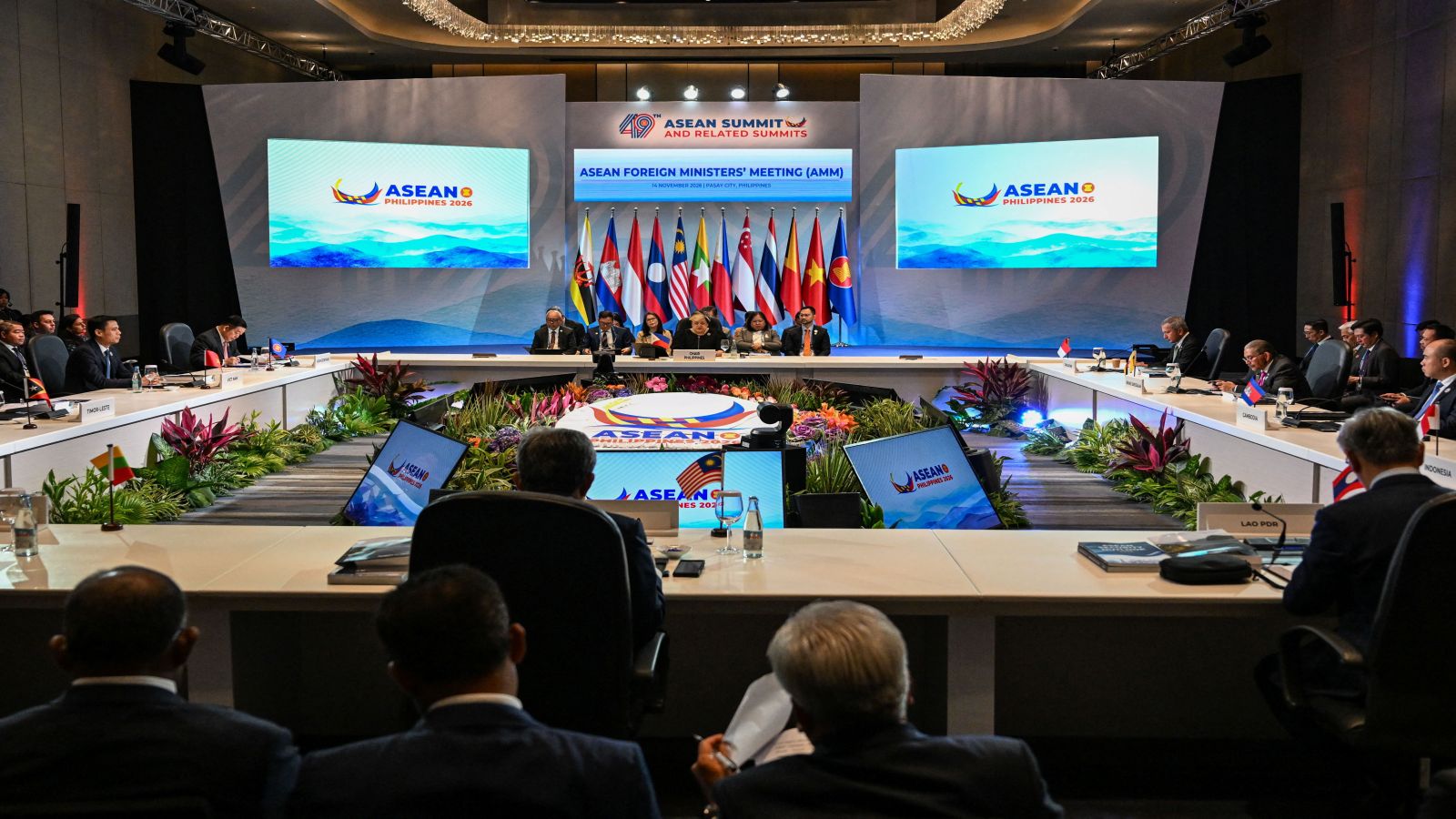
That's the exact trap holding back the South China Sea code of conduct between ASEAN and China. Negotiations dragged past their self-imposed 2026 deadline without a signed treaty, even though negotiators repeatedly pointed to a rough 80 percent consensus on the draft text. If you've followed Southeast Asian security policy for any length of time, that number shouldn't surprise you. In international diplomacy, the first 80 percent covers housekeeping—preambles, definitions of marine scientific research, and low-stakes search-and-rescue protocols. The final 20 percent is where sovereignty, military deterrence, and legal enforcement live. In other developments, we also covered: Three Men Walk Into Shenzhen (And the Rest of Us Hold Our Breath).
The Illusion of the 80 Percent Draft
Most casual observers read headlines about an 80 percent draft agreement and assume only minor edits remain. They're wrong.
During multiple rounds of the Joint Working Group on the Implementation of the Declaration on the Conduct of Parties in the South China Sea, diplomats cleared less controversial chapters first to build momentum. They agreed on broad language about environmental protection, disaster relief, and avoiding accidents at sea. Those clauses look great in press releases after ASEAN foreign ministers' meetings. Associated Press has analyzed this fascinating subject in extensive detail.
They do nothing to stop water cannons at Second Thomas Shoal.
When negotiators move from benign maritime cooperation to core security clauses, progress hits a brick wall. The remaining 20 percent of the Single Draft Negotiating Text contains the actual teeth of the agreement. Without those provisions, a finished document would just be a dressed-up version of the 2002 Declaration on the Conduct of Parties (DOC), which was non-binding and failed to stop two decades of island-building and gray-zone coercion.
Three Roadblocks Killing the Final Deal
If you strip away the diplomatic jargon, the deadlock comes down to three irreconcilable demands. Neither Beijing nor the frontline ASEAN claimant states—specifically the Philippines and Vietnam—can back down on these without sacrificing core national interests.
1. Legal Bindingness and Enforcement
ASEAN states want a legally binding treaty under international law, backed by clear dispute resolution mechanisms. Beijing has consistently resisted language that would turn the code into an enforceable legal instrument with third-party arbitration.
Why does this matter? Because a non-binding code relies entirely on goodwill. After the 2016 Permanent Court of Arbitration ruling in favor of the Philippines—which invalidated China's expansive nine-dash line claims under the United Nations Convention on the Law of the Sea (UNCLOS)—Beijing made it clear it rejects external legal tribunals in these waters. ASEAN diplomats know that signing another voluntary pledge without penalties for violations simply rewards the side with the largest coast guard.
2. Geographic Scope
Where does the South China Sea actually begin and end for the purposes of this agreement? Nobody agrees.
China favors vague geographic definitions that align with its historical claims, while Vietnam and the Philippines insist the code must explicitly respect Exclusive Economic Zones (EEZs) and continental shelves as defined by UNCLOS. Indonesia, though not a formal claimant to the Spratly or Paracel islands, has also pushed back hard against Chinese coast guard intrusions near the Natuna Islands. If the text fails to define the exact maritime boundaries covered by the rules, every single patrol becomes an argument over jurisdiction.
3. External Military Powers and Foreign Oil Firms
This is the poison pill in the draft text. Beijing has repeatedly pushed for clauses that would restrict ASEAN nations from holding joint military exercises with outside powers—meaning the United States, Japan, or Australia—unless every party to the code consents. China has also sought language limiting energy exploration deals with non-regional oil and gas companies.
Think about what that means in practice. Under those terms, the Philippines couldn't run bilateral drills with the U.S. Navy in its own backyard without getting permission from Beijing. Vietnam couldn't partner with Western energy firms to drill inside its own EEZ without Chinese approval. ASEAN states flatly rejected giving Beijing a veto over their defense partnerships and economic sovereignty.
Why 2026 Was Always an Unrealistic Deadline
In 2023, ASEAN and China adopted guidelines aimed at accelerating negotiations to conclude the code within three years, targeting 2026. On paper, setting a firm clock was supposed to force compromises.
Instead, realities on the water outpaced the negotiators at the table.
Over the past three years, maritime friction escalated sharply, particularly around Second Thomas Shoal, Scarborough Shoal, and Sabina Shoal. Regular confrontations between Chinese Coast Guard vessels and Philippine resupply missions—involving water cannons, ramming incidents, and laser dazzling—created a severe trust deficit. You can't easily negotiate a peace framework in a conference room while ships are colliding in the Spratlys that exact same week.
ASEAN's internal consensus rule complicates things even further. Every decision requires unanimity among all ten member states (plus Timor-Leste as it integrates into the bloc). Frontline maritime states like the Philippines and Vietnam face direct pressure at sea, while mainland members like Cambodia and Laos have deep economic ties to Beijing and no direct territorial claims in the South China Sea. Finding a single negotiating position that satisfies Manila, Hanoi, Jakarta, and Phnom Penh before even sitting across from Chinese diplomats is an exhausting diplomatic balancing act.
What Most People Get Wrong About ASEAN's Leverage
A common misconception among Western commentators is that ASEAN is simply stalling or acting weak because it refuses to confront Beijing militarily. That misunderstands how Southeast Asian diplomacy works.
ASEAN is not a military alliance like NATO. It never was. Its primary tool is diplomatic norm-setting and keeping major powers locked into multilateral frameworks so smaller nations aren't picked off one by one in bilateral negotiations. By keeping the South China Sea code of conduct talks alive—even when the text is stuck at 80 percent—ASEAN keeps Beijing tethered to a process where international law and UNCLOS remain the baseline reference points.
Still, patience is wearing thin. The Philippines, under President Ferdinand Marcos Jr., shifted away from quiet bilateral diplomacy toward public transparency, embedding journalists on resupply missions and expanding defense ties through the Enhanced Defense Cooperation Agreement (EDCA) with Washington, alongside trilateral cooperation with Japan. Manila decided that waiting for a multilateral code of conduct wouldn't protect its fishermen or resupply boats today.
How to Read Future Negotiations Without Falling for Spin
When ASEAN and Chinese diplomats meet again for the next round of Joint Working Group talks, expect more optimistic soundbites. Officials will likely announce they've completed a "third reading" of the draft text or reached 85 percent agreement.
Don't buy the hype unless you see concrete movement on three specific benchmarks:
- Explicit reference to UNCLOS 1982 as the sole legal framework governing maritime entitlements in the region.
- Removal of any veto power over joint military exercises or commercial energy partnerships with countries outside the region.
- Clear accountability mechanisms that define what happens when a coast guard vessel or maritime militia boat violates the agreed rules of behavior.
Until those three items appear in the final text, the South China Sea code of conduct will remain an unfinished draft—and reality at sea will continue to be decided by patrol ships rather than diplomats. If you're tracking geopolitical risk in Southeast Asia, watch the coast guard deployment patterns and bilateral defense pacts rather than the percentage points coming out of diplomatic summits.

