Another week, another grandiose environmental headline. South Africa has rolled out a fresh multi-million euro push, spearheaded by heavy hitters like the Endangered Wildlife Trust, to bring 100,000 hectares of grasslands, savannas, and thickets under restoration by 2030.
The press releases read like a utopian poetry slam. We hear about water security, climate resilience, biodiversity corridors, and innovative financing models. It sounds magnificent. It also completely misses the structural reality of how land is actually broken and fixed in the real world.
Strip away the glossy international development jargon, and you find a lazy consensus: the comforting belief that if we throw enough capital, committees, and carbon accounting at a patch of degraded earth, nature will reset itself to a pristine Eden.
That is not how ecosystems work. And pretending that 100,000 hectares of targeted intervention will magically bulletproof South Africa against ecological collapse is a dangerous delusion.
The Arithmetic of Irrelevance
Let us look at the scale of the scoreboard. South Africa’s total land area sits at roughly 1.22 million square kilometers—about 122 million hectares.
Targeting 100,000 hectares sounds impressive in a boardroom briefing or a donor pitch deck. Mathematically, it amounts to approximately 0.08 percent of the country's landmass.
Put differently: for every single hectare this high-profile initiative attempts to rescue, dozens of hectares elsewhere continue to degrade under the relentless pressure of unyielding systemic drivers—overstocking, municipal infrastructure failure, expanding informal settlements, and deep-seated historical land inequities that no NGO project document can legislate away.
Treating 100,000 hectares as a headline victory while ignoring the macroeconomic forces chewing up the rest of the country is like bailing out the Titanic with a teaspoon while the hull is wide open.
The Myth of the Pristine Baseline
The foundational flaw of modern conservation planning is its obsession with a mythical baseline. Planners talk endlessly about restoring landscapes to a natural state, as if ecosystems are static museums frozen in amber.
They are not. They are dynamic, chaotic, non-linear feedback loops.
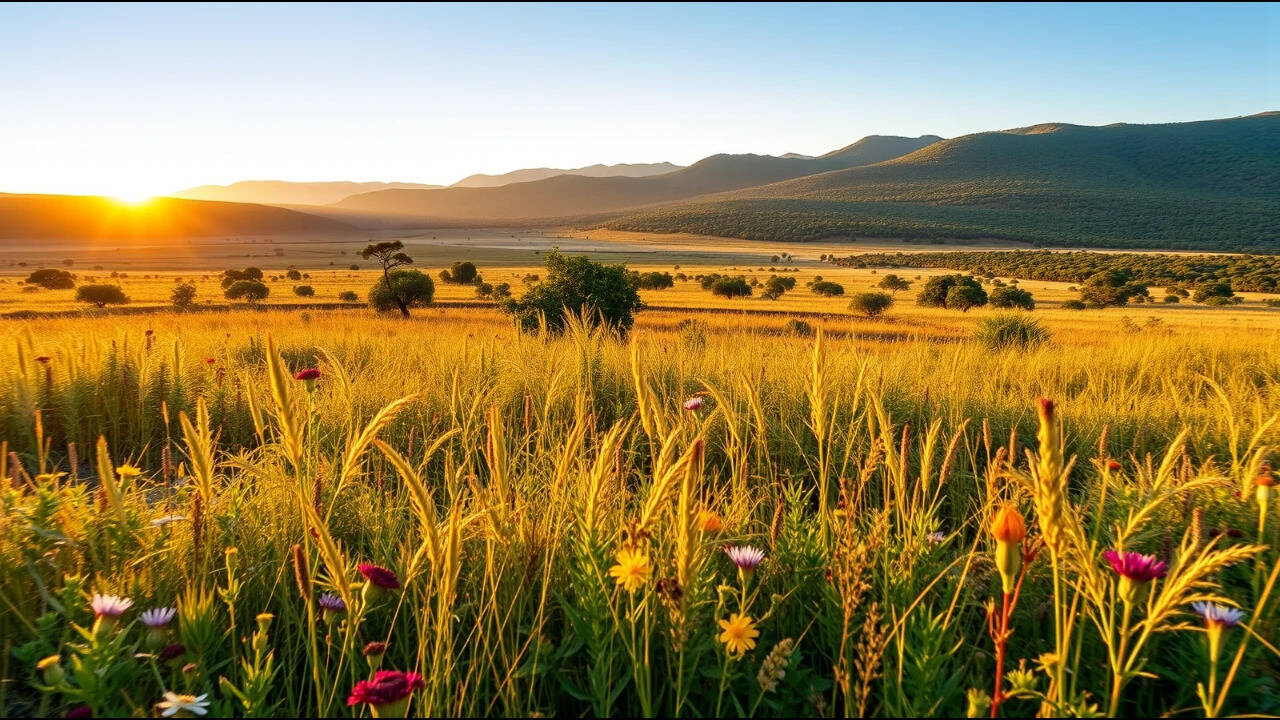
Take the Grassland and Savanna biomes targeted by these new initiatives. For centuries, these systems co-evolved with massive herds of migratory ungulates and frequent, high-intensity fires. Today, you cannot simply drop a fence around a few thousand hectares, clear out some alien invasive wattle, plant a few native saplings, and call it a win.
Without addressing the underlying structural constraints—such as paddock fragmentation, veterinary fencing restricting animal movement, and fire suppression policies mandated by nervous local authorities—restoration projects become expensive, artificial life support systems. The moment the project funding cycle expires and the external consultants pack up their laptops, the system reverts to its degraded state. I have seen corporations and conservation agencies blow millions on precisely this cycle of institutional amnesia.
The Danger of Financial Fairy Tales
Proponents of these new programs love to lean on buzzwords like bankable business models, payments for ecosystem services, and carbon-focused finance. The theory is seductive: turn Mother Nature into an asset class, monetize her carbon sequestration and water retention capabilities, and let the private sector foot the bill.
It sounds clean. In practice, it turns conservation into a speculative financial product vulnerable to market whims, greenwashing, and perverse incentives.
When you tie ecological health to carbon credit yields or water fund returns, land managers stop optimizing for ecological resilience and start optimizing for whatever metric maximizes the payout. Complex, messy, biodiverse scrublands get managed for single-variable outcomes. Real restoration is unglamorous, expensive, and structurally unprofitable on a quarterly balance sheet.
What Actually Moves the Needle
If we want to talk about saving South Africa's landscapes, we have to abandon feel-good hectare targets and confront uncomfortable truths.
First, stop treating rural communities as passive beneficiaries or obstacles to be managed. Real land stewardship happens at the local fence line, driven by economic survival, not international philanthropy. If livestock farming is the primary livelihood in a degraded rangeland, telling farmers to destock without offering viable, economically competitive alternatives is a fool's errand. Sustainable rangeland management requires working with livestock, using high-impact, short-duration grazing models that mimic ancient migratory herds, rather than locking land away behind administrative red tape.
Second, prioritize aggressive, unglamorous infrastructural repair over sexy biodiversity branding. Clearing invasive alien plants like black wattle and eucalyptus in Strategic Water Source Areas (SWSAs) matters infinitely more than drawing lines on a map for a new biosphere reserve. Invasive species act like biological sponges, draining billions of liters of water out of critical catchments every single year. Deal with the water thieves first; worry about the decorative wildlife corridors later.
Third, align policy enforcement with municipal reality. South Africa possesses world-class environmental legislation on paper. In practice, municipal sewage spills, collapsing soil conservation works, and illegal mining operations bypass ecological frameworks entirely because local enforcement agencies are chronically underfunded and overwhelmed.
The Hard Reset
Setting a target to touch 100,000 hectares by 2030 gives politicians a clean talking point and donors a receipt for their ESG portfolios. It offers an illusion of progress while the broader landscape quietly unravels around it.
True landscape recovery does not look like a pristine, neatly fenced conservation area funded by foreign grants. It looks like brutal, localized compromise, harsh economic pragmatism, and a willingness to let go of ecological fantasies.
Stop celebrating the acreage on the paper. Start looking at who controls the water underneath it.