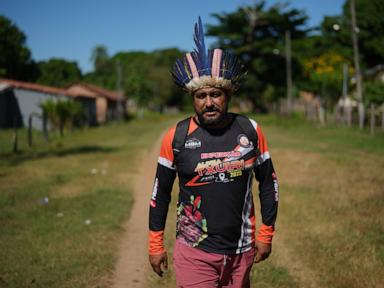
The scent of wet ash sticks to the back of your throat long before you see the clearing. It is a thick, heavy smell, born from ancient canopy wood that took three centuries to grow and only three days to burn. When the wind shifts across the margins of the Xingu basin in the Brazilian Amazon, this smoke carries more than carbon. It carries a profound friction.
To understand the crisis currently fracturing the world’s largest rainforest, you have to look past the macroscopic satellite maps and look instead at a single fence line. On one side stands a wall of dense, chaotic green—an intricate web of life maintained for generations by Indigenous communities like the Kayapó. On the other side is an aggressive, sun-bleached expanse of pasture. Thousands of white Nelore cattle graze there, their blocky silhouettes stark against the charred stumps of what was, until very recently, a living ecosystem. You might also find this connected coverage insightful: The Illusion of Economic Leverage Why Cutting Off Sanctions Cash Never Actually Starves a Regime.
This is not a simple story of good versus evil. It is a collision of two entirely incompatible visions of what land is for. For the global supply chain, the Amazon is a massive, untapped economic frontier. For the people who have lived here since before Brazil had a name, it is a home, a pharmacy, a church, and a life-support system.
The tension is rising. The stakes are absolute. As extensively documented in recent coverage by NPR, the effects are notable.
The Economics of a Clearing
Consider how a patch of forest transforms into a steak on a dinner plate thousands of miles away. It starts with silence, then the roar of chainsaws, and finally, the match.
Land speculation drives the frontier forward. In the state of Pará, clearing a tract of pristine forest and throwing down cheap grass seed instantly multiplies the land's market value. Cattle are the ultimate tool for this transformation. They are mobile, low-maintenance, and highly profitable. You do not need expensive infrastructure or paved roads to harvest beef; the cargo walks itself out of the woods on four legs.
Brazil is the world's largest exporter of beef. The industry accounts for billions of dollars in annual revenue, fueling local economies in frontier towns that would otherwise have little industry. To the ranchers who clear these lands, they are pioneers doing the hard work of building a nation's economy. They see an empty wilderness that needs to be tamed, put to work, and monetized.
But the wilderness is not empty.
Imagine a woman named Maria, a hypothetical composite of the land defenders currently standing watch along these shifting borders. Maria wakes up at dawn to the sound of distant heavy machinery. Every year, those engines sound a little closer to her village. She knows that if the trees fall, the river that runs past her home will begin to shallow out and warm up. The fish will die. The game will retreat deeper into dwindling reserves. For Maria, the expansion of the cattle frontier is not an economic indicator of growth. It is an existential countdown.
The Blind Spots in the Supply Chain
The real crisis lies in the complexity of how beef moves from a deforested patch of land to the global market.
Major meatpacking companies have pledged for years to eliminate direct deforestation from their supply chains. They use satellite monitoring to track the ranches they buy from directly. If a rancher clears protected Indigenous land, the meatpacking plant is supposed to blacklist them.
The system sounds airtight on paper. In reality, it is incredibly easy to bypass through a practice known as cattle laundering.
A rancher grazes a herd of calves on illegally cleared land deep inside an Indigenous territory, where satellite tracking flags the environmental infraction. But before those cattle are sold to the slaughterhouse, they are trucked to a legally compliant, fully certified "clean" ranch closer to the highway. The clean ranch sells the cattle to the meatpacker. The paperwork looks flawless. The destination supermarket can honestly claim its suppliers are verified. Yet, the systemic destruction remains embedded in the meat.
This tracking blind spot is where the true damage occurs. Indirect suppliers—the breeding and rearing ranches hidden away in the jungle—remain largely unmonitored.
The Sound of an Empty Forest
When you walk through a healthy patch of the Amazon, the noise is overwhelming. It is a constant, multilayered wall of sound: cicadas screaming, birds calling, monkeys moving through the high canopy, the rustle of undergrowth. It feels alive because every square inch is packed with biological data.
Step across the fence into the pasture, and the silence hits you like a physical blow.
The humidity drops instantly. The soil under your boots changes from a sponge-like, nutrient-rich loam to hard, cracked clay baked by the equatorial sun. The only sound is the occasional lowing of a cow and the buzz of flies. The complexity of thousands of interacting species has been replaced by a monoculture designed to produce one thing: protein.
The physical threat to Indigenous peoples goes beyond the loss of biodiversity. When cattle pastures press against the borders of recognized territories, conflict becomes inevitable. Fences are cut. Cattle wander into Indigenous hunting grounds. In response, armed land invaders—known locally as grileiros—frequently intimidate local populations to expand their holdings.
The law is clear on paper: the Brazilian Constitution guarantees Indigenous peoples exclusive rights to their traditional lands. But enforcement requires resources, political will, and physical presence in regions where the nearest police station might be a two-day boat ride away. In the absence of state authority, the rule of the frontier takes over. Might makes right, and the cattle keep moving forward.
The Cost We Do Not Pay
We live in a world that thrives on cheap commodities, but the price tag on a pound of beef rarely reflects the true cost of production. It leaves out the loss of the forest's ability to pump moisture into the atmosphere—the "flying rivers" that regulate rainfall across South America and affect global weather patterns. It leaves out the cultural erasure of communities that possess deep, irreplaceable knowledge of tropical ecology.
This is the psychological weight carried by those on the front lines. They are fighting an economic engine fueled by global demand, trying to stop bulldozers with bows, arrows, and legal petitions. It is an unequal struggle, and the margins of error are disappearing.
The next time you look at a landscape of rolling hills or a map of the Amazon, look for the edges. Look for the places where the deep green fractures into geometric squares of pale yellow. That is where the quiet war is being fought. It is a battle over the future of the climate, the survival of ancient cultures, and the choices made by consumers thousands of miles away who will never smell the wet ash or hear the silence of a cleared forest.
The smoke eventually clears, but the ground underneath remains altered forever.