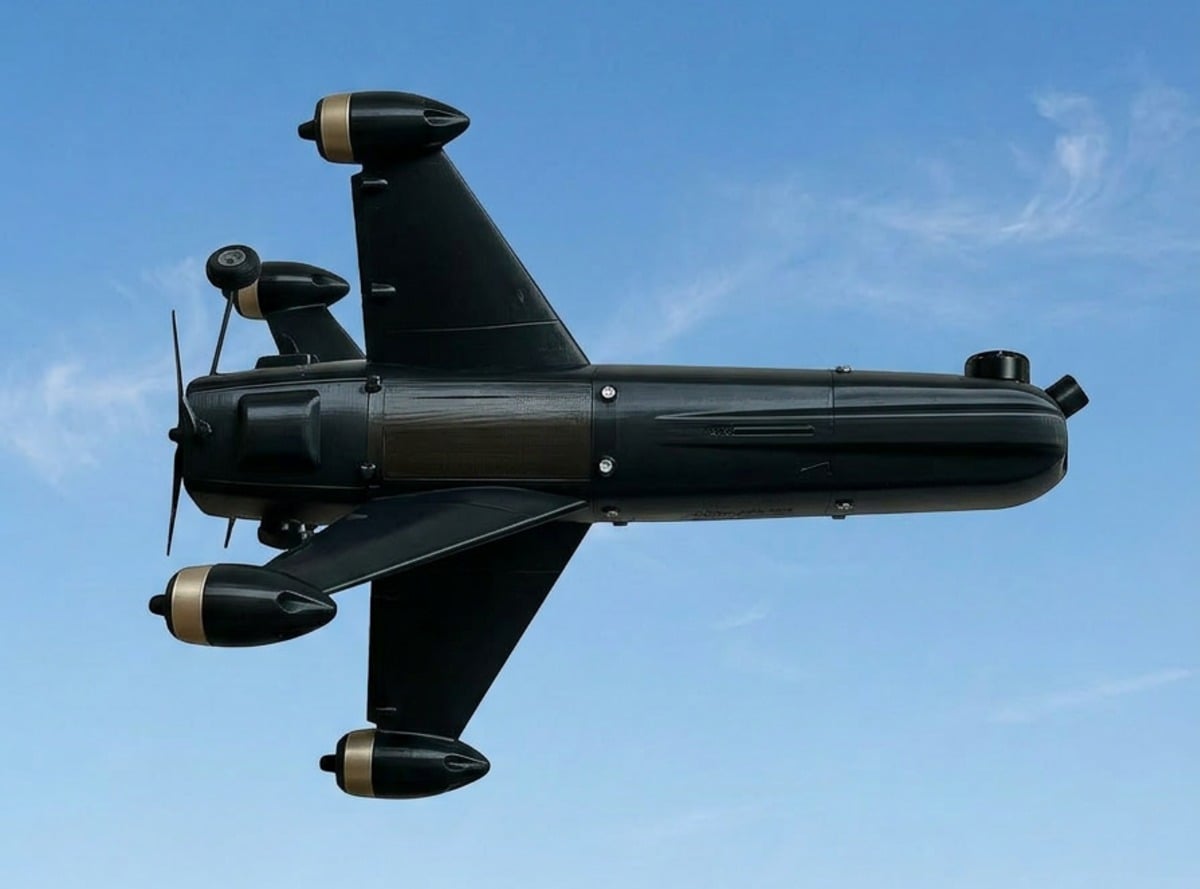
The U.S. Air Force is dramatically expanding its inventory of small combat drones, shifting away from total reliance on multi-million-dollar crewed fighters toward mass-produced, low-cost autonomous systems. By deploying swarms of cheap, expendable unmanned aerial vehicles alongside tradition platforms, defense planners aim to overwhelm enemy air defenses and absorb attrition without risking pilot lives. This strategy addresses the stark reality of modern high-intensity conflict: expensive stealth jets are too scarce and costly to lose in high-volume combat. Modern warfare requires scale, and small autonomous aircraft provide the volume necessary to dominate modern battlefields.
The Mathematical Trap of Modern Airpower
For decades, military aviation prioritized exquisite technology over raw numbers. A single F-35 Lightning II costs roughly $80 million, while an B-21 Raider bomber reaches into the hundreds of millions. These platforms represent unmatched engineering achievements, yet they present a fundamental vulnerability. They are simply too expensive to replace at the pace of modern attritional warfare.
When anti-access/area-denial (A2/AD) networks feature advanced surface-to-air missile batteries and sophisticated radar arrays, sending a limited fleet of exquisite jets into contested airspace poses an existential risk to force capacity. Lose a dozen multi-role fighters in a week, and an air force loses capabilities that take years and billions of dollars to restore.
Small combat drones solve this mathematical dilemma. By producing unmanned systems at a fraction of the cost—ranging from $100,000 to a few million dollars per unit—the military trades sheer sophistication for overwhelming volume. An adversary cannot fire a $3 million interceptor missile at every $150,000 target without rapidly bankrupting their defense stockpiles and exposing their operational radar positions.
Autonomous Collaborative Platforms in Action
The operational push centers around collaborative combat aircraft that fly alongside manned fighters. Instead of operating as isolated remote-controlled reconnaissance tools, these newer systems act as force multipliers directly linked to a human flight lead.
Consider a operational force pushing into contested airspace. A single crewed fighter acts as the central command node, trailing miles behind an advance guard of six small autonomous drones.
- Sensor Extension: The smaller drones fly forward into dangerous corridors, using onboard sensors to map enemy radar emitters and relay target data back to the central fighter.
- Electronic Warfare: Specialized payloads on cheap airframes jam enemy communications and blind tracking systems, masking the approach of friendly units.
- Decoy Operations: Small platforms simulate the radar signatures of larger, crewed aircraft, forcing integrated air defense systems to illuminate their positions and expend expensive ordnance prematurely.
- Direct Kinetic Engagement: Armed variants carry lightweight precision munitions, striking targets highlighted by the broader network.
If an enemy missile destroys two of these vanguard drones, the primary mission continues unabated. The pilot remains safe miles away, and the operational footprint loses negligible capital value.
Industrial Realities and Supply Chain Hurdles
Transitioning from low-rate production of exquisite jets to mass manufacturing of attritable drones presents severe industrial challenges. The traditional defense industrial base is structured around decade-long development cycles and complex, low-volume manufacturing lines.
Scaling small drone manufacturing requires borrowing techniques from commercial automotive and consumer electronics industries. Instead of hand-assembled titanium airframes, these platforms rely on commercial off-the-shelf electronics, modular composite structures, and open-architecture software interfaces.
The Component Bottleneck
Manufacturing thousands of autonomous systems creates intense competition for specialized components. A sudden surge in production exposes clear supply vulnerabilities across key sectors.
| Component Group | Primary Risk Factor | Operational Impact |
|---|---|---|
| Flight Control Processors | Concentrated commercial supply chains | Delays in guidance computer assembly |
| Small Gas Turbine Engines | Limited specialized manufacturers | Caps overall vehicle range and speed |
| Secure Software Modules | Rigorous cyber testing backlogs | Delays field deployment and updates |
| Composite Materials | Raw material market volatility | Fluctuations in unit assembly costs |
Securing these supply networks requires fundamental shifts in procurement policy. The Department of Defense must establish multi-year commit contracts that incentivize commercial tech firms to enter the defense ecosystem, breaking the monopoly long held by traditional prime contractors.
The Human Element in Autonomous Warfare
Integrating hundreds of autonomous systems into active combat units redefines the role of military pilots. Human operators will no longer focus solely on manual flight mechanics or individual target tracking. They become tactical commanders managing autonomous fleets in real time.
This transition creates immediate cognitive challenges. A flight lead attempting to manage six uncrewed wingmen while piloting a supersonic aircraft risks severe information overload. Artificial intelligence must handle navigation, basic pathfinding, and target identification autonomously, presenting the human pilot with simple, actionable decisions.
Rules of engagement remain a strict boundary. Policy requires human authorization before firing lethal weapons systems. Designing human-machine interfaces that provide clear situational awareness without overwhelming the operator remains one of the most complex engineering tasks in modern defense aviation.
Redefining Air Superiority
The pivot toward massed, low-cost autonomous systems is not a temporary trend. It represents a permanent structural realignment driven by the realities of modern anti-aircraft weapons and manufacturing economics. Relying exclusively on small fleets of hyper-expensive aircraft creates single points of failure that peer competitors can exploit. By pairing advanced crewed command platforms with scalable swarms of small combat drones, military planners build a resilient, adaptable force capable of absorbing losses while maintaining operational tempo. Mass, combined with autonomy, has returned as a decisive factor in air warfare.