The sound of a baseball hitting bone does not echo like the crack of an ash bat. It is a dull, sickening thud, swallowed almost instantly by the ambient noise of a Saturday afternoon—the hum of lawnmowers beyond the chain-link fence, the rustle of sunflower seed bags in the bleachers, the chatter of parents holding lukewarm coffee.
For a split second after that thud, nobody moves. Time stretches thin. Then a twelve-year-old boy drops to the red clay, and the ordinary afternoon vanishes forever. Meanwhile, you can explore related stories here: Samuel Ersson and Ottawa's Three-Goal Collapse Against the Flyers.
When a news headline states, in thirteen cold words, that a twelve-year-old boy struck by a baseball has died after nearly six months in the hospital, the public reads it as a freak tragedy. We wince. We offer a silent prayer for a family we do not know, perhaps hug our own children a little tighter at bedtime, and scroll to the next story. The brevity of the report creates a dangerous illusion: that the event began with a single errant pitch or line drive, and ended with a quiet passing half a year later.
It hides the one hundred and eighty days in between. To see the full picture, check out the recent article by Sky Sports.
To understand what actually happens when a five-ounce sphere of cork, rubber, and horsehide traveling at seventy miles per hour meets a child's skull or chest, you have to step off the diamond and walk through the sliding glass doors of a pediatric intensive care unit. You have to learn the language of monitors, intracranial pressure, and the agonizing, millimeter-by-millimeter battle between modern medicine and blunt-force trauma.
The Architecture of a Fraction of a Second
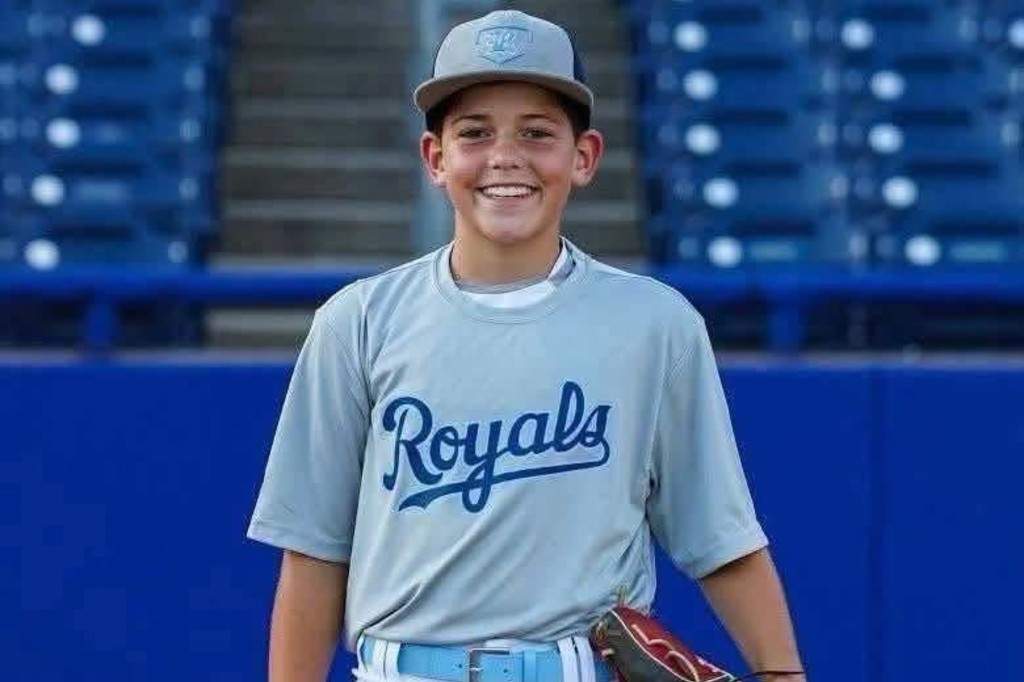
Imagine, for a moment, a hypothetical Saturday morning at any municipal Little League complex in North America. Let us call the boy Leo. Leo is twelve—that awkward, wonderful bridge between childhood and adolescence where feet grow faster than coordination, and confidence often outpaces reaction time. He wears a helmet that is slightly too big, adjusts batting gloves he saw a major leaguer wear on television, and steps into the box.
Sixty feet and six inches away—or forty-six feet on a standard youth diamond—stands another twelve-year-old.
In professional baseball, a pitcher stands sixty feet, six inches from home plate. A batter has roughly four hundred milliseconds to recognize the spin of a ninety-five-mile-per-hour fastball, decide whether to swing, and initiate the mechanics of the torso and hands. Blink your eyes. That took about three hundred milliseconds.
Now shrink the field. On a youth diamond with a forty-six-foot pitching distance, a twelve-year-old throwing seventy miles per hour gives the batter—or the pitcher himself, when a composite bat sends a line drive screaming back up the middle—roughly three hundred and fifty milliseconds to react.
The human nervous system was not engineered for that math.
When a ball strikes the temporal bone of a twelve-year-old's skull, the physics are brutal and unforgiving. A child's cranial bones are thinner than an adult's, still fusing, still developing the structural density that offers marginal protection later in life. The impact transfers kinetic energy directly into the brain tissue. Even if the skull does not fracture—and often, it does—the brain slams against the interior wall of the cranium, rebounds, and slams against the opposite side.
Doctors call this a coup-contrecoup injury. Parents call it the moment the lights went out.
Or perhaps the ball did not hit Leo's head at all. Perhaps it struck him squarely in the center of the chest, between two heartbeats, during a twenty-millisecond window in the cardiac cycle when the heart's electrical system is resetting. That phenomenon, known in cardiology as commotio cordis, stops a healthy heart instantly without leaving a single bruise on the skin. Deprived of oxygen for even four minutes before an automated external defibrillator arrives, the brain begins to die while the paramedics are still navigating traffic two miles away.
Either way, the result is the same. The ambulance doors close. The siren wails. And the clock starts ticking on a six-month vigil.
Life Inside the Beeping Room
Anyone who has ever kept watch beside a hospital bed knows that time behaves differently under fluorescent lights. Outside, seasons change. Leaves turn gold and fall; winter frost coats windshields; spring buds push through thawed earth. Inside Room 412, there is only the rhythm of the ventilator and the steady, hypnotic pulse of the oxygen saturation monitor.
Ninety-eight. Ninety-nine. Ninety-eight.
During the first seventy-two hours after a severe pediatric head trauma, the primary enemy is not the initial blow. It is swelling. Think of the brain as a delicate sponge sealed inside a rigid, unyielding glass jar. When bruised, the sponge swells with fluid. Because the glass jar cannot expand, the pressure inside rises, squeezing blood vessels shut and starving healthy brain tissue of oxygen.
Neurosurgeons fight this war with hypertonic saline, induced comas, and sometimes by removing a section of the skull entirely—a decompressive craniectomy—to give the brain room to breathe. For a parent sitting in a vinyl recliner three feet away, medical terminology becomes a second language learned under duress. You stop asking when your son will play baseball again. You stop asking when he will go back to school. You start praying for his intracranial pressure to stay below twenty millimeters of mercury.
Days turn into weeks. Weeks bleed into months.
This is the part the news ticker never captures: the slow, grinding attrition of hope and despair. At week four, a twitch of the left thumb sends waves of euphoria through the family group chat. Nurses caution against reading too much into spinal reflexes, yet how do you tell a mother not to cling to a moving finger? At week nine, a stubborn bout of ventilator-associated pneumonia drags the child back to the brink, forcing doctors to re-sedate him just when his eyes had begun to flutter open.
By month three, the acute crisis has hardened into chronic purgatory. Friends from the team have moved on to fall soccer or basketball. Their parents still send gift cards and casserole dishes, their kindness genuine, yet separated from the hospital room by an invisible pane of glass. Life outside continues its forward momentum; life inside has been reduced to range-of-motion exercises performed by physical therapists on limbs that are slowly losing muscle mass.
I have sat in those sterile corridors, listening to the squeak of rubber soles on linoleum at three in the morning, watching fathers stare blankly at vending machines because they cannot bear to return to a room where their child lies motionless beneath a tangle of clear tubing. You learn quickly that grief does not wait for a funeral. When a child lingers in critical care for nearly half a year, grief arrives in installments, day after day, eroding your certainty about what constitutes a miracle and what constitutes mercy.
The Myth of the Safe Pastime
We love baseball because it feels pastoral. Unlike football, with its violent collisions and chronic traumatic encephalopathy headlines, or hockey, with its boards and blades, baseball wears the pastoral mask of summer. It is a game of waiting, of green grass, of fathers and sons playing catch in the backyard at dusk.
Because it looks gentle, we treat its risks casually.
Consider the statistics that rarely make the sports pages. According to data compiled by the U.S. Consumer Product Safety Commission and pediatric emergency medicine studies, baseball and softball consistently rank among the leading causes of sports-related eye injuries and facial fractures in children aged five to fourteen. Between 2010 and 2019, more than one hundred thousand children visited emergency rooms each year for baseball-related injuries. While sprains and fractures make up the majority of those visits, traumatic brain injuries account for the most devastating outcomes.
Yet walk onto any youth baseball field across the country today and look at the gap between what technology can prevent and what tradition still resists.
Bat technology, for instance, underwent a quiet revolution over the last two decades. Composite and multi-wall alloy bats engineered with trampoline-like barrel walls dramatically increased exit velocities—the speed at which a ball leaves the bat. A twelve-year-old swinging a high-performance composite bat can generate exit speeds that rival high school varsity players of thirty years ago. Governing bodies eventually stepped in with USA Baseball and BBCOR standards to deaden the barrels and bring exit speeds back down to earth, a tacit admission that the equipment had outpaced human reflexes.
Still, the ball remains a hard, dense projectile. And the distance between the pitcher's mound and home plate in youth leagues remains forty-six to fifty feet.
Ask yourself a simple question: why do we put protective netting down the foul lines in every Major League stadium to protect grown adults sitting two hundred feet from home plate, while a twelve-year-old pitcher stands forty-six feet away from an aluminum bat with zero facial protection?
The answer is culture. Baseball is fiercely protective of its aesthetics. Pitchers say face guards obstruct their vision. Coaches worry that softer, reduced-injury-factor baseballs don't travel as far or teach kids how to play the "real" game. Parents hesitate to be the lone voice demanding chest protectors or heart-guard shirts when nobody else on the roster wears them. Nobody wants to wrap childhood in bubble wrap.
That hesitation is understandable. Childhood requires risk; learning to judge a fly ball in the sun or stand your ground against an inside fastball builds courage and resilience. We cannot eliminate every hazard from a ballfield without destroying the game itself.
But there is a profound difference between acceptable athletic risk and preventable catastrophic failure.
What Actually Saves Lives When Seconds Matter
If we cannot eliminate the line drive or the wild pitch, we have to look honestly at the two places where the outcome can still be changed: prevention before the impact, and response in the sixty seconds immediately after.
First, look at the equipment sitting in the dugout.
For decades, batting helmets protected the top and sides of the skull while leaving the jaw, cheekbone, and temple exposed. After a string of high-profile facial fractures in the major leagues—most notably Giancarlo Stanton in 2014—C-flap jaw guards went from rare oddities to standard issue across professional baseball almost overnight. Youth leagues have been slower to mandate them universally, leaving it largely to parental discretion. Adding a twenty-dollar polycarbonate extension to a helmet does not guarantee immunity from a concussion, nor does it protect the back of the head, yet it shields the fragile zygomatic arch and temporal region where a direct impact causes the deadliest bleeding.
Similarly, after commotio cordis claimed the lives of young athletes across baseball, lacrosse, and hockey, engineers developed chest protectors certified under NOCSAE standard ND200. Unlike older foam pads that merely absorbed superficial bruising, ND200-certified gear disperses blunt-force energy away from the sternum during that vulnerable cardiac window. In 2021, high school rules mandated these protectors for catchers. For pitchers and infielders—the players closest to the bat—wearing a lightweight compression shirt with an integrated ND200 pad remains entirely optional.
Second, look at the fence line.
When a child collapses on a field—whether from cardiac arrest or severe head trauma—the single most decisive variable is the presence of an automated external defibrillator and someone who knows how to use it. In cardiac arrest, survival drops by roughly ten percent for every minute that passes without defibrillation. An ambulance siren five minutes away is often too late. An AED mounted on the concession stand wall, unlocked and maintained, turns a coach or a bystander into a bridge of life until paramedics arrive.
Yet countless municipal fields still lock their medical kits inside equipment sheds after the last game, or rely on leagues that never required coaches to complete basic hands-only CPR and concussion recognition training. We spend thousands of dollars on matching travel uniforms, custom bat bags, and weekend tournament fees, while treating a fifteen-hundred-dollar defibrillator as an optional luxury.
The Weight of the Empty Glove
When a twelve-year-old boy dies after six months in a hospital bed, the tragedy does not belong solely to his family, though they will carry its heaviest, most unbearable weight for the rest of their lives. It belongs to the pitcher who threw the ball, a child himself who will replay that pitch in his head every time he steps onto a mound—or who may never pick up a baseball again. It belongs to the coaches who ran onto the grass, their hands shaking as they dialed 911. It belongs to the teammates who watched their friend leave in an ambulance and spent six months wondering why he never came back to practice.
Six months is long enough for the news cycle to forget a name. By the time the obituary appears, the initial shock has faded, replaced by a quiet, exhausted sorrow.
Somewhere, in a bedroom that has remained untouched since a bright Saturday afternoon half a year ago, a leather glove sits on a dresser, its pocket still oiled and broken in, waiting for a hand that will never slip inside it again.