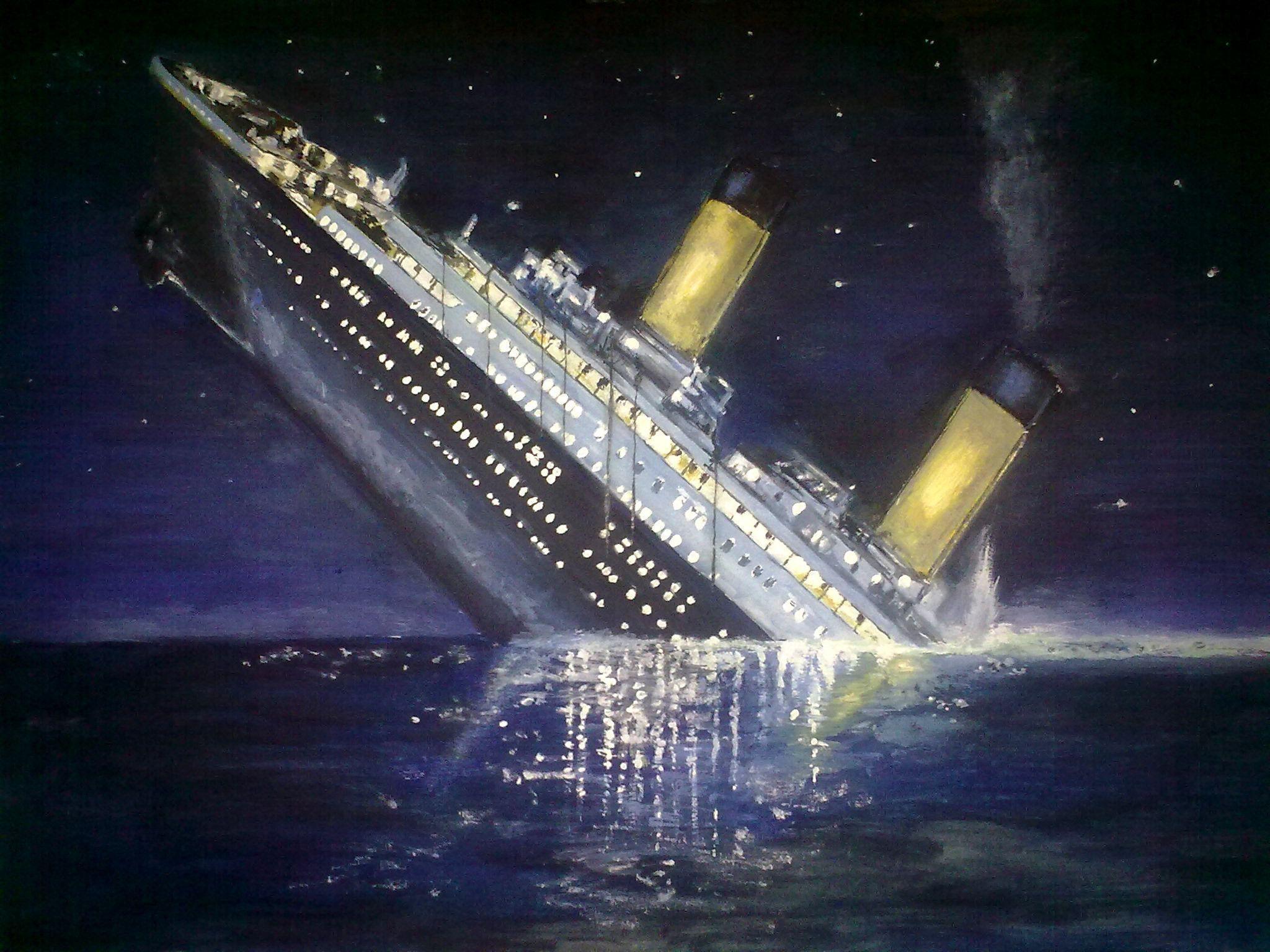
Every coastal newspaper and maritime nostalgia blog is currently weeping over the November 11, 2026 sinking of the SS United States. They call it a tragic end for America’s flagship. They frame Okaloosa County’s $13.5 million reefing operation off Destin-Fort Walton Beach as a sad burial for a Cold War titan.
They are dead wrong.
The real tragedy was not the controlled scuttling in 180 feet of Gulf water. The real tragedy was the thirty-year slow-motion extortion racket along the Delaware River in Philadelphia, where preservationists held a gutted, toxic steel hulk hostage while begging for hundreds of millions of dollars that nobody with a functioning calculator was ever going to spend.
When the water rushed into her hull and sent all 990 feet of William Francis Gibbs’s masterpiece upright onto the seabed, it did not destroy a historic landmark. It rescued an American icon from a scrapyard in Alang or Brownsville and turned a bankrupt liability into a cash-generating underwater asset.
The Preservationist Delusion vs. Basic Maritime Math
If you listen to the loudest critics of the sinking, you would think the SS United States was a floating museum brimming with mid-century luxury, ready to welcome tourists onto her teak decks.
She was not. She was a hollow shell.
In 1994, a Turkish shipyard stripped the vessel down to bare metal during an aborted asbestos-removal and refurbishment project. Every stick of mid-century furniture, every art deco mural, every ounce of interior glamour was auctioned off or torn out three decades ago. What sat rotting at Pier 82 in South Philadelphia for nearly thirty years was not a ship. It was 45,000 tons of rusting steel, miles of stripped bulkheads, and lingering hazardous waste.
I have watched municipal development boards and non-profit trusts burn through tens of millions of dollars chasing romantic waterfront restorations. The playbook never changes. A group forms to save a historic vessel. They commission glossy architectural renderings showing luxury hotels, tech incubators, and fine dining. They quote a restoration budget that ignores the brutal reality of marine corrosion, Coast Guard structural compliance, and modern fire suppression codes.
Let us look at the actual numbers behind the "save the ship" fantasy:
- Purchase and initial acquisition: $1 million paid by Okaloosa County in 2024 just to clear the title and settle the pier eviction crisis.
- Dry-dock structural stabilization: Tens of millions of dollars before a single drywall panel goes up, because a hull sitting in brackish river water for thirty years requires massive plate replacements.
- Full stationary commercial conversion: Anywhere from $300 million to $500 million, according to multiple developer feasibility studies over the last twenty years.
- Annual maintenance and berth rent: Millions per year just to keep the bilge pumps running, pay insurance, and satisfy waterfront landlords like Penn Warehousing.
When Norwegian Cruise Line owned the ship between 2003 and 2011, they had the capital, the dry-dock connections, and the marine engineering teams to revive her. They ran the math and walked away. When RXR Realty tried to turn her into a stationary mixed-use complex in New York between 2018 and 2024, they had access to billions in institutional real estate capital. They ran the math and walked away.
Yet whenever a private billionaire declines to light half a billion dollars on fire, the comment sections erupt with outrage. People ask why the federal government did not step in. They ask why a museum could not simply open on the decks.
Because nobody wants to pay $45 for a ticket to walk through an empty metal warehouse with no air conditioning, while taxpayers eat a $20 million annual operating deficit. Look at the Queen Mary in Long Beach, California. That ship actually kept her original interiors intact, sits in a prime tourist market, and still nearly went bankrupt multiple times due to hundreds of millions of dollars in deferred structural maintenance. Trying to pull off a stationary conversion on a gutted ship in a secondary industrial berth was financial suicide.
Why "World’s Largest Artificial Reef" Is Not Just a PR Spin
Critics love to dismiss artificial reefing as a polite euphemism for ocean dumping. They claim counties just want a cheap way to dispose of trash while slapping an eco-friendly label on the press release.
That argument falls apart the second you look at the environmental remediation protocols and marine economics governing modern reef deployments.
Before the SS United States left Mobile, Alabama, after a year-long preparation phase, crews had to satisfy strict Environmental Protection Agency and U.S. Army Corps of Engineers standards. You cannot just tow a dirty boat offshore and open the sea cocks. Every single one of her 128 fuel and lubricant tanks had to be pumped dry, scrubbed, and certified gas-free by a marine chemist. Crews pulled more than 200 material samples to hunt down polychlorinated biphenyls, stripping away miles of green exterior deck covering that contained legacy toxins. They removed floatable plastics, wiring insulation, and loose debris, and cut precise openings throughout the superstructure so the vessel would sink upright and allow sunlight and water currents to circulate freely.
The result is a 990-foot steel mountain sitting 22 nautical miles southwest of Destin-Fort Walton Beach. Her keel rests at 180 feet, while her upper decks rise to roughly 55 feet below the surface.
Let us dismantle the common misconceptions surrounding what happens next on the Gulf floor.
Does sinking a massive ship actually help marine life, or does it just attract fish away from natural reefs?
This is the classic "attraction versus production" debate in marine biology, and the nuance matters. In the short term, yes—a brand-new wreck acts like a giant magnet. Red snapper, grouper, amberjack, and baitfish congregate around vertical structure because the northern Gulf of Mexico seabed is mostly flat sand and mud.
However, over a five-to-ten-year horizon, a structure of this scale shifts from simple attraction to genuine biological production. The SS United States adds millions of square feet of hard substrate into the sunlit photic zone. Encrusting organisms—barnacles, sponges, hydroids, bryozoans, and soft corals—colonize the bare steel within months. That invertebrate carpet creates an entirely new food web that would never exist on barren sand. It feeds juvenile reef fish, which in turn feed pelagic predators.
Is wreck diving on a 180-foot liner actually accessible to normal tourists?
Here is where the local tourism board's marketing gets ahead of reality, and we need to be honest about the downside.
Okaloosa County officials love to point out that the upper decks sit at 55 to 60 feet, putting the wreck within the 60-foot depth limit of an entry-level Open Water scuba certification. Technically, that is true. Practically, putting a newly certified vacation diver 22 miles offshore in open Gulf currents over a 180-foot drop-off is a recipe for panic and rapid air consumption.
The real winners here are Advanced Open Water divers, Nitrox-certified recreational divers, and technical trimix divers exploring the lower promenade decks and engine spaces between 100 and 180 feet. Unlike the USS Oriskany—the 911-foot aircraft carrier sunk off nearby Pensacola in 2006 whose flight deck sits at 145 feet, placing most of the ship out of standard recreational range—the SS United States offers a massive upper superstructure that experienced recreational divers can actually explore without decompression stops.
The Economics of Sinking vs. Floating
Let us compare the cold business math of Okaloosa County’s $13.5 million reef investment against the fantasy of keeping the ship afloat.
| Metric | Stationary Waterfront Restoration | Artificial Reef & Land Museum |
|---|---|---|
| Upfront Capital Required | $300,000,000 – $500,000,000 | $13,470,000 (funded via tourist bed taxes) |
| Time to Revenue | 5 to 8 years of shipyard & pier delays | Immediate (charter bookings start Day 1) |
| Ongoing Structural Maintenance | $5M – $12M annually for hull paint, pumps, & berth fees | $0 for the hull; minimal buoy & monitoring costs |
| Primary Revenue Engine | Ticket sales, hotel rooms, & event rentals | High-margin dive charters, fishing trips, & hotel stays |
| Catastrophic Storm Risk | Severe (hurricanes tear moored liners off piers) | Minimal once settled at 180 feet below wave surge |
Look closely at that third row: ongoing structural maintenance.
A floating steel ship is in a constant, losing war against saltwater electrolysis and rust. The moment you stop spending millions on dry-dockings and cathodic protection, the hull plates thin out, seams fail, and the ship sinks at the pier—which is infinitely more expensive and environmentally disastrous to clean up than a planned offshore deployment.
By sinking the SS United States on purpose, Okaloosa County eliminated 100% of future hull maintenance costs. Saltwater corrosion is no longer an expensive enemy; it is now a slow, natural process that turns riveted steel into complex reef crevices over the next century.
Even better, the county did not use local property taxes. They used tourist development bed taxes—money collected exclusively from visitors staying in local hotels and short-term rentals. Based on economic impact data from the USS Oriskany deployment down the coast, high-end wreck divers stay longer, spend more on charter boats, fill local restaurants during shoulder seasons, and generate millions in recurring annual economic activity.
And what about the history? Critics act as if the ship’s story evaporated into the Gulf of Mexico. It did not. The county allocated $1 million and reserved the ship’s iconic red, white, and blue winged funnels—along with her mast and historical artifacts—for a dedicated land-based museum in Destin-Fort Walton Beach. Visitors who never put on a wetsuit can still stand beneath the massive aluminum stacks that broke the transatlantic speed record in 1952 at 38.32 knots.
Stop Worshiping Rust and Start Measuring Value
We have a bad habit in this country of confusing sentimentality with preservation.
True preservation means keeping an object’s legacy alive and accessible to future generations. Letting the SS United States rot behind a chain-link fence in South Philadelphia while lawyers argued over unpaid pier rent was not preservation. It was neglect dressed up as patriotism.
If you are a maritime purist, a destination marketer, or a municipal planner staring down a similar historic albatross, take three hard lessons from what just happened off the Florida Panhandle:
- Separate the artifact from the hull. You do not need to maintain 990 feet of corroding marine steel to tell a human story. Save the signature engineering pieces—the funnels, the bridge telegraph, the builders' plates—for a climate-controlled museum where people can actually touch them.
- Never confuse nostalgia with a business model. If an attraction requires $400 million in charity just to break even on construction, it is not a viable enterprise. It is a monument to ego.
- Invest in experiences people actually buy. Scuba divers and offshore anglers will happily fly across the globe and spend thousands of dollars to explore the largest artificial reef on earth. Almost nobody will fly to an industrial riverfront to look at a fenced-off hull from a parking lot.
The SS United States was built during the height of the Cold War to be faster, tougher, and more innovative than anything else afloat. She crossed the Atlantic in three days, ten hours, and forty minutes—a record for passenger liners that still stands untouched today.
She did not belong in a scrapyard being cut into razor blades by blowtorches. And she certainly did not belong rotting in a muddy river while committees argued over PowerPoint slides. She belongs in the ocean, serving a real purpose, generating real value, and drawing explorers from around the world.
Pour one out for the nostalgia if you must, then go book a dive charter.