A nationwide ground stop transforms routine flight training from a controlled educational environment into an immediate test of decentralized crisis management. When centralized air traffic control (ATC) infrastructure halts departures across the National Airspace System (NAS), airborne student pilots lose their primary safety buffer—predictable airspace sequencing and direct instructor intervention—forcing reliance on foundational airmanship, visual flight rules (VFR), and contingency protocols.
The Structural Vulnerability of Centralized Airspace Controls
Modern aviation relies on tightly coupled systems where efficiency depends on centralized command. A ground stop, issued by the Federal Aviation Administration (FAA) Air Traffic Control System Command Center (ATCSCC), restricts aircraft that meet specific criteria from departing for affected airports. While this mechanism prevents sector saturation during severe weather, telecommunications outages, or systemic software failures (such as the January 2023 NOTAM system outage), it creates an immediate asymmetry between aircraft on the ground and those already airborne. Also making news recently: What Happens When US Flights Ground While a Student Pilot Is Airborne.
For commercial carriers, a ground stop is a logistical and financial optimization problem involving crew duty limits, gate availability, and fuel burn. For general aviation and flight training operations, the impact is operational and immediate. Student pilots operating on solo cross-country flights or local pattern work operate with minimal margin for error. When a ground stop triggers, three systemic pressures converge on the cockpit:
- Frequency Saturation: Controllers shift priority to holding patterns, diversions, and commercial vectoring, reducing bandwidth for low-priority VFR flight following.
- Airspace Reclassification and Restrictions: Adjacent sectors often experience cascading congestion, prompting sudden altitude changes, unexpected holding instructions, or abrupt termination of radar services.
- Cognitive Overload: A student pilot, whose cognitive capacity is heavily allocated to basic aircraft control and navigation, must suddenly process non-standard ATC directives without an instructor in the right seat.
Deconstructing the Solo Flight Safety Envelope
To understand why a ground stop forces a solo student into a high-stakes landing scenario, one must examine the regulatory and operational architecture of flight training under 14 CFR Part 61 and Part 141. Further information into this topic are explored by NPR.
Before a student pilot is endorsed for solo flight, a Certified Flight Instructor (CFI) must verify proficiency in specific maneuvers, including normal and crosswind landings, go-arounds, and emergency procedures. However, solo endorsements are bounded by strict environmental and operational parameters: maximum wind velocity, specific airport approvals, and daylight VFR minimums.
The flaw in standard flight training risk management lies in assuming static airspace conditions during the flight window. A ground stop invalidates that baseline assumption through a clear cause-and-effect chain:
- Cause: A systemic failure (e.g., radar outage, NOTAM database crash, or severe convective weather blocking primary arteries) triggers an immediate ATCSCC ground stop.
- Primary Effect: Inbound traffic to major hubs is frozen or diverted to secondary and tertiary airfields—the exact regional and municipal airports where flight schools operate.
- Secondary Effect: General aviation traffic patterns swell with unfamiliar, higher-performance corporate and regional aircraft executing instrument approaches into non-towered or Class D airports.
- Terminal Outcome: The student pilot, lacking an instrument rating and operating a light single-engine trainer (such as a Cessna 172 or Piper Archer), must integrate into a compressed, high-stress traffic environment or execute an unscheduled diversion to an unfamiliar airfield.
The Mechanics of Cockpit Decision-Making Under Systemic Stress
When an external airspace shutdown forces a student pilot to land immediately—either due to airspace clearing directives, deteriorating conditions, or fuel reserves—decision-making is governed by the OODA loop (Observe, Orient, Decide, Act) and aeronautical decision-making (ADM) frameworks.
Observation and Orientation
In a typical ground stop scenario, the student pilot first observes an anomaly through radio communications: controllers issuing blanket hold instructions, canceling VFR flight following, or broadcasting system-wide advisories. Orientation requires rapidly mapping this external event onto the aircraft's current state. Key variables include:
- Usable Fuel Remaining: Calculated against FAA VFR minimums (30 minutes reserve during the day, 45 minutes at night) plus the burn rate required to reach an alternate airfield.
- Airspace Geometry: Identifying whether the aircraft is inside Class B, C, or D airspace, where two-way radio communication and explicit clearances are mandatory, versus Class E or G airspace, where pilot discretion governs.
- Runway Suitability: Evaluating wind direction, runway length, and surface conditions at the nearest viable landing site.
The Aviate-Navigate-Communicate Hierarchy
Under acute stress, inexperienced operators frequently invert the standard aviation priority hierarchy, spending excessive cognitive energy trying to query ATC (Communicate) while allowing airspeed and altitude to drift (Aviate). When ATC frequencies are congested during a national ground stop, attempting to negotiate complex routing is counterproductive.
The operational mandate is strict adherence to the hierarchy: stabilize the aircraft at best glide or normal cruise speed, establish a direct heading toward a known, suitable runway (Navigate), and transmit concise, standard phraseology stating intentions and student pilot status (Communicate). Explicitly declaring "student pilot" on frequency is a formal procedural tool defined in the Aeronautical Information Manual (AIM); it alerts controllers to provide simplified instructions, wider spacing, and priority handling.
Economic and Operational Friction in Flight Training Infrastructure
A national ground stop exposes underlying economic vulnerabilities in the flight training business model. Flight schools operate on tight asset utilization margins, billing aircraft by Hobbs or tachometer time. When the NAS freezes, revenue halts immediately while fixed costs—aircraft financing, hangar leases, insurance, and salaried administrative staff—continue to accrue.
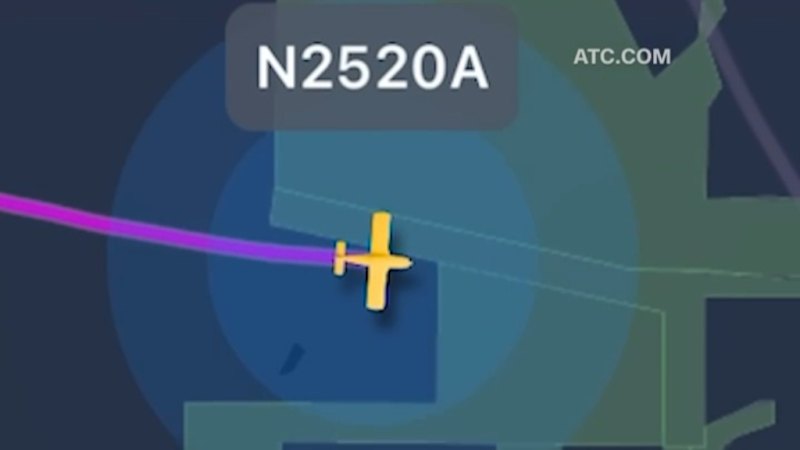
More critically, ground stops highlight the fragility of legacy aviation infrastructure. The US airspace system relies on aging mainframe architectures and distributed radar networks. When a single point of failure forces a nationwide halt, the downstream cost is absorbed disproportionately by smaller operators who lack the dispatch infrastructure of Part 121 airlines. Airlines maintain dedicated System Operations Control (SOC) centers staffed by licensed dispatchers who continuously model fuel burn, alternate airports, and slot times. A solo student pilot has no dispatcher; their only real-time support is a CFI monitoring from the ground via ADS-B tracking platforms (such as FlightAware or ForeFlight) and potentially unreachable via cellular networks while the aircraft is at altitude.
Limitations of Current Mitigation Strategies
No training syllabus can fully replicate the psychological pressure of a live airspace shutdown. While flight schools utilize flight training devices (FTDs) and scenario-based training (SBT) to simulate emergencies, these tools have distinct boundaries:
- Simulation Fidelity Gaps: Simulators rarely replicate the chaotic radio environment of a real-world ground stop, where dozens of pilots transmit simultaneously over a saturated frequency.
- Technology Over-Reliance: Modern student pilots rely heavily on electronic flight bags (EFBs) like ForeFlight on iPads for situational awareness. During a systemic telecommunications or satellite-based augmentation system (SBAS) disruption, tablet displays may lose ADS-B traffic and weather uplinks, forcing an abrupt reversion to paper charts and dead reckoning—skills that often atrophy after initial ground school.
- Instructor Endorsement Rigidity: Solo endorsements specify exact airports. In a dynamic airspace closure, the safest landing site may be an unendorsed airfield. While 14 CFR 91.3 grants the pilot-in-command (PIC) emergency authority to deviate from any rule to the extent required to meet an emergency, student pilots often hesitate to violate written endorsement limits due to fear of regulatory reprisal.
Operational Protocol for Flight Training Organizations
To insulate solo operations from systemic NAS disruptions, flight school leadership and chief flight instructors must move beyond baseline FAA compliance and implement deterministic contingency architectures:
- Mandatory Pre-Flight Infrastructure Audits: Require students to verify not only local METARs and TAFs, but national ATCSCC advisories and systemic NOTAM statuses prior to engine start. Establish a hard go/no-go threshold if central FAA systems exhibit latency or partial outages.
- Dynamic Diversion Envelopes: Modify solo endorsements to explicitly pre-approve a ring of secondary and tertiary non-towered airfields within a 25-nautical-mile radius of the primary route. Remove the psychological barrier to diverting before fuel or airspace constraints become critical.
- Lost-Communications and Degraded-ATC Drills: Mandate that every pre-solo stage check includes a simulated ATC saturation scenario where radar services are terminated without warning, requiring the student to execute a sterile, self-announced approach into an unfamiliar non-towered airport using primary flight instruments and pilotage alone.
- Telemetry-Backed Dispatch Monitoring: Implement mandatory flight-following protocols at the flight school dispatch desk using live ADS-B aggregation. Establish standardized visual light-gun signal reviews and pre-briefed contingency frequencies so ground personnel can coordinate with local tower controllers if a solo student becomes isolated inside a ground-stopped sector.