Snap.
It is the worst sound in sports, a dry, unmistakable crack that sounds less like human tissue giving way and more like a thick dry branch breaking underfoot in a quiet forest, carrying across the grass before the brain even registers the pain.
For anyone who has ever stepped onto a field past the age of thirty, that sound is a recurring nightmare. You plant your foot to pivot, expecting the familiar spring of rubber and sinew, and suddenly there is nothing there—only the sensation that someone behind you just kicked the back of your ankle with a steel-toed boot. You turn around to glare at the offender, only to find empty air and a cold wave of nausea rising in your stomach as your heel refuses to leave the ground.
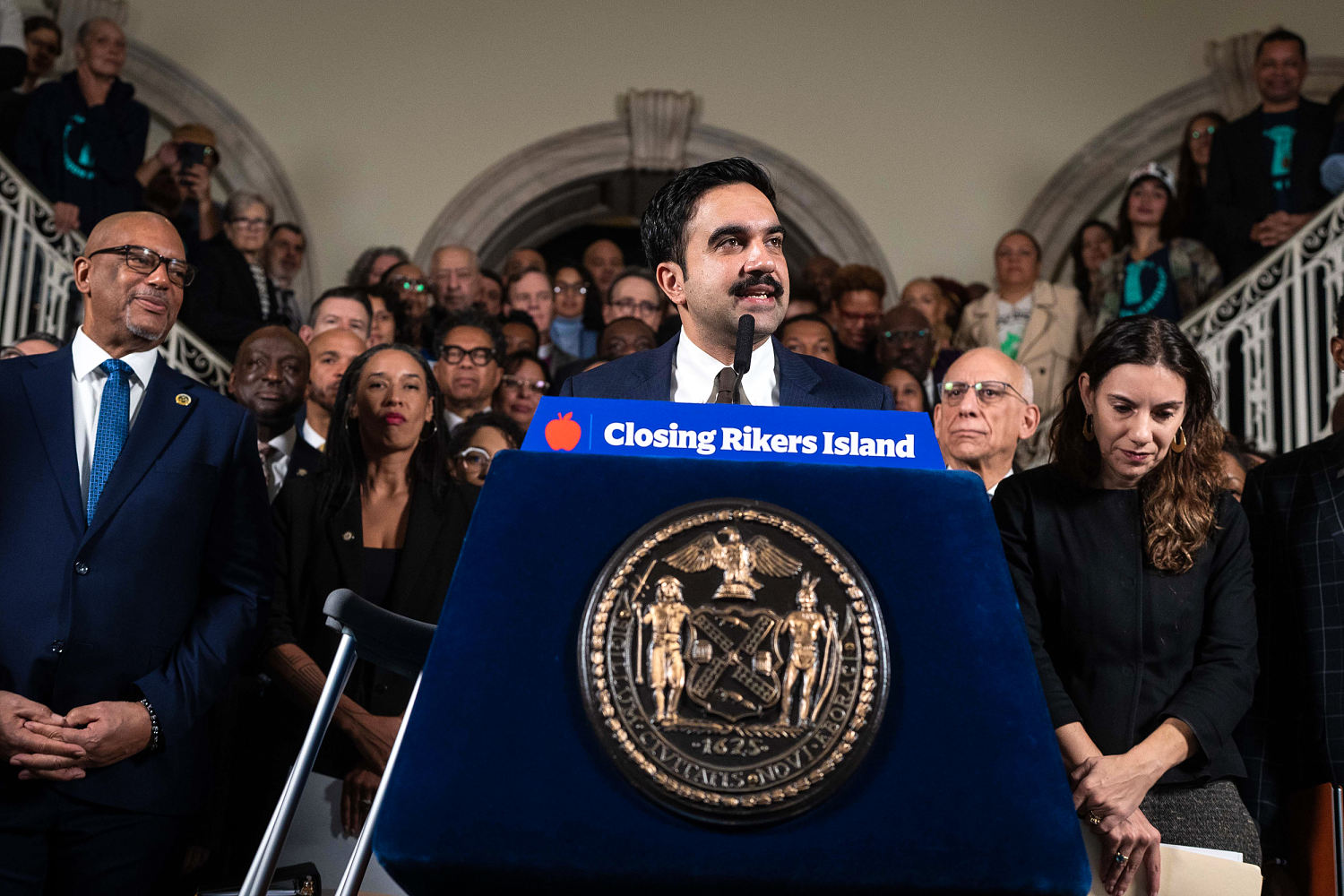
That exact visceral shock played out on a New York City soccer pitch when Zohran Mamdani, the Queens assemblymember and prominent figure in local progressive politics, ruptured his Achilles tendon during a friendly match against members of the New York City press corps.
On paper, the headline reads like a piece of trivial local color. A politician played a pickup game with reporters, pushed a little too hard, and ended up on crutches. People chuckle, wish him well on social media, and scroll on to the next municipal crisis.
They miss the entire point.
The Illusion of the Friendly Match
To understand what happened on that grass, you first have to understand the peculiar psychology of the politician-versus-press sporting event. In theory, these games are exercises in civic camaraderie—a rare afternoon where the adversarial friction of City Hall press conferences and legislative hearings melts away into shared sweat and bad passes.
In practice, there is no such thing as a truly friendly game when competitive people keep score.
Consider a hypothetical scene that plays out on municipal fields across the country every weekend. Picture a thirty-something lawmaker who spends sixty hours a week sitting under fluorescent lights, surviving on lukewarm coffee, adrenaline, and the constant, low-grade hum of political combat. His body is essentially a vehicle for transporting his brain from one committee room to the next. Then comes Saturday morning. The sun is out. The cameras are clicking. Across the halfway line stand the very reporters who scrutinize every press release he issues, laced up in turf shoes and ready to press the ball.
Nobody wants to lose to the beat reporters. And the beat reporters certainly do not want to lose to the lawmakers.
So the pace quickens. The tackles get a fraction firmer. A midfielder sees a gap opening up near the touchline and demands that his legs deliver the same explosive burst they possessed back in college, ignoring the fact that those legs have spent the last five days wedged under a mahogany desk in Albany or Lower Manhattan.
The mind writes a check that the tendon simply cannot cash.
Anatomy of a Silent Betrayal
When an Achilles rupture occurs, it feels like a sudden catastrophe, a bolt of lightning out of a clear blue sky. Biologically, however, it is almost always the final chapter of a story that has been writing itself in silence for years.
Think of the Achilles tendon—the thick cord connecting the calf muscles to the heel bone—like a heavy-duty braided nylon tow rope left out in the sun and rain over several winters. From ten feet away, the rope looks completely intact, thick and dependable. You could tug on it gently all day without a hint of trouble. Yet inside the weave, microscopic fibers have dried out, stiffened, and begun to fray, starved of the steady blood flow that keeps younger tissue supple and forgiving.
If you suddenly hook that weathered rope to a pickup truck and slam on the gas, it does not stretch. It parts cleanly in a single, violent instant.
Orthopedic surgeons see this exact pattern every week, particularly among what sports medicine clinics wryly refer to as weekend warriors—professionals in their thirties and forties whose daily lives demand immense mental stamina while leaving their physical conditioning to sporadic bursts of intense exertion. During an explosive push-off, the Achilles tendon absorbs forces up to ten or twelve times a person's body weight. For a hundred-and-seventy-pound man lunging for a loose ball, that translates to roughly a ton of sudden tension yanking on a band of tissue barely thicker than a thumb.
When Mamdani went down on the turf against the press corps, he was not falling victim to a freak accident or a reckless slide tackle. He was colliding with a biological reality that spares neither assemblymembers nor journalists.
What Really Happens When the Crutches Come Out
The immediate aftermath of an Achilles tear is disorienting, largely because the injury plays tricks on your senses. Unlike a broken bone or a torn knee ligament that swells into a balloon and throbs with relentless agony, a ruptured Achilles often stops hurting within minutes. Once the tendon snaps completely, the tension vanishes. The nerve endings stop screaming.
I remember sitting on the edge of a bench after my own tendon gave way years ago, staring down at my right ankle and feeling weirdly calm, almost convinced I had just suffered a bad cramp. I tried to stand up, pressed my toes into the floor, and watched in bewilderment as my calf muscle bunched up near the back of my knee like a rolled-up window shade while my foot remained completely dead weight. You do not realize how much of human movement—walking up subway stairs, shifting weight while standing at a podium, simply crossing a street before the light changes—depends entirely on that single cord until the connection is severed.
For a public official in New York City, the invisible stakes of that injury multiply overnight.
New York is not a city built for the immobilized. It is a vertical, kinetic metropolis of steep subway staircases, uneven cobblestones, crowded sidewalks, and back-to-back events scattered across five boroughs. Politics here is a contact sport practiced on foot. You build coalitions by showing up in person—climbing three flights of stairs to a tenant association meeting in Astoria, standing for two hours on concrete at a rally in Lower Manhattan, walking block after block during a neighborhood canvass.
Suddenly, every one of those routine movements becomes a logistical calculation.
A surgical repair or conservative casting protocol does not just sideline an athlete; it rewires a person's relationship with time and space. For the first several weeks, the foot must be locked in a pointed-downward position inside a rigid walking boot or plaster cast, preventing the stitched or healing ends of the tendon from pulling apart. Sleep happens awkwardly with a heavy plastic boot resting on pillows. Simple tasks—carrying a cup of coffee across a kitchen, stepping into a shower, navigating a rainy curb—require absolute concentration.
The Long Grind of the Comeback
People often ask how long it takes to recover from a torn Achilles, expecting a tidy number of weeks like a sprained wrist or a mild concussion. The honest answer is unsettling, even to doctors who treat the injury daily.
Physical recovery follows a slow, frustratingly linear calendar. Usually, patients spend six to eight weeks in a protective boot, gradually adjusting wedges inside the heel to bring the foot back to a neutral ninety-degree angle. Around the three-month mark, they begin relearning how to walk without a pronounced limp, coaxing a visibly shrunken calf muscle back to life through thousands of tedious, microscopic heel raises. Returning to running takes six to nine months. Returning to cutting, pivoting sports like soccer often takes a full year—and even then, many players admit the injured leg never feels quite identical to the uninjured one.
Yet the harder battle happens between the ears.
There is a specific kind of vulnerability that settles in when your body suddenly refuses to obey basic commands. In political life, vulnerability is treated like a liability; leaders are expected to project tireless energy, momentum, and control. Showing up to legislative sessions or community events on crutches strips away that armor immediately. Every stranger on the sidewalk sees the boot. Everyone asks what happened. You have to tell the story of the pickup game against the press corps fifty times a day, turning a moment of genuine physical trauma into a lighthearted icebreaker so the people around you feel comfortable.
Behind the self-deprecating jokes, though, sits a quiet reckoning with mortality and limits. You begin to notice every uneven crack in the pavement. You flinch instinctively when someone walks too close behind your heels in a crowded subway station. Even months after the boot comes off, stepping onto grass triggers a split-second hesitation—a subconscious flinch before planting your foot, wondering whether the rope will hold this time.
The Unspoken Pact Between Adversaries
Look back at that afternoon on the pitch, and another layer emerges beneath the medical reality.
There is something disarmingly human about the fact that this happened during a game between an elected official and the local press corps. In an era when public discourse often feels poisoned by rehearsed talking points and digital hostility, getting onto a field together requires a baseline of mutual trust. Reporters and politicians spend their working lives circling each other cautiously, weighing every word for hidden motives or gotcha headlines.
On the soccer field, that armor comes off. You cannot spin a missed penalty kick, and you cannot file a Freedom of Information request to explain why you got beat down the wing. When Mamdani went down on the turf, the rivalry evaporated instantly. The beat reporters were no longer adversaries hunting for a quote; they were neighbors helping a fellow New Yorker off the grass, carrying his gear, and calling for ice.
That moment captures a truth about civic life that rarely makes the evening broadcast. Beneath the ideological battles, the budget fights, and the sharp exchanges at press conferences, the people shaping a city are still fragile human beings subject to the exact same laws of physics and biology as everyone else riding the train home.
Months from now, the cast will be gone, the physical therapy sessions will taper off, and the political calendar in New York will roll forward at its usual relentless speed. Someone will eventually toss a soccer ball onto a patch of green grass on a sunny afternoon, and the temptation to sprint after it will return.
And just before planting that back foot to turn, anyone who has ever heard that sharp, unmistakable snap will pause for half a second, listen to the quiet, and remember how fragile the ground beneath us really is.


