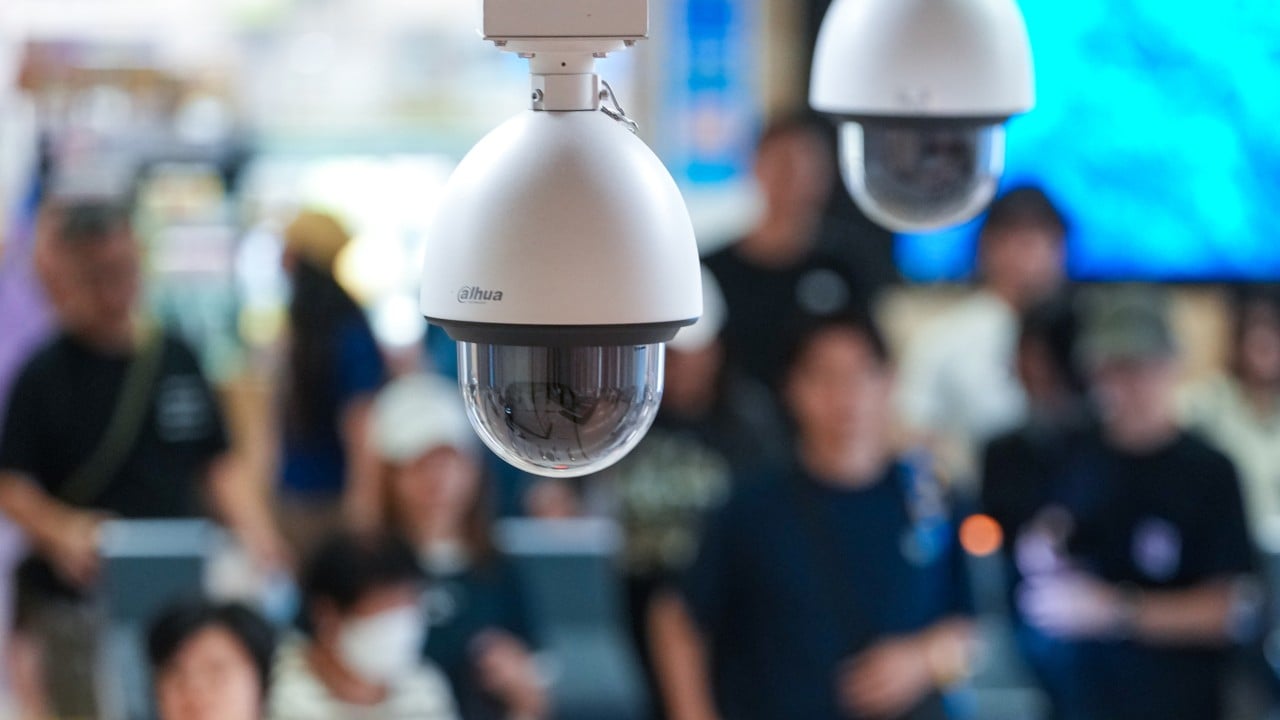
Two hundred miles above a frozen treeline, a silent predator holds its breath.
No engine hums. No contrail betrays its path. Yet every ninety minutes, a piece of Russian orbital hardware slides across the dark, keeping pace with a synthetic aperture radar satellite that helps Ukrainian forces peer through cloud cover, nightfall, and dense foliage. To a casual observer staring at orbital mechanics charts, it looks like a line on a graph or a dry intelligence note: a Russian satellite shadowing a radar satellite used by Ukraine.
Cold. Clinical. Easy to scroll past.
It feels almost abstract until you picture the people below trying to survive a winter morning when the sky refuses to clear. I have spent enough time watching how modern conflict warps ordinary life—how a humming generator outside a basement flat becomes a lifeline, how a single grainy satellite image can mean an artillery battery shifts before dawn rather than a village street taking the blow—to know that orbital geometry is never just math. Orbital geometry is a quiet tug-of-war over who gets to see and who gets blinded in the dark.
Full disclosure: there is no public, verified dossier confirming every single maneuver or classified command sent from ground stations during these orbital encounters, nor can anyone outside closed defense circles state with certainty whether a shadowing spacecraft carries kinetic weapons, electronic jammers, or purely observational sensors. What we do know from open-source orbital tracking, defense reporting, and aerospace physics is that space has become a crowded, tense chessboard where watching the watcher is now standard practice.
To understand why a shadow in low Earth orbit matters so much, consider a hypothetical scenario. Picture an analyst named Olena sitting inside a windowless room somewhere in eastern Ukraine at four in the morning, her eyes gritty from fluorescent light and cold coffee. Outside, low stratus clouds sit heavy over muddy roads. Optical cameras—the kind that snap crisp daylight photographs—are useless when thick weather and darkness lock down the terrain. Radar is different. Synthetic aperture radar sends microwave pulses down to the ground and reads the bounce back, carving sharp relief out of mud, trenches, armor columns, and staging grounds regardless of cloud cover or night. For Olena and the units relying on that intelligence, a timely radar pass is the difference between a blind spot and a warning.
Now place a second character in the picture—again, a hypothetical composite meant to ground real operational pressures rather than depict a specific real person. Imagine a Russian orbital flight controller, Viktor, watching telemetry screens thousands of miles away. His job is not simply flying a spacecraft along a tidy ellipse. His job is denying an adversary certainty. If a spacecraft trails, mirrors, or maneuvers near a radar satellite supporting Ukrainian operations, it creates friction. It forces questions. Is the chaser gathering radio-frequency signatures? Is it testing proximity maneuvers? Could it attempt electronic interference, laser dazzling, or physical harassment if tensions spike?
Even if nothing dramatic happens on a given pass, uncertainty itself is a weapon.
When Light Fails, Radar Wakes Up
Most people picture spy satellites like cameras pointing down from the heavens. Click. Picture taken.
Reality is messier. Clouds block visible light. Smoke from burning fuel or artillery obscures ground movement. Deep winter nights stretch long across northern latitudes, leaving optical sensors staring into gloom for hours at a time.
Synthetic aperture radar, often shortened to SAR, solves that limitation by making its own illumination. Instead of waiting for sunlight to bounce off a tank or a bridge, the satellite transmits radar waves toward Earth and uses its own forward motion to synthesize a much larger antenna aperture than its physical dish could ever be. The result is high-resolution imaging through weather and darkness that would blind a standard camera.
That capability is why commercial and allied radar satellites became so valuable once modern warfare shifted toward precision strikes, rapid counter-battery fire, and constant reconnaissance. When weather turns foul, radar keeps working.
And where value goes, scrutiny follows.
Think of it like two people walking through a pitch-black warehouse with flashlights. One person carries a bright beam that cuts through dust and gloom to spot hazards ahead. Another person steps quietly behind them, matching their pace, watching where the beam points, timing every turn, waiting to see if they can crowd the space or read the rhythm of the search. That warehouse comparison is a metaphor—space is a vacuum without walls or ambient light—but the psychological dynamic is remarkably similar. Whoever controls the timing and clarity of observation gains precious seconds.
The Quiet Art of Orbital Tailgating
Space is vast, yet orbits are unforgiving highways. Every spacecraft is locked in a high-speed dance between forward velocity and Earth's gravity, whipping around the planet at roughly seventeen thousand miles per hour. You cannot simply hit the brakes in orbit the way you tap a pedal on a highway. Changing altitude or inclination costs precious propellant, and once propellant is gone, a satellite becomes mostly a passenger on a fixed track.
When analysts report that a Russian satellite is shadowing a radar satellite used by Ukraine, they are talking about carefully calculated orbital alignment—placing one spacecraft in a nearby or trailing path so it repeatedly crosses similar ground tracks or stays within striking distance of observation geometry.
Why do militaries bother? Several reasons overlap, and none of them require Hollywood explosions to matter.
First comes characterization and intelligence gathering. By tracking a target satellite closely, an operator can observe how often it changes orbit, when it downlinks data, what frequencies its transponders use, and how predictable its passes over specific regions are. Knowing a radar satellite's habits helps defenders on the ground time their movements—hiding vehicles under cover during active imaging windows or shifting positions between passes.
Second comes electronic and signal pressure. Even without touching another spacecraft, proximity can complicate communications or create ambiguity about whether a satellite is collecting emissions or testing non-kinetic interference capabilities.
Third comes deterrence and signaling. In orbit, presence is a message. A shadowing satellite reminds everyone watching the tracking catalogs that no asset in low Earth orbit is completely alone or unmonitored.
I have to admit something that sometimes surprises people who expect clean answers about space security: even seasoned analysts often sit with incomplete certainty. Space surveillance has improved dramatically thanks to commercial radar telescopes and amateur satellite trackers, yet distinguishing a routine orbital drift from a deliberate shadowing maneuver can still spark fierce debate. A spacecraft might share a similar inclination purely by launch economics, or it might burn fuel deliberately to match ground tracks. Separating coincidence from intent requires patience, physics, and careful cross-checking—and even then, gray zones remain.
Why Space Feels Distant Until It Isn't
Here is the trap most of us fall into when we read about orbital maneuvers: we treat space as "up there" and war as "down here," as if a two-hundred-mile gap insulates everyday life from what happens overhead.
It never really has.
Modern militaries and societies run on invisible scaffolding. Navigation signals keep timing networks synchronized; communications links move data across continents; earth-observation satellites monitor crop yields, infrastructure damage, troop movements, and weather. When one link in that chain is shadowed, pressured, or degraded, the ripple travels straight down to muddy roads, power substations, hospitals, and frontline trenches.
Consider how sensory that ripple becomes on the ground. In winter, air smells of wet earth, diesel exhaust, and woodsmoke. Sound carries strangely across frozen fields. A soldier or civilian listening for distant thuds or watching for drone buzzes cannot see what is happening ten miles behind a ridge—but a timely radar image can reveal whether armor is massing or a supply line is moving. If that window of clarity gets narrowed, harassed, or anticipated by the other side, the margin for error shrinks.
Nobody on the ground sees the Russian satellite gliding silently above the atmosphere. Nobody hears orbital thrusters firing a tiny puff of gas to adjust a phase angle. Yet the consequences can show up hours later in a strike that lands where it shouldn't, or a convoy that slips through unnoticed.
A History of Watching the Watchers
Shadowing in orbit is not a brand-new invention springing out of nowhere; it is the latest chapter in a decades-old cat-and-mouse game that began in the Cold War.
During the space race, both the Soviet Union and the United States developed early inspector and co-orbital concepts—satellites designed to maneuver close to other objects in space, observe them, or test whether one spacecraft could intercept or neutralize another. Back then, telemetry was slower, commercial tracking barely existed, and public visibility into specific orbital maneuvers was thin.
What has changed is the tempo, the commercialization of space, and the tight coupling between orbital sensors and real-time terrestrial combat. Today, dual-use satellites—commercial imaging and radar platforms tasked or contracted to support military operations—operate alongside dedicated government spacecraft. That blurs traditional boundaries. A radar satellite might be commercially owned, launched on a rideshare or dedicated rocket, tasked for Ukrainian defense needs, and shadowed by a state-operated spacecraft.
International space law, anchored by the 1967 Outer Space Treaty, declares space the province of all humankind and bans weapons of mass destruction in orbit, yet it does not draw neat lines around every form of close approach or signal monitoring. Space is crowded with debris and active satellites alike, making "close approach" a phrase that demands careful context. Sometimes two satellites pass near each other because orbits cross. Sometimes one actively matches another's trajectory.
The Human Stakes Behind Every Orbit
Let's step back to Olena and Viktor in our hypothetical scenario—not because they are real people, but because keeping human faces in mind stops us from treating technology as fate.
Olena does not care about orbital mechanics for its own sake. She cares whether the data reaching her team is fresh, accurate, and uncompromised before daylight breaks. Every delay, every blind spot, every moment of doubt about whether an adversary already knows the timing of a radar pass adds weight to decisions that already carry heavy costs.
Viktor, meanwhile, operates inside a system that treats every foreign capability near a conflict zone as a threat to be watched, mapped, and countered. From his chair, shadowing a radar satellite used by Ukraine is not an abstract stunt; it is routine strategic competition played out in silence above the clouds.
Between those two poles sits a sobering truth about modern conflict: battles are increasingly decided before a single shot is fired on the ground, inside data streams, radar returns, and silent orbital alignments that most citizens never see.
Yet there is also something strangely clarifying about looking closely at how these systems work. Radar does not care about propaganda; it obeys wave physics. Orbits do not care about bluster; they obey gravity and momentum. Understanding the real mechanics strips away both sensationalism and fatalism. A shadowing satellite is neither a magic wand nor an unstoppable death ray—it is a piece of hardware operating under strict physical limits, fuel budgets, and visibility windows.
Still, limits do not erase risk. When space becomes a contested shadow theater, miscalculation becomes more dangerous. A misread maneuver, an aggressive station-keeping burn, or an escalation into electronic jamming can turn a quiet orbital game into something far harder to contain.
Look up on a clear night sometime, far from city streetlights if you can, and watch a faint point of light drift steadily across the stars. Most of what you see is harmless—a weather satellite, a communications relay, a piece of rocket body catching sunlight. Somewhere higher or lower, out of sight in Earth's shadow, other craft are tracing paths that matter deeply to people living through cold, uncertain days far below.
Silence in orbit does not mean nothing is happening.