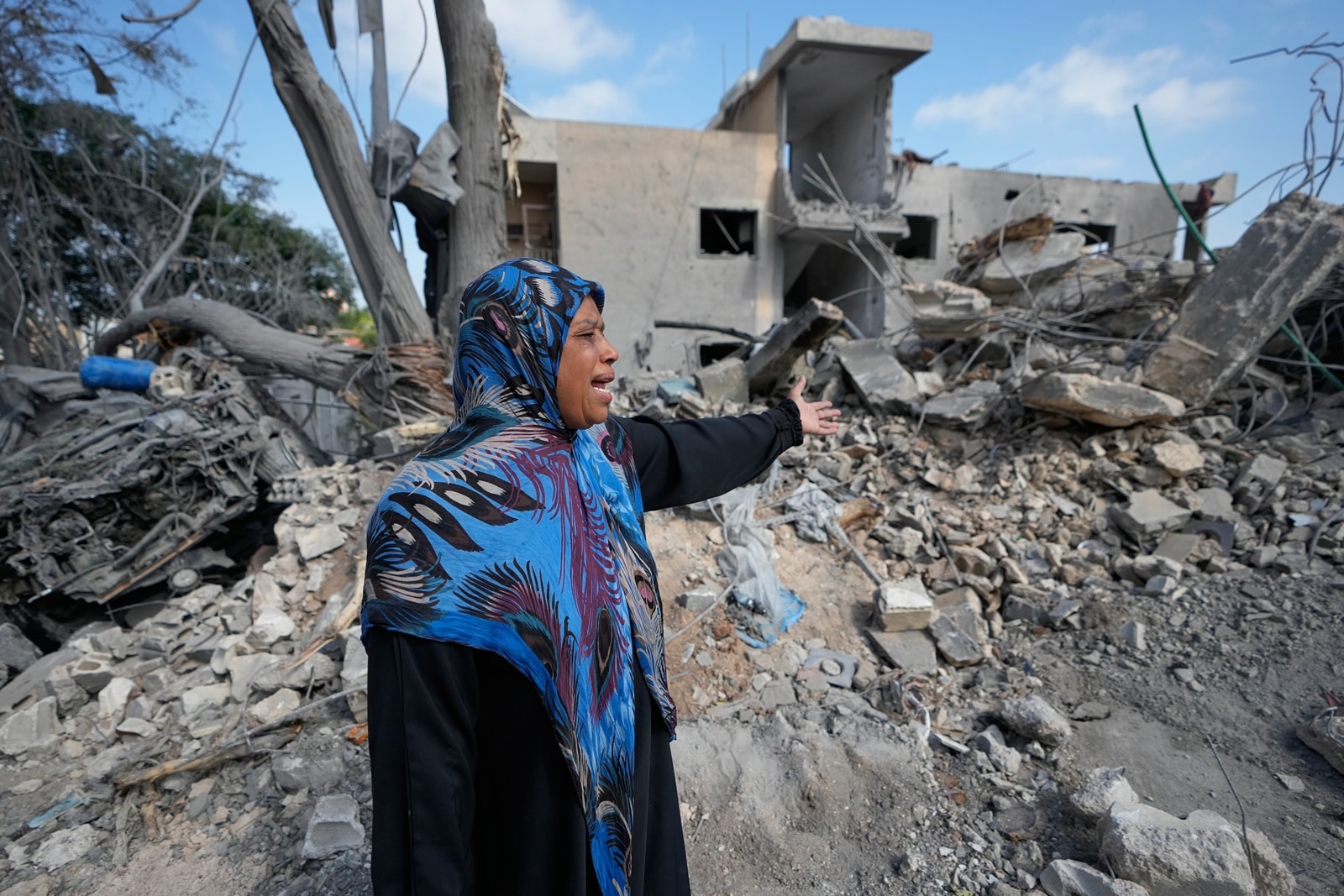
The coffee in the small plastic cup is still hot when the buzzing starts. It is not the familiar, rhythmic thrum of the cicadas that heavy up the afternoon air in southern Lebanon. This sound is mechanical, thin, and metallic. It sits high in the sky, a persistent mosquito of a sound that everyone here has learned to translate.
It means someone, somewhere, is looking at a screen. And it means you might have to leave everything you own in the next ten minutes.
When military command centers issue evacuation orders, they arrive on smartphones as clean, digitized maps with red borders. On a screen, a town is just a polygon. A coordinate. A piece of terrain to be cleared before the artillery opens up. But on the ground, those red lines slice through living rooms, through olive groves planted by grandfathers, and through the fragile illusion that tomorrow will look anything like today.
Recently, seven more towns in Lebanon were transformed into those digital polygons. The orders came down swift and absolute, telling residents to move north of the Awali River immediately. No delays. No time to negotiate with history. Just the sudden, frantic packing of a life into the trunk of an old sedan.
The Anatomy of an Exit
To understand what is happening along this border, you have to look past the grand strategic briefings and look at the keys.
Every person fleeing a village in southern Lebanon carries a heavy ring of keys. They carry the key to the front door, the key to the gated shop, the key to the storage shed. Locking the door before fleeing an incoming airstrike is an act of defiance. It is a stubborn, quiet declaration that says, I am coming back. Consider a family from one of those seven newly warned towns. Let us call the father Rafik, a hypothetical composite of the men who have spent decades tending to the tobacco fields and citrus orchards of the south. When the notification pings on his phone, Rafik does not read a geopolitical shift. He calculates weight.
What can fit into a backseat when the sky is turning violent?
The paperwork goes first—birth certificates, property deeds, diplomas wrapped in plastic bags to keep out the dust. Then the medicine for his mother’s blood pressure. A jar of locally pressed olive oil, because the taste of home is the first thing you lose when you become a statistic. The children’s schoolbooks are left on the table. The television is too heavy. The cat cannot be found; she hid under the porch the moment the first sonic boom cracked the air an hour ago.
This is the hidden tax of modern warfare: the total liquidation of a life’s stability in the span of seven minutes.
Meanwhile, the strikes follow the warnings with terrifying predictability. The Israeli military stated these operations target specific infrastructure—tunnels, weapon caches, and command posts embedded within civilian areas. From a military standpoint, the logic is clinical. It is about neutralizing a threat, pushing an adversary back, and securing a northern border so that tens of thousands of displaced Israeli citizens can finally return to their own abandoned homes in Galilee.
It is a mirror image of displacement. On both sides of that blue line, ordinary people are staring at empty kitchens, wondering who is sleeping in their beds, or if their beds even still exist.
The Echo in the East
But this conflict is not a localized tragedy. It is a regional clockwork where every gear tooth locks into another, miles across the desert.
Just as the smoke rises from the Lebanese hillsides, a reminder arrives from Tehran. It is never a loud declaration; it is a calculated posture. Iranian officials make it clear that the axis of resistance will not simply dissolve under the weight of precision-guided munitions. They signal that the supply lines, the ideological commitments, and the strategic patience remain fully intact.
To the family stuck in a traffic jam on the coastal highway heading toward Beirut, the statements from Iran feel impossibly distant yet suffocatingly close. They are the background radiation of their displacement.
Think of it as a massive, intricate web. A strand is pulled in Jerusalem; a knot tightens in Beirut; the web vibrates in Tehran. And the people caught in the silk are always the ones who own the least. The store owners, the farmers, the schoolteachers who have no say in the grand strategy but bear the entirety of its kinetic cost.
The strategy of pre-strike evacuation warnings is presented as a humanitarian measure, a way to minimize civilian casualties while conducting intense urban operations. In the sterile language of international law, it fulfills an obligation. But the lived experience of that warning is a psychological shattering. It transforms a home from a sanctuary into a target zone in a matter of seconds. It forces a population into a state of permanent transience, where every night spent under a roof feels borrowed.
The Dust That Never Settles
The highway leading north is a slow-motion river of mattresses and micro-tragedies. Cars overheat. Radiators hiss. Children stare out of rear windows, watching the horizon behind them light up with silent, orange flashes before the thud of the detonations catches up.
There is a specific smell to an airstrike. It is not just gunpowder. It is the pulverized dust of concrete, the sharp tang of ruptured electrical wiring, and the ancient, earthy smell of dry soil turned inside out. It hangs in the air for hours, settling into the clothes of those who escaped, a physical reminder that follows them into the crowded schools and makeshift shelters of the north.
The commentators on the late-night news channels debate the efficacy of the strikes. They analyze the troop movements, the diplomatic leverage, the red lines that keep moving like desert sands. They speak with the confidence of men who sleep in rooms where the windows do not rattle.
But the truth of the matter is found in the silence that follows the news broadcast. It is found in the quiet desperation of a mother trying to find clean water in a school gymnasium turned refugee center. It is found in the calculated defiance of an old man who refuses to leave his porch, choosing the risk of the sky falling over the certainty of becoming a beggar in a strange city.
The conflict moves forward, relentless and hungry, driven by logics that require more targets, more clearances, and more red lines on a digital map. The seven towns are empty now, left to the drones, the artillery, and the ghosts of the people who built them.
On the dashboard of Rafik’s car, the plastic cup of coffee has gone completely cold, its surface covered in a fine layer of gray road dust. The car moves an inch forward in the gridlock. Behind them, the sky cracks open again.