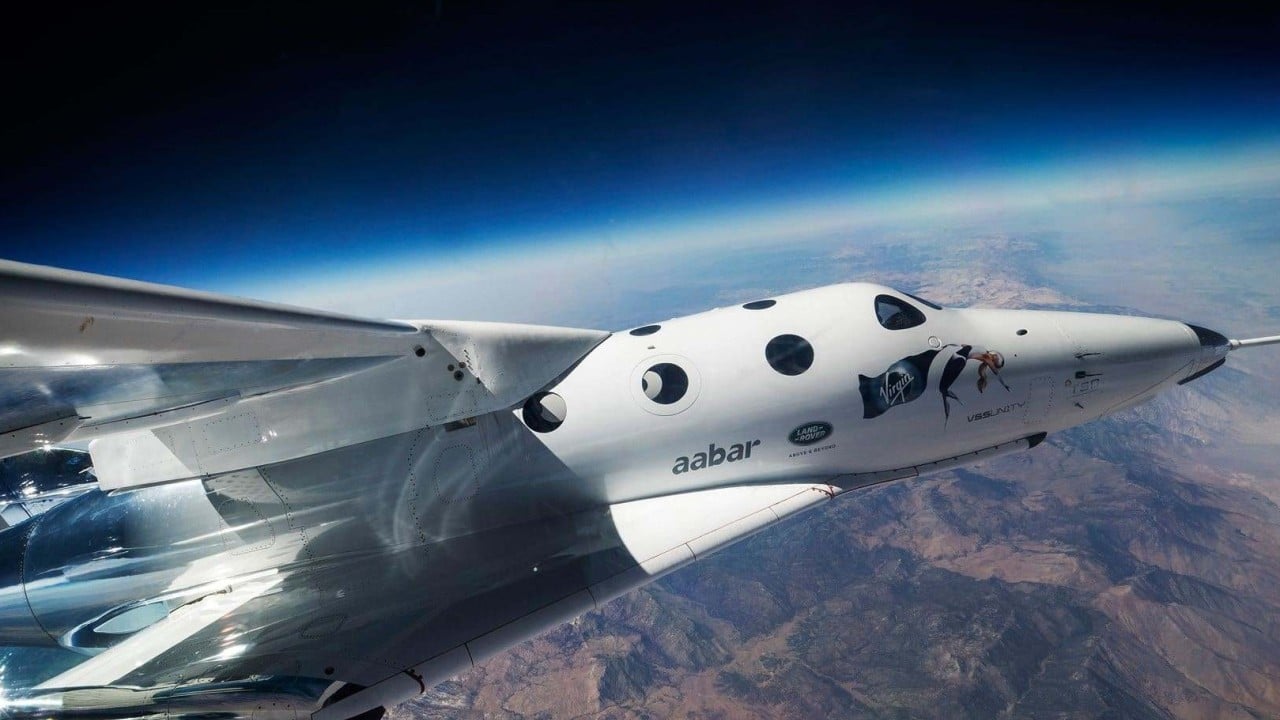
The media loves a morality play. When a Chinese e-commerce livestream listed a suborbital space flight package for roughly seven hundred sixty thousand dollars, the collective tech press did what it always does. They clutched their pearls, wrote breathless columns about decadent billionaires, and framed the whole thing as a galactic joyride for the ultra-wealthy.
They missed the entire point.
That price tag is not a luxury price point. It is a distress signal from a capital-starved aerospace sector trying to fund basic research using retail impulse buyers.
I have spent over a decade watching hardware startups burn through venture capital before realizing that physics does not care about your valuation. When commercial space platforms start auctioning off suborbital seats via consumer apps, you are not looking at the dawn of high-end leisure. You are watching a cash-strapped manufacturing pipeline outsource its crash-test dummy budget to eccentric tech bros.
The Physics Do Not Care About Your Luxury Cabin
Let us clear up the romantic nonsense immediately. A suborbital flight is not a cruise ship with a better view. You are strapped into a capsule sitting on top of thousands of liters of volatile propellant, experiencing three to four minutes of weightlessness before dropping back down like a stone through an atmospheric meat grinder.
The marketing departments want you to think about champagne service and zero-gravity selfies. The structural engineers are sweating over thermal protection tiles and nozzle erosion rates.
When a platform like Deep Blue Aerospace or any similar commercial entrant prices a seat at over three quarters of a million dollars, financial analysts assume profit margins are astronomical. They are not. Building a reusable vertical takeoff and landing vehicle requires capital burn rates that make traditional aviation look like a lemonade stand.
The hardware costs alone dwarf the ticket revenue. Every flight destroys or degrades expensive avionics, seals, and turbopumps. That ticket price is barely covering the cost of liquid oxygen and insurance premiums, assuming nothing blows up on the pad.
Why Livestreaming Space Tickets Is Pure Financial Engineering
Selling space travel on a shopping app looks like a marketing gimmick. It is actually a brilliant liquidity hack.
Traditional aerospace development relies on government contracts or venture capital tranches tied to grueling milestones. Both options come with handcuffs. Governments demand endless compliance; venture capitalists demand aggressive software-like margins on a hardware-heavy asset class.
By opening retail channels to deep-pocketed consumers, these companies bypass traditional gatekeepers. They secure upfront, non-refundable deposits from retail buyers who are essentially acting as unsecured creditors. You give them seven hundred thousand dollars today for a flight that might happen three years from now. That cash hits the balance sheet immediately, funding the next round of engine static fires without giving up equity to cautious institutional investors.
It is crowdfunding for rockets, dressed up in velvet-rope luxury marketing.
The Insurance Policy That Costs More Than the Fuel
People asking about the safety record of commercial suborbital tourism are asking the wrong question. Do not look at the accident statistics. Look at the actuarial tables.
No commercial insurer in their right mind writes a comprehensive policy for an unproven suborbital vehicle without catastrophic exclusions. The premiums required to cover a hull loss and passenger liability for a private spaceflight are astronomical. When companies offer these packages, they are either self-insuring through complex corporate shell structures or passing an unquantifiable tail risk directly onto the balance sheet of the operating entity.
If a vehicle fails during a commercial run, the financial fallout does not just bankrupt the operating company; it poisons the regulatory well for the entire commercial aerospace ecosystem. That is why every launch is preceded by years of untelevised subscale testing. The passengers are not customers. They are human telemetry units providing vital operational data that computer simulations simply cannot replicate.
The Myth of the Scalable Passenger Economy
Every time a new ticket price drops, op-ed writers trot out the tired analogy of commercial aviation in the nineteen fifties. They tell us that Pan Am flying across the Atlantic was once expensive luxury before becoming affordable for everyone. They promise that suborbital hops will follow the exact same economic curve.
They are ignoring the laws of thermodynamics.
Commercial aviation benefits from economies of scale because a Boeing seven forty-seven carries hundreds of passengers across thousands of miles while consuming fuel efficiently at high altitudes. A suborbital rocket burns hundreds of tons of propellant to lift three people past the Karman line for ten minutes. You cannot scale that efficiency. The energy requirements scale exponentially with payload mass.
A suborbital ticket will never cost the price of an economy class seat to Tokyo. It will always remain an ultra-high-cost, low-volume enterprise because the physics of breaking through the stratosphere demand an insane amount of chemical energy per pound of payload.
The Supply Chain Bottlenecking the Stars
Look closely at the manufacturing supply chain behind these commercial space ventures. You will not find mass-production lines humming with automated efficiency. You will find small teams of exhausted aerospace engineers hand-welding titanium manifolds and inspecting turbine blades under microscopes.
The bottleneck is not marketing. The bottleneck is talent and metallurgy.
When you buy a ticket for seven hundred thousand dollars, you are paying for scarce human labor. There are only so many metallurgists on the planet who understand how high-temperature alloy components behave under cryogenic shock. When a platform auctions off seats via livestreaming, they are desperately acquiring the working capital needed to poach engineering talent from state-backed defense contractors.
The Real Cost of the Ticket
If you have seven hundred thousand dollars burning a hole in your pocket, buy index funds, buy commercial real estate, or buy a yacht. Do not buy a suborbital ticket expecting a vacation.
You are not a tourist. You are an equity partner in an expensive physics experiment, paying for the privilege of testing a prototype.
The media will continue to frame these ticket offerings as a symptom of late-stage excess. They are wrong. It is a sign of industrial desperation. When private aerospace companies have to sell seats on consumer shopping portals to fund their wind tunnel tests, it means the traditional capital markets have finally realized how hard it is to make money leaving the atmosphere.
Enjoy the view. Just remember who paid for the research.