Call it a freak accident. Call it a tragedy. Call it bad luck.
Do not call it a surprise.
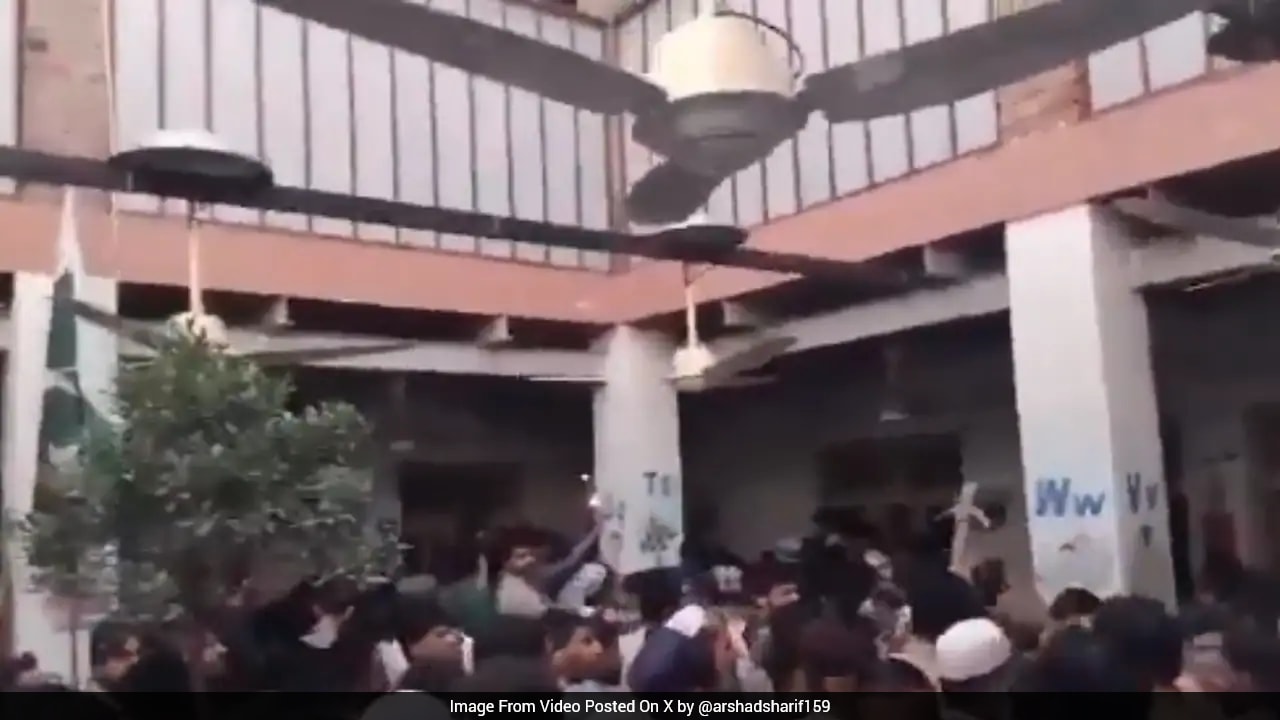
Every time a school roof caves in across Pakistan—burying children and teachers under slabs of concrete, mud, and steel—the standard headlines roll out like clockwork. Thirty-four students and a teacher dead. Grieving parents. Tearful press conferences. Promises of inquiries. Condolences from officials who signed off on the building codes or let the budgets evaporate years earlier.
Then everyone moves on until the next monsoon, the next seismic tremor, or the next morning a concrete slab gives up under its own weight.
That is the lazy consensus. It treats these collapses as isolated acts of fate or unfortunate quirks of construction. It is wrong. A roof does not decide to collapse out of spite. Buildings fail because of predictable engineering shortcuts, uninspected materials, deferred maintenance, and a public system that treats school infrastructure as an afterthought rather than life-safety engineering.
I have spent years working around structural assessments, forensic site reviews, and public-works compliance in high-risk environments. I have seen governments and institutions blow fortunes on ribbon-cuttings, decorative facades, and sprawling new campuses while ignoring hairline cracks in load-bearing beams. I have watched contractors shave fractions of cost off reinforcement steel and cement ratios because nobody with teeth was checking the mix at 6:00 AM on a Tuesday.
When a school roof fails and kills dozens of people, the tragedy is emotional, but the mechanism is mechanical.
The Myth of the "Sudden" Collapse
Listen closely to how these stories are framed. Words like suddenly, unexpectedly, and without warning show up everywhere.
Concrete almost never fails without warning. Masonry walls rarely give way in a vacuum.
Structural degradation is a slow argument between gravity and neglect. Moisture seeps through unsealed roof membranes. Rainwater finds micro-fissures in lime mortar, mud plaster, or poorly cured concrete. Over seasons, water reaches steel rebar, triggering oxidation and corrosion. As iron oxide forms, it expands—sometimes to several times the original volume of the steel—pushing outward from inside the concrete. That internal pressure spalls the cover, exposes more metal, weakens bond strength, and quietly strips away load capacity long before the ceiling ever drops.
In many rural or underfunded schools, the problem starts even earlier: non-engineered spans. Builders stretch heavy reinforced concrete or timber-and-mud slabs across wide rooms without proper beam depth, adequate shear reinforcement, or sound load paths into load-bearing walls. Add vertical additions—a second floor slapped onto a single-story foundation designed for one level—and the math turns lethal.
People ask, "How could a building just fall down on children?" That question assumes the structure was sound until the second it broke. Most of the time, it was already living on borrowed margin. The weather, the vibration, or the extra weight of standing water just collected a debt that had been compounding for years.
Why Asking "Who Is to Blame?" Misses the Real Failure
When thirty-four students and a teacher die, public outrage naturally hunts for a villain. Was it the contractor who cut corners? The local engineer who skipped a site visit? The district official who approved the paperwork? The school administrator who kept classes running inside a cracked building because there was nowhere else to put the kids?
Yes. And no.
Blaming a single link in a broken chain lets the rest of the chain off the hook. If you arrest one contractor or suspend one mid-level clerk after a collapse, you get a headline, not safer schools.
Structural safety in public infrastructure is a systems problem. When enforcement is weak, incentives flip upside down. Honest contractors who bid with proper steel ratios, quality aggregate, and realistic timelines get undercut by operators who price in shortcuts and payoffs. Local inspectors operating without independent labs, clear authority, or protection from political pressure cannot easily stop bad work—or choose not to fight a losing battle.
Meanwhile, school principals face an impossible bind. Shutting down a cracked building means telling hundreds of families their children cannot go to school, often with no alternative room in the village. Keeping it open means gambling with lives every single day.
Asking "Who is to blame?" focuses on punishment after the bodies are pulled from the rubble. A sharper question is: What incentives made cutting corners profitable, and what incentives made keeping a risky building open the path of least resistance?
The Real Cost of Cheap Construction
In construction economics, upfront savings on structure are often an illusion. Saving ten or fifteen percent on structural materials or engineering oversight during initial build can multiply costs later through emergency repairs, premature failure, or catastrophic loss of life.
Consider the basic physics of a roof slab. A roof is not just a lid to keep sun and rain off desks. It is a structural diaphragm and load-bearing element subjected to dead load (the weight of the structure itself), live load (maintenance workers, equipment, occasional occupancy), environmental loads (rain ponding, wind uplift, thermal expansion), and seismic forces in seismically active regions.
When a roof is built with sub-standard cement-to-aggregate ratios, under-cured concrete, corroded or undersized reinforcement, or weak bearing seats on unreinforced brick or block walls, its safety factor shrinks toward zero. Under normal dry conditions, it might hold for years. Introduce heavy rain—which adds substantial weight when water pools on a flat roof with clogged drains—and a marginal roof crosses the threshold from stressed to failed.
Why "More Inspections" Alone Will Not Fix It
The standard policy reflex after any major structural failure is predictable: announce a sweeping inspection of all schools.
Inspections sound decisive. They look good on television. Often, they fail in practice.
A visual walkthrough by an overburdened team glancing at walls and ceilings can spot obvious hazards—sagging beams, wide diagonal cracks, exposed rusted rebar, severe water damage, or bulging masonry. It cannot see inside a thick slab to measure rebar spacing, concrete compressive strength, or hidden corrosion. Without basic structural triage criteria, clear shut-down protocols, and funded relocation or repair budgets, an inspection list can easily become just another stack of paper.
Even worse, inspections without follow-through breed cynicism. If a building is flagged as unsafe and nothing happens for two years, people stop taking warnings seriously.
A Thought Experiment in Accountability
Imagine a scenario where every public school building is required to have a plain, publicly accessible Structural Health Card—not buried in a ministry file cabinet, but posted visibly at the school gate.
That card records four simple facts in plain language: when the building was constructed or last structurally assessed, what roof and wall system it uses, its current risk rating (Green, Amber, Red) based on defined engineering criteria, and the exact date of the next scheduled inspection or remediation milestone.
If a building is rated Red, a mandatory trigger automatically shifts resources—temporary classrooms, tents, nearby facility sharing, or rapid structural stabilization—within days rather than years, and the local authority must sign off publicly on why a structure remains in use.
A thought experiment like this does not magically create money or fix corruption overnight. What it does is change visibility. Secrecy protects negligence; transparency makes indifference harder to hide.
What Heavy Hitters in Structural Engineering Actually Emphasize
Look at the guidance from major structural engineering bodies, disaster-resilience researchers, and building-code authorities worldwide—institutions like the American Society of Civil Engineers (ASCE), seismic safety initiatives such as those studied by the Earthquake Engineering Research Institute (EERI), and international school-safety frameworks developed with UN agencies and structural specialists.
Across different climates and economies, their core lessons converge on unglamorous fundamentals:
- Load path continuity matters: Forces from the roof must transfer cleanly through beams, columns, or load-bearing walls down into a stable foundation. Breaks in that path—like unsupported cantilevers or unreinforced masonry walls—create points of sudden failure.
- Water is the silent destroyer of buildings: Keeping water out and draining it off roofs quickly is one of the highest-return life-safety measures in construction. Standing water ruins materials and accelerates corrosion.
- Non-engineers should not guess at spans and loads: Traditional or informal building methods have limits. Once spans widen, materials change, or extra stories are added, guesswork becomes dangerous.
- Maintenance is part of design: A building without a maintenance plan is a building scheduled to degrade.
None of these principles are flashy. None of them win elections like opening a shiny new facility. Yet every single one of them saves lives.
Answering the Questions People Actually Search
Is a school roof collapse usually caused by bad weather or bad construction?
Usually it is the collision of both. Extreme rain, wind, or tremors act as the trigger, not the sole root cause. A well-engineered, properly maintained roof built to code is designed to handle expected environmental loads with a margin of safety. When construction quality is poor, materials are degraded, or drainage fails, ordinary or slightly heavy weather can push a weak structure past its breaking point.
Can you tell if a roof is about to collapse just by looking at it?
Not always with certainty, but warning signs often exist before total failure. Sagging or deflection in beams or slabs, widening cracks (especially near supports or corners), water stains, efflorescence, crumbling concrete, or rusted steel pushing concrete apart are red flags. However, internal structural weaknesses—like hidden rebar corrosion or poor concrete compaction—can exist without dramatic surface signs. Only a qualified structural engineer can properly evaluate whether a building is safe.
What should happen immediately when cracks appear in a school building?
Do not treat structural cracks like cosmetic paint chips. Limit or stop use of the affected room or building until a qualified engineer inspects it. Clear roof drainage outlets immediately so water cannot pool on top of the structure. Document the damage with photos and dates, and escalate in writing to school leadership and local education or engineering authorities. Moving classes to a safer space or temporary setup may be inconvenient, but it beats gambling with lives.
Actionable Steps That Actually Work
If you are a parent, educator, local administrator, or community member dealing with aging school buildings, waiting for sweeping national reform is a slow strategy. Focus on practical moves that reduce risk right now:
- Demand a physical walk-through focused on structure and drainage. Push for an assessment that checks roof slopes, blocked rainwater spouts, seepage marks, foundation settlement, and cracks in beams or load-bearing walls—not just whether desks and chalkboards are in place.
- Keep water off the roof. Clear leaves, debris, and trash from roof drains and parapets before rainy seasons hit. Standing water adds heavy load and feeds decay.
- Stop unauthorized vertical additions. Resist adding extra rooms, heavy water tanks, or upper-floor extensions onto existing school structures unless a structural engineer verifies the foundation and load-bearing walls can handle the added weight.
- Push for clear red-line rules. Insist on written criteria for when a room or building must be closed immediately—and insist on pre-planned backup spaces so closures do not automatically mean kids lose all schooling.
The Trade-Offs of Taking This Stance Hard
Calling out systemic neglect and engineering shortcuts has real downsides, and pretending otherwise is dishonest.
First, taking a hard, systems-level view can sound harsh toward people on the ground who are doing their best with almost nothing. A local teacher or headmaster trying to educate children in a cramped, aging building is often a victim of broken systems, not the architect of them. Nuance matters: hold systems and negligent decision-makers accountable without turning struggling local staff into convenient scapegoats.
Second, fixing structural safety properly is expensive and slow. Retrofitting unsafe buildings, enforcing real material testing, building resilient new schools, and funding maintenance take serious money and political willpower. There is no neat shortcut that makes bad concrete strong or turns an underfunded public works department overnight into a model of precision.
Third, blunt talk can alienate people who prefer polite euphemisms. Many readers want comfort after a tragedy; they do not always want to hear that the warning signs were sitting in plain sight.
Comfort does not hold up a slab of concrete. Physics does.
Thirty-four students and a teacher dead is not a mystery for fate to explain away. It is a receipt from a system that priced shortcuts above safety—and until that price changes, the ledger is never truly closed.