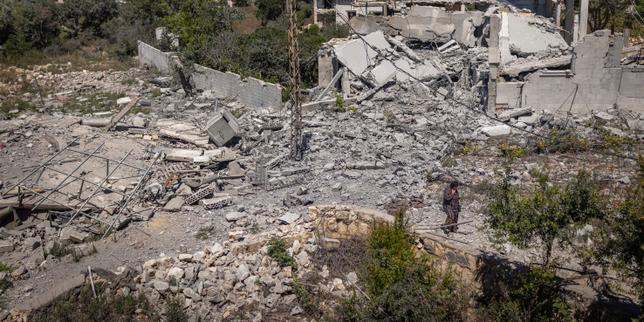
Entire villages in southern Lebanon are being wiped off the map, and a desperate race is underway to salvage what is left of the region's history before it disappears entirely. When bulldozers and airstrikes reduce centuries-old stone homes and ancient markets to rubble, the loss isn't just physical. It is an erasure of identity.
I have watched local historians, displaced residents, and heritage groups scramble to document whatever survives. They are archiving oral histories, mapping satellite changes, and collecting photographs of towns like Muhaibib and Yaroun before they vanish. It is exhausting work, and honestly, they are losing ground every single day.
The Anatomy of Systematic Erasure
The destruction across southern Lebanon goes far beyond collateral damage. Analysts estimate that a massive percentage of buildings in the border region have been severely damaged or completely flattened. Historic Ottoman-era houses, medieval castles like Beaufort, and ancient religious sites are caught in the crosshairs.
When the Israeli military moves through these zones, the tactics often involve controlled detonations and heavy machinery that flatten entire neighborhoods block by block.
- Vernacular architecture built from local stone is crushed into dust.
- Centuries-old olive groves are intentionally burned down or uprooted.
- Economic hubs like the historic market in Nabatieh are reduced to ash.
Government officials and heritage preservationists point out a grim reality. Erasing the built environment makes permanent displacement much easier. If nothing is left to return to, the psychological anchor binding people to their land gets severed.
Why Heritage Preservation Is an Uphill Battle
You might wonder how anyone can document history while active military operations and occupation zones block access. That is the core tragedy of this crisis. Organizations like Biladi and local councils rely on expensive high-resolution satellite imagery just to see what happened to their neighborhoods.
People who fled are pooling their savings to buy overhead snapshots of their hometowns. They scan for the remnants of their grandfathers' houses or the hollowed-out shells of local churches.
The physical destruction is compounded by an environmental crisis. Fires sparked by ongoing bombardments have scorched massive swathes of woodland and agricultural land near the border. These groves aren't just scenery. They represent generations of labor, family inheritance, and local economic survival.
What Recovery Actually Requires
Fixing this mess will take decades, and money alone won't solve it. Pouring concrete to rebuild modern structures doesn't bring back a 400-year-old market or a centuries-old sanctuary.
True recovery demands a coordinated international effort to catalog war crimes against cultural heritage, pressure governing bodies to respect antiquities, and fund grassroots archiving projects. If you want to support these efforts, look toward independent Lebanese NGOs working on cultural preservation and heritage mapping. They are the last line of defense against total historical erasure.
For a firsthand look at how displaced residents are fighting to keep their history alive, watch Sud du Liban: villages détruits, mémoire en exil. This video explores the painful reality of families displaced from southern Lebanon as they struggle against the odds to preserve the memory of their leveled hometowns.
http://googleusercontent.com/youtube_content/1