The mourning of a mediocre amusement park follows a rigid, exhausting script. Corporate PR issues a sanitized note about "operational realities." Local news runs a montage of rusty go-karts and cotton candy machines. Coaster enthusiasts on Reddit immediately build spreadsheets predicting where the flagship ride will be relocated.
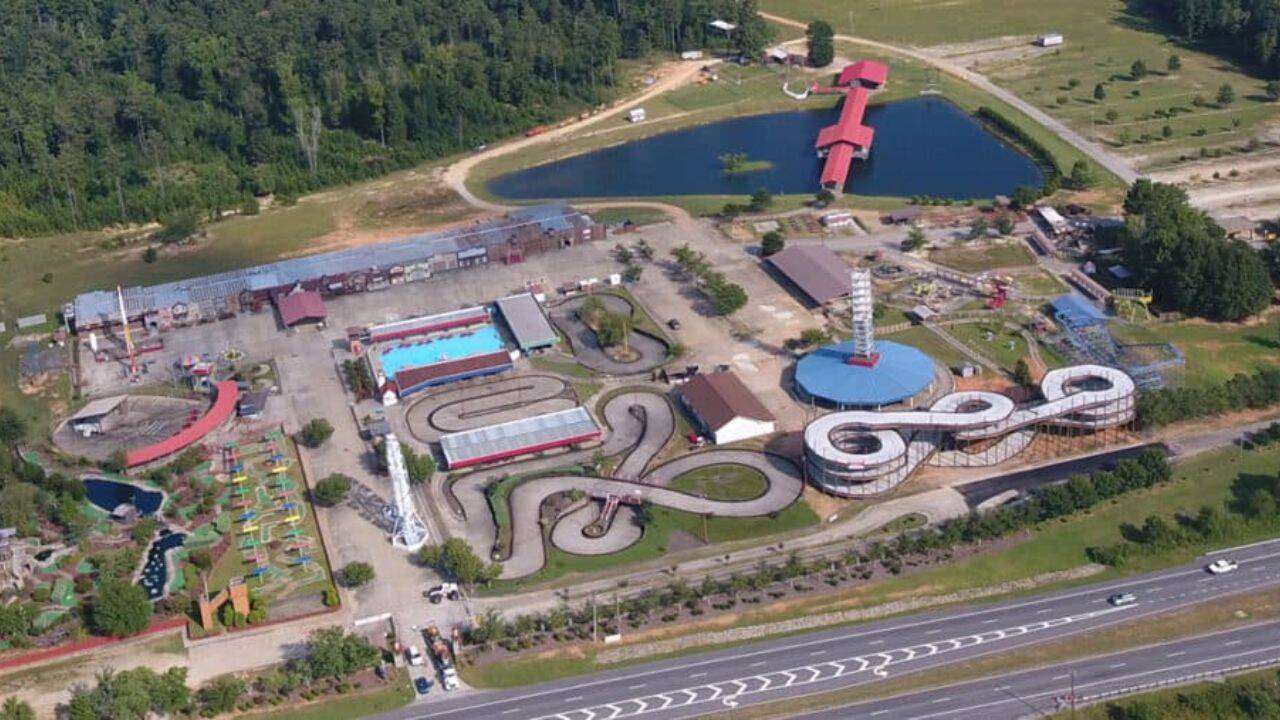
We are seeing this play out right now with the announced August 2 closure of Fun Spot America in Fayetteville, Georgia. The lazy consensus is already solidified: a beloved 36-year-old local institution fell victim to bad luck, poor market awareness, or a cruel corporate parent, leaving behind a tragic void and an orphan $18 million roller coaster.
That narrative is completely wrong.
Fun Spot Atlanta didn't die of bad luck. It died because its entire business thesis was fundamentally flawed. The closure isn't a tragedy; it is a textbook case of what happens when regional operators misunderstand demographic gravity and try to fix a structural real estate problem by throwing a world-class roller coaster at it. I have spent years analyzing the unit economics of regional entertainment centers, and I can tell you that assuming an $18 million capital expenditure can magically transform a localized family fun center into a destination theme park is a multi-million-dollar delusion.
The Fatal Flaw of the Single-Asset Hail Mary
In 2017, Fun Spot acquired what was once Dixieland Fun Park, a modest footprint long reliant on birthday parties and school field trips. In 2023, they debuted ArieForce One, a monstrous, critically acclaimed Rocky Mountain Construction (RMC) steel coaster. It was an engineering masterpiece. It was also a commercial catastrophe.
The industry collective assumed that if you build a world-class coaster, the enthusiasts will come. They did come—once. They bought a ticket, rode it ten times in a day because there was no line, posted a POV video on YouTube, and went home to Ohio or Florida.
The Reality Check: Roller coaster enthusiasts do not keep the lights on at a regional park. Local families buying high-margin soda, recurring season passes, and overpriced arcade tokens do.
A single elite ride creates an unsustainable operational mismatch. Imagine dropping a Michelin-starred tasting menu inside a suburban bowling alley snack bar. The high-thrill coaster required massive capital, rigorous maintenance, and heavy insurance premiums, yet the surrounding park still possessed the infrastructure of a 1990s go-kart track. The casual local mom looking to drop fifty bucks on a Saturday didn't want her seven-year-old on a massive zero-G stall coaster, and the hardcore enthusiast didn't want to pay a premium admission price just to sit next to a dilapidated batting cage. By attempting to serve both, the park served neither.
The Location Myth: Why Fayetteville Was Never Atlanta
Park management recently complained that their biggest hurdle was simply "making people aware" that they operated year-round. This is a classic misdiagnosis of a distribution problem. The problem wasn't marketing; it was geography.
Fayetteville sits roughly 30 miles south of downtown Atlanta. To the north sits Six Flags Over Georgia, a massive, established corporate juggernaut backed by decades of branding and deep capital reserves.
- The Northern Stronghold: Six Flags commands the affluent, high-growth northern suburbs of metro Atlanta.
- The Southern Trap: Fun Spot was marooned in a secondary southern market without the population density or tourist infrastructure to support a major thrill-centric park.
A commuter market like Atlanta will not drive past a massive regional theme park to visit a smaller, hybrid fun center unless that center offers an radically lower price point or an entirely different value proposition. Fun Spot tried to compete on Six Flags' terms—thrills—without the scale to back it up.
People Also Ask: The Brutal Answers
The internet is flooded with standard questions regarding this closure. The public answers are polite. The economic answers are brutal.
Why didn't Fun Spot Atlanta just lower ticket prices to boost attendance?
Because discounting is a death spiral for asset-heavy entertainment venues. Lowering prices slightly does not spark mass adoption if the core product is mismatched with the local demographic; it merely devalues the brand and eats into the thin margins needed to pay off the debt service on an $18 million coaster.
Can't Six Flags Over Georgia just buy ArieForce One and save it?
This is the ultimate enthusiast fantasy. Mechanically, yes, coasters can be relocated. Economically, dismantling, shipping, re-engineering footers, re-assembling, and re-certifying a massive custom steel coaster costs millions. For a major park, buying a used ride often carries nearly the same logistical headache as buying a new one, minus the marketing pop of a "world first" attraction.
The Asset Relocation Trap
The ultimate lesson of Fayetteville is that regional amusement parks cannot be treated as modular tech stacks. You cannot just upgrade one component and expect the entire ecosystem to scale up.
Fun Spot’s Florida locations in Orlando and Kissimmee work because they are embedded in the dense, hyper-touristic Highway 192 and International Drive corridors. They survive on the overflow of global tourism, operating as high-visibility, pay-per-ride evening secondary stops for people who spent the morning at Disney. Dropping that exact same business model into rural-suburban Georgia and expecting it to function without the 70 million annual tourists is pure executive hubris.
When the gates lock for the final time on August 2, don't blame a lack of community support. Blame the math. The regional amusement industry is littered with the ghosts of parks that forgot what they were and tried to buy relevance they couldn't afford.