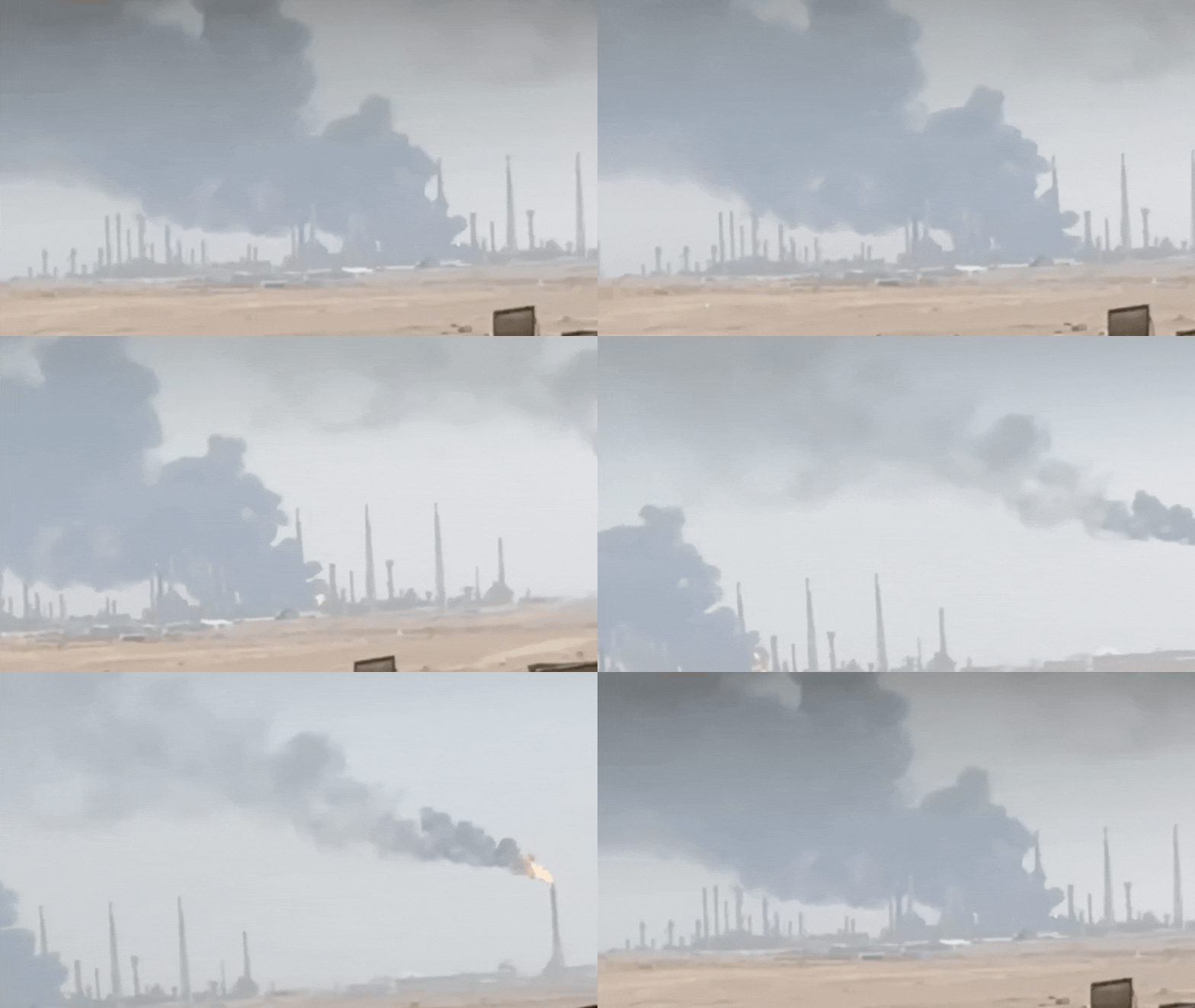
Energy markets wake up fast when infrastructure burns. When coordinated missile and drone strikes hit Saudi Aramco facilities in Abqaiq and Khurais, the shockwaves went far beyond a regional conflict. Black smoke choked the desert sky, but the real damage happened on trading floors and inside defense command centers worldwide. People realized how fragile modern fuel supply chains actually are.
You cannot simply shrug off a strike on the world's most critical oil processing hub. This wasn't a minor border skirmish. It was a precise, high-stakes operation attributed to Houthi forces that temporarily knocked out over five million barrels of daily production. That represents roughly five percent of global oil supplies vanishing in a single morning. If you think modern energy independence shields your local economy from Middle Eastern flashpoints, you haven't been paying attention.
The Vulnerability of Centralized Energy Infrastructure
Abqaiq isn't just a collection of storage tanks. It is the beating heart of Saudi Arabia's petroleum empire. Almost every barrel produced in the eastern province moves through these stabilization and processing towers before reaching tankers or domestic power plants. Centralization creates massive efficiency during peacetime, but it turns into a strategic nightmare during a conflict.
Security analysts warned about these exact bottlenecks for years, yet operators kept scaling up massive single-point facilities. Building sprawling mega-complexes makes economic sense on a spreadsheet until low-cost aerial drones bypass multi-million-dollar defense shields. The math changed overnight. When a swarm of explosive drones costing a few thousand dollars each can shut down billions of dollars in critical infrastructure, defense strategies have to adapt immediately.
Governments and energy conglomerates spent decades focusing on cyber threats and conventional military invasions. They completely underestimated the asymmetric threat of low-flying projectiles guided by consumer-grade GPS technology. Saudi Aramco faced an operational crisis that required emergency repairs around the clock, deploying specialized engineering teams to fabricate replacement stabilization towers from scratch.
Market Reactions and the Illusion of Short-Term Stability
Oil prices spiked immediately following the explosions. Brent crude jumped nearly twenty percent in the opening minutes of Asian trading, marking the largest intraday percentage leap in decades. Traders panicked, and rightfully so. When you pull millions of barrels of crude offline instantly, panic replaces rational calculation.
Yet, the market recovery happened almost as fast as the spike. Strategic petroleum reserves were tapped. Saudi engineers managed to restore production capacity quicker than skeptics predicted. Prices drifted back down, lulling casual observers into a false sense of security. That recovery was a band-aid, not a cure.
Every major industrial economy operates on a just-in-time delivery model. Energy inventory buffers are thinner now than they were decades ago because holding excess crude costs money. When a major supplier takes a direct hit, the margin for error is razor-thin. If a similar attack happens again and lasts for months instead of weeks, emergency reserves won't save you from severe economic shock.
The Shift in Regional Power Dynamics
The strikes exposed severe gaps in sophisticated anti-missile defense shields. Advanced radar systems designed to track high-altitude ballistic missiles struggled to detect low-flying drones skimming terrain contours. This technological mismatch changed how regional actors view deterrence.
Military planners across the globe started rewriting their doctrine to account for drone warfare. Traditional air defense batteries are too expensive and too scarce to protect every mile of pipeline, refinery, and pumping station. You cannot deploy a Patriot battery next to every valve on a thousand-mile pipeline network.
Protecting critical assets now requires a blend of electronic jamming, directed-energy weapons, and localized sensor nets. Companies that build energy infrastructure are forced to become defense contractors in practice, investing heavily in hardening physical structures against blast fragmentation and fire.
What This Means for Your Energy Future Moving Forward
You might think distant geopolitical conflicts in the Arabian Gulf have zero impact on your daily routine. That perspective ignores how deeply petroleum threads through global supply chains. From the plastic packaging on grocery store shelves to the diesel fuel powering cargo ships and delivery trucks, higher crude prices bleed into the cost of everything.
Transitioning to renewable energy sources is supposed to solve this vulnerability, but that transition takes decades, not days. Until wind, solar, and grid-scale storage achieve total dominance, fossil fuels remain the baseline engine of the global economy. Ignoring the physical security of oil infrastructure is a gamble no government can afford to take.
Assess your exposure. Diversify your energy sources where possible, and stop assuming that critical infrastructure is invulnerable just because it sits behind concrete barriers and security fences. The rules of energy security changed in the desert smoke, and the rest of the world is still catching up.