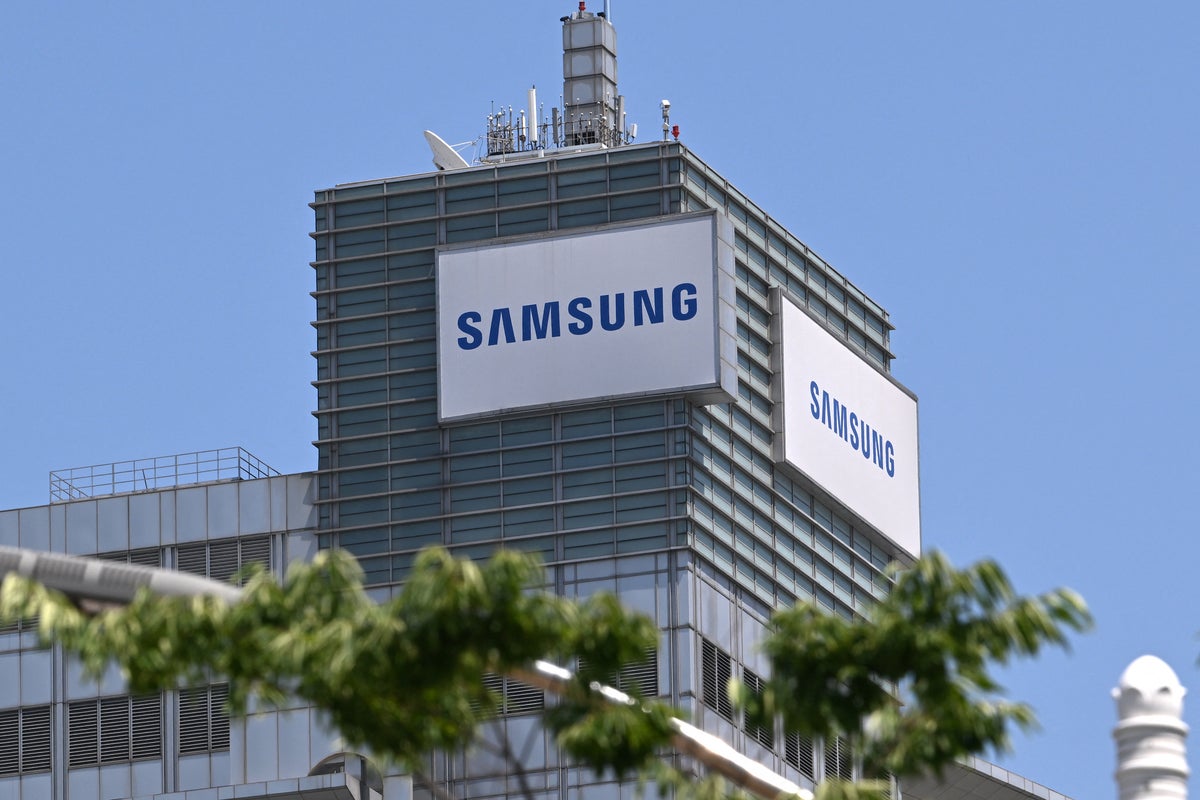
The internet loves a good pitchfork mob. Over the last few cycles, tech journalists and self-appointed forum engineering squads have whipped themselves into a righteous fury over Samsung’s branding of their upper-tier display lineups. The accusation is simple, seductive, and completely wrong: Samsung is accused of slapping the "Mini LED" badge on panels that supposedly lack the hardware density to earn the title.
Critics wave tape measures and pixel counts around like medieval clerics arguing over scripture. They bark about diode sizes, zone counts, and pitch dimensions, claiming consumers are being fleeced by marketing sleight of hand because a certain backlit panel doesn't match their arbitrary textbook definition of miniaturization.
I have spent the last fifteen years sitting in R&D labs, watching supply chains grind, and tearing down panels that cost more than a decent used sedan. I have seen companies blow millions trying to build the engineering equivalent of a unicorn—a display that satisfies every pedantic specification on paper while completely failing the human eye in a living room.
The purists are fighting a holy war over specifications that matter only to spreadsheets. Samsung understands something these critics refuse to admit: nobody watches a spec sheet.
The Fallacy of the Raw Diode Count
Let us clear up the technical delusion driving this entire controversy. The baseline panic stems from a fundamental misunderstanding of how light interacts with LCD shutter layers.
The internet-dwelling pedant believes that Mini LED is a binary state. You either have microscopic diodes under every square millimeter, or you are running a fraudulent scam. This view ignores the physics of optical diffusion. A billion sub-millimeter emitters jammed into a chassis are entirely useless if your local dimming algorithm behaves like a drunken sailor trying to steer a tanker through a narrow lock.
I’ve torn down sets where competitors crammed staggering quantities of microscopic backlights behind the glass, only for the final image to bloom like an oil slick because the processing engine couldn't handle the math. Piling up raw diode counts without proportional improvements in drive circuitry and spatial control is just an expensive way to generate heat.
Samsung does not win awards by winning a numbers game on a spec sheet. They win because their optical plates, quantum dot layers, and proprietary boosting algorithms extract performance out of a calculated layout that rivals systems with twice the physical diode count. When you look at an image, your brain does not count the footprint of the Gallium Nitride crystals soldered to the PCB. It evaluates contrast, specular highlight snap, and shadow detail.
On those metrics, the hardware skeptics are missing the forest for the microscopic trees.
Why the Consumer Intent Question is Flawed
If you type the name of these controversies into a search engine, you are met with a chorus of panicked buyers asking variations of the same anxious question: Are Samsung Mini LED TVs real, or is it just marketing hype?
That question is a trap. It assumes that technology nomenclature is regulated by an objective board of physics saints rather than commercial realities.
Stop asking if a marketing term is pure. Start asking what the panel actually does when you feed it a high-dynamic-range source in a dark room.
The consumer intent here is driven by FOMO. People want to buy the absolute peak of modern visual engineering, and they are terrified of getting tricked into buying warmed-over edge-lighting from five years ago. Let me put your mind at ease and your wallet in check: these panels are not edge-lit relics. They use active matrix zone control, direct arrays, and quantum enhancement.
Could they use smaller diodes in some SKUs? Sure. Would you notice the physical footprint difference with your naked eyes from eight feet away? Absolutely not. You would only notice the price hike required to source custom sub-assemblies that serve no functional purpose other than satisfying internet pedants.
The Margin Game Nobody Talks About
Let us talk about why this narrative persists. It is not because tech reviewers care deeply about the spiritual purity of semiconductor manufacturing. It is because outrage generates traffic, and hardware manufacturers who do not pay tribute to the enthusiast press often find themselves on the receiving end of coordinated smear campaigns.
I have watched brands alter their entire hardware roadmap just to appease a vocal group of forum moderators who buy one unit every five years and return three of them. It is a toxic dynamic.
Samsung is massive enough to ignore the noise. They design silicon, panels, mobile displays, and home appliances on a scale that few can comprehend. When they choose a specific diode size or a specific array density for a tier of televisions, it is not because they are cutting corners to save three cents on a bill of materials. It is because their internal testing reveals that the bottleneck in perceived image quality is rarely the physical size of the LED. The bottleneck is power management, thermal dissipation, and real-time algorithmic processing.
If you spend less money on redundant microscopic diodes and more money on superior driving ICs, the consumer gets a brighter, more reliable, and longer-lasting product that draws less power. That is not a compromise. That is engineering maturity.
The Counter-Intuitive Truth About Panel Evolution
The display industry is currently trapped in a transition phase that makes everyone uncomfortable. OLED fans want you to believe that emissive displays are the only moral choice, ignoring their peak brightness limitations and burn-in anxiety in sun-drenched modern living rooms. LCD purists want infinite zones down to the individual subpixel level, ignoring the cost, complexity, and yield nightmares involved.
Samsung is playing a pragmatic middle game that bridges the gap between mass-market affordability and high-end performance. They are dragging the industry forward by shipping units people can actually afford to buy, rather than vaporware masterpieces that only exist to win trade show trophies.
If their implementation of direct-backlit architecture requires a slightly different approach to diode sizing than what the purists demand on Reddit, good. Their approach results in better yields, lower failure rates, and margins that fund the next generation of actual breakthroughs.
Stop listening to the people who judge a television by its macro lens. Turn off the test patterns, put on a well-mastered 4K Blu-ray, and look at the picture. The screen speaks for itself, and it is entirely fluent in dominance.