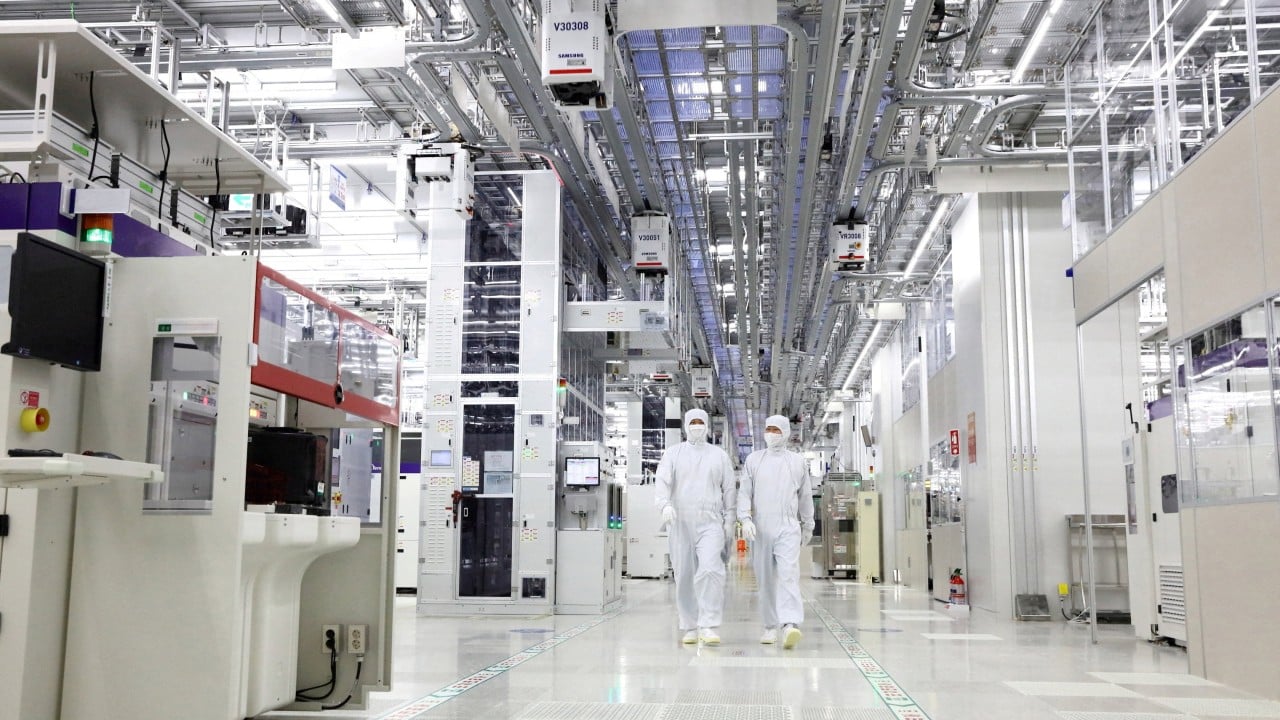
The tech press is weeping for Samsung’s mobile workers.
They look at the massive gap in annual bonuses—where semiconductor employees are pulling in up to 50% of their annual salaries in cash while the smartphone division gets a fraction of that—and they see a crisis. They call it a civil war. They call it a toxic cultural divide that is tearing the South Korean giant apart.
They are dead wrong.
The outrage machine has missed the fundamental reality of how hardware empires survive. Equal pay for unequal value is a corporate death sentence. The so-called "bonus feud" at Samsung isn’t a management failure; it is a masterclass in aggressive, meritocratic resource allocation.
If Samsung capitulates to the whining of its consumer electronics divisions and flattens its bonus structure, it will doom its only real moat: high-bandwidth memory (HBM) and foundry leadership.
The Soft Trap of Corporate Egalitarianism
Most business writers suffer from a chronic misunderstanding of how conglomerates work. They operate under the naive assumption that every division of a multi-tentacled beast like Samsung should feel equally valued.
Let’s dismantle that fantasy.
Samsung Electronics is not a monolithic family. It is an investment portfolio disguised as a consumer brand.
On one side, you have the Device Experience (DX) division, which makes smartphones, TVs, and washing machines. On the other, you have the Device Solutions (DS) division, which designs and manufactures semiconductors.
To suggest that a mechanical engineer designing the hinge on a folding phone deserves the same upside potential as a principal engineer figuring out the sub-2-nanometer yields on a gate-all-around (GAA) transistor architecture is offensive.
+------------------------------------+------------------------------------+
| Device Experience (DX)             | Device Solutions (DS)              |
| (Phones, TVs, Appliances)          | (Semiconductors, HBM, Foundry)     |
+------------------------------------+------------------------------------+
| Low barrier to entry               | Extreme, multi-billion dollar R&D  |
| Marketing-driven margins           | Physics-constrained yields         |
| Easily replaceable talent pool     | Generational, irreplaceable talent |
+------------------------------------+------------------------------------+
The talent markets for these two divisions are entirely different beasts. If a mobile software developer quits Samsung, they can be replaced in a month. If a world-class extreme ultraviolet (EUV) lithography specialist walks out the door to join SK Hynix or TSMC, Samsung loses years of institutional momentum and billions in market cap.
I’ve seen hardware companies sink entire product lines because they tried to play nice with internal politics. They diluted the bonus pools of their high-performing, high-risk R&D units to keep the peace with the marketing and sales teams. The result? The top-tier engineers quietly checked out, updated their resumes, and left.
You cannot run a bleeding-edge silicon business with B-tier talent. And you cannot attract A-tier silicon talent with a socialist bonus pool.
The $402,000 Distraction
Let's address the specific figure driving the headlines: the massive $402,000 maximum payout potential. The media frames this as an absurd, divisive sum.
But let’s look at the actual economics of the semiconductor cycle.
Silicon is a brutal, cyclical, capital-intensive industry. When the market is down, it is terrifyingly down. Memory prices crash, fabrication plants run at a loss, and the DS division's bonuses drop to absolute zero. The semiconductor workers accept this volatility. They sign up for the ride knowing that when the cycle peaks—driven by the insatiable demand for AI chips and GPU-adjacent memory—the payday will be legendary.
The mobile and home appliance divisions do not face this level of volatility. Their product cycles are predictable, annual, and shielded from the extreme swings of global silicon pricing.
To demand that mobile workers get a piece of the semiconductor windfall during a chip boom is pure opportunism. It is demanding the upside of a high-risk venture without ever exposing yourself to the downside.
If Samsung’s mobile division wants $400,000 bonuses, they need to build a product that commands the same strategic leverage as high-bandwidth memory in the age of generative AI. Until they do, they are just system integrators buying chips from other people—including their own colleagues down the hall.
Dismantling the Myth of "Synergy"
Corporate consultants love to throw around the word "collaboration" as if it is a magic cure for declining margins. They argue that a divided Samsung cannot compete with a unified Apple.
This comparison is structurally illiterate.
Apple is a design and integration shop. They outsource every single piece of physical manufacturing to TSMC, Foxconn, and a global supply chain. They can afford a unified culture because everyone is ultimately working on the exact same product: the iOS ecosystem.
Samsung is an industrial giant. It is a merchant foundry, a memory pioneer, a display manufacturer, and a consumer brand all stuffed into one corporate structure.
The friction between the divisions is not a bug; it is a feature.
When Samsung’s mobile division is forced to negotiate with the semiconductor division as an arm’s-length external client, it keeps both sides sharp. If the mobile division got preferential pricing or guaranteed supply just because they share a logo, the semiconductor division would lose its competitive edge. They would become lazy suppliers to a captive internal market.
By forcing these divisions to compete, fight, and yes, even resent each other’s bonuses, leadership ensures that neither division becomes a welfare recipient of the other's success.
The Actual Danger: Yields, Not Hurt Feelings
The real threat to Samsung has absolutely nothing to do with disgruntled smartphone assembly managers complaining on blind forums about their bonuses.
The real threat is that Samsung has fallen behind TSMC in advanced packaging and allowed SK Hynix to capture the lions share of the early HBM3e market.
To claw back that ground, Samsung must aggressively, unapologetically overcompensate the engineers who can fix their foundry yields. The bonus disparity isn't too wide; if anything, it isn't wide enough.
Estimated HBM Market Share (Approximate Industry Trend)
[SK Hynix]   █████████████████████████ 50%
[Samsung]    ██████████████████ 35%
[Micron]     ███████ 15%
Every spare dollar of profit must be funneled directly into the pockets of the people who can close that gap. The mobile workers' feelings are an acceptable casualty in this war. If Samsung loses the semiconductor race, the entire corporate group loses its geopolitical leverage. The smartphone business won't save them when the fabs go cold.
The Playbook for Unapologetic Leadership
If you are running a business with highly disparate divisions, stop trying to make everyone happy. It is a coward's strategy that guarantees mediocrity across the board.
- Identify your bottleneck talent. If 5% of your workforce creates 95% of your enterprise value, pay them like it. Ignore the complaints of the other 95%.
- Tie bonuses to division-specific market performance, not corporate-wide averages. If a division underperforms its direct competitors, its bonus pool should be zero, regardless of how well the parent company did.
- Embrace the friction. Internal competition breeds efficiency. Pacifying your workforce with artificial equity only masks deep-seated structural rot.
Stop apologizing for paying your stars what they are worth. The moment you start optimizing for harmony over performance is the moment your competitors eat your lunch.