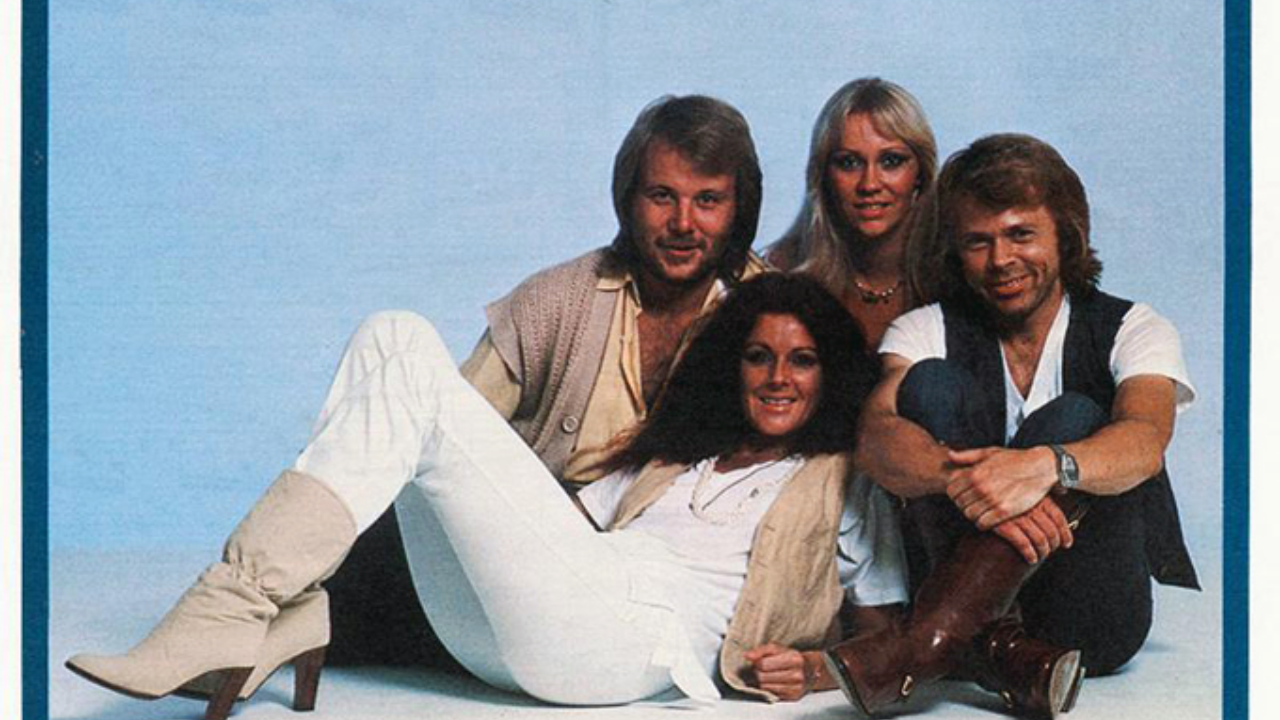
Most celebrity philanthropy suffers from terminal decay because it relies on episodic attention rather than structural cash flow. When a benefit concert ends or a fundraising campaign closes, capital inflows drop to zero while administrative overhead remains fixed. In 1979, Björn Ulvaeus and Benny Andersson bypassed this failure mode by permanently assigning 100 percent of the songwriting and publishing royalties from ABBA’s track "Chiquitita" to the United Nations Children's Fund (UNICEF). Over 45 years, that single intellectual property transfer has generated more than $5 million in unrestricted, recurring capital, demonstrating how perpetual copyright mechanics outperform traditional charitable fundraising.
Standard charitable initiatives operate on a linear donor-acquisition model that requires continuous marketing expenditure to replace lapsed donors. By contrast, an intellectual property endowment converts a depreciating attention event—the 1979 Music for UNICEF concert—into an appreciating, self-sustaining financial annuity. Because copyright law in major music markets protects musical compositions for the life of the author plus 70 years, UNICEF holds a multi-generational cash-flowing asset with zero customer acquisition cost and zero fulfillment overhead.
The Structural Architecture of Intellectual Property Philanthropy
To understand why "Chiquitita" outlasted nearly every other benefit single of its era, one must separate the two distinct copyright layers in recorded music: the master recording copyright and the musical composition (publishing) copyright. Most charity singles, such as Band Aid's "Do They Know It's Christmas?" or USA for Africa's "We Are the World," rely primarily on master recording sales and temporary licensing agreements among competing record labels and publishers. Those structures fracture over time due to complex royalty splits, expiring licensing windows, and shifting distribution rights.
Ulvaeus and Andersson eliminated multi-party friction at the point of origin. As the sole songwriters and rights holders of the composition via Polar Music, they executed a permanent assignment of the publishing rights to UNICEF. Under this architecture, every commercial exploitation of the underlying composition routes revenue directly to the beneficiary without passing through intermediate charitable foundations or artist management holding companies.
This structural design relies on three compounding mechanisms:
- Zero-Marginal-Cost Distribution: Once a musical composition is registered with global Performance Rights Organizations (PROs) and mechanical licensing agencies, the cost of collecting royalties across terrestrial radio, television broadcast, physical sales, and digital streaming is absorbed by the existing industry infrastructure. UNICEF incurs no operational expense to monetize the asset.
- Linguistic Market Expansion: Shortly after recording the English version, ABBA recorded a Spanish-language adaptation ("Chiquitita") in early 1979. Rather than treating Latin America and Spain as secondary export markets, the Spanish recording penetrated domestic radio charts across Argentina, Chile, Mexico, and Spain, doubling the geographic surface area generating performance and mechanical royalties.
- Intergenerational Catalog Resilience: Unlike topical charity songs tied to a specific famine or political crisis, "Chiquitita" was written as a universal ballad of emotional reassurance. Because the lyrics contain no date-stamped references to 1979 or specific humanitarian crises, the track remains eligible for commercial synchronization, algorithmic playlisting, and multigenerational radio rotation decades after its release.
Revenue Mechanics Across Shifting Media Eras
A 45-year revenue tail requires an asset capable of surviving four distinct technological transitions in music consumption: vinyl and cassette retail (1979–1988), compact disc replacement cycles (1989–2005), digital download fragmentation (2006–2014), and algorithmic streaming dominance (2015–present). Each era altered how publishing royalties were calculated and collected, yet the underlying legal claim remained intact.
During the initial physical retail cycle between 1979 and 1981, revenue was driven by mechanical royalties—statutory payments owed to the songwriter for every physical unit pressed and sold. "Chiquitita" reached number one in ten countries, including the United Kingdom, Ireland, Belgium, the Netherlands, Switzerland, Spain, Mexico, and New Zealand. In the United Kingdom alone, the single sold over 850,000 copies, creating an immediate capital injection for UNICEF's International Year of the Child initiative in 1979.
As physical single sales tapered off in the mid-1980s, the asset transitioned into a passive income generator governed by public performance royalties. Whenever a radio station, television network, retail store, or live venue broadcasts a composition, the venue pays a blanket licensing fee to local PROs such as STIM in Sweden, PRS in the United Kingdom, or ASCAP and BMI in the United States. These organizations distribute pooled fees based on airplay logs. Because ABBA's catalog remained a staple of Adult Contemporary and Oldies radio formats globally, "Chiquitita" generated predictable quarterly distributions throughout the 1990s and 2000s, insulated from the piracy crisis that devastated master recording revenues during the peer-to-peer file-sharing era.
The third phase of monetization emerged through catalog aggregation and theatrical licensing. The 1992 compilation album ABBA Gold: Greatest Hits became one of the highest-selling albums in recording history, moving over 30 million units worldwide. Because "Chiquitita" was sequenced onto this permanent retail staple, every new cohort of consumers purchasing ABBA Gold triggered fresh mechanical royalty payments to UNICEF. The 1999 stage musical Mamma Mia! and its 2008 film adaptation introduced a secondary synchronization and dramatic performance revenue stream, embedding the composition into global theatrical runs that continue across dozens of international territories.
Algorithmic Discovery and the Streaming Multiplier
The transition to on-demand audio streaming fundamentally altered catalog economics, shifting value from front-line new releases to deep catalog tracks with high familiarity scores. On platforms like Spotify, Apple Music, and YouTube, "Chiquitita" operates as a perpetual micro-transaction engine.
Streaming royalties divide into two streams on the publishing side: performance royalties (paid when a track is streamed interactively) and mechanical royalties (paid for the digital reproduction of the composition). While individual per-stream payouts average fractions of a cent, scale and velocity compensate for low unit margins. As of the mid-2020s, "Chiquitita" has accumulated hundreds of millions of streams across major audio platforms, supplemented by hundreds of millions of views on official video uploads.
In 2020 and 2021, a structural anomaly in user-generated content platforms further accelerated these micro-transactions. The orchestral piano outro of "Chiquitita" went viral on TikTok and Instagram Reels, detached from its 1970s disco-pop context and adopted by Generation Z users as an emotional scoring bed for short-form video. Under licensing agreements between major publishers and short-form video platforms, uses of compositions in user-generated videos trigger blanket licensing payouts and drive downstream consumption on full-track streaming services. The composition acquired millions of new listeners without UNICEF spending a single dollar on digital outreach or donor acquisition.
Capital Allocation Efficiency Inside UNICEF
To evaluate the financial weight of $5 million over 45 years, one must examine the quality of the capital rather than merely the nominal sum. In institutional philanthropy, funds are bifurcated into restricted grants and unrestricted core funding.
Restricted grants are earmarked by donors for specific geographic regions, disease verticals, or discrete line items, often carrying heavy compliance, reporting, and auditing costs that consume 10 to 20 percent of the grant's value. Unrestricted funds, conversely, allow an agency to deploy capital immediately where marginal utility is highest—such as rapid emergency response, logistics bottlenecks, or underfunded preventative programs that lack media appeal.
The "Chiquitita" royalty stream flows into UNICEF as unrestricted revenue, historically designated toward protecting children from violence, exploitation, and abuse, including targeted interventions in Central America and Guatemala. In humanitarian operations, unrestricted capital functions as organizational liquidity. When an acute crisis hits—such as a sudden displacement event or localized violence—UNICEF does not need to wait 90 days to launch an emergency appeal, design marketing collateral, and clear payment processing holds. The quarterly royalty check acts as pre-positioned working capital.
The Opportunity Cost and Tax Mechanics of Copyright Donation
From a corporate finance perspective, donating an income-producing copyright differs radically from donating cash. When an artist donates $1 million in cash after receiving royalties, the income is first taxed at ordinary personal or corporate income tax rates—which in Sweden during the late 1970s exceeded 80 percent at the top marginal bracket. By assigning the copyright ownership directly to a recognized non-profit entity before the income materialized, Ulvaeus and Andersson avoided the tax drag that would have stripped away the vast majority of the capital before it ever reached children's programs.
The long-term opportunity cost to the songwriters is substantial. Had Ulvaeus and Andersson retained the publishing rights and invested the post-tax proceeds into a diversified equity portfolio or real estate over 45 years, the compounded value would vastly exceed $5 million. By surrendering the publishing rights in perpetuity, they absorbed a permanent reduction in enterprise value for Polar Music in exchange for guaranteeing a sovereign, irrevocable revenue floor for UNICEF.
Structural Limitations of the Royalty Endowment Model
While the "Chiquitita" transfer represents an optimal execution of intellectual property philanthropy, the model carries severe structural constraints that prevent it from scaling across the broader entertainment industry:
- Hit-Rate Skewness: Music publishing follows an extreme power-law distribution. Over 99 percent of recorded songs fail to recoup their initial production and marketing costs, generating negligible long-term royalties. Donating the rights to an unproven track yields zero philanthropic value; donating the rights to a proven hit requires the creator to sacrifice their primary wealth-building asset.
- Catalog Fragmentation: Modern pop compositions routinely involve between four and ten credited songwriters, multiple publishing administrators, and private equity catalog funds (such as Hipgnosis or Primary Wave) that hold veto power over rights transfers. Securing unanimous consent to assign 100 percent of publishing rights to a charity is legally prohibitive in contemporary music production.
- Inflationary Erosion of Statutory Rates: Mechanical royalty rates in several jurisdictions were historically fixed by government statute rather than indexed to inflation, causing the real purchasing power of per-unit sales to erode over multi-decade horizons until recent regulatory adjustments in the streaming era.
- Currency and Cross-Border Leakage: Collecting royalties from over 100 national PROs introduces administrative friction. Local collection societies deduct administrative fees ranging from 10 to 25 percent before remitting funds internationally, and currency fluctuations between emerging markets and the US dollar create variance in realized capital.
Executing Perpetual Asset Transfers in Modern Philanthropy
For creators, founders, and intellectual property holders seeking to replicate the financial durability of the ABBA-UNICEF structure, cash pledges are an inferior vehicle. High-impact philanthropy requires transferring appreciating or cash-flowing equity directly into the beneficiary's balance sheet prior to liquidity events.
Intellectual property owners should structure charitable transfers around three operational rules:
- Assign Upstream Rights, Not Downstream Profits: Transfer ownership of the underlying copyright, patent, or equity stake directly to the non-profit entity rather than promising a percentage of net profits. Net profit pledges are vulnerable to creative accounting, management changes, and corporate restructuring; direct asset ownership guarantees legal standing and direct payment routing from collection agencies.
- Select Evergreen, Non-Topical Assets: Charitable endowments require assets with low obsolescence risk. Software patents or trend-dependent media decay within five years. Foundations should prioritize foundational copyrights, broad-utility trademarks, or evergreen educational and artistic works capable of surviving multiple technological distribution shifts.
- Eliminate Intermediary Foundations: Route the asset directly to the operating charity's treasury rather than establishing a bespoke family foundation to manage the royalty stream. A standalone foundation introduces redundant legal, auditing, and staffing overhead that consumes the exact compounding yield the asset was designed to protect.