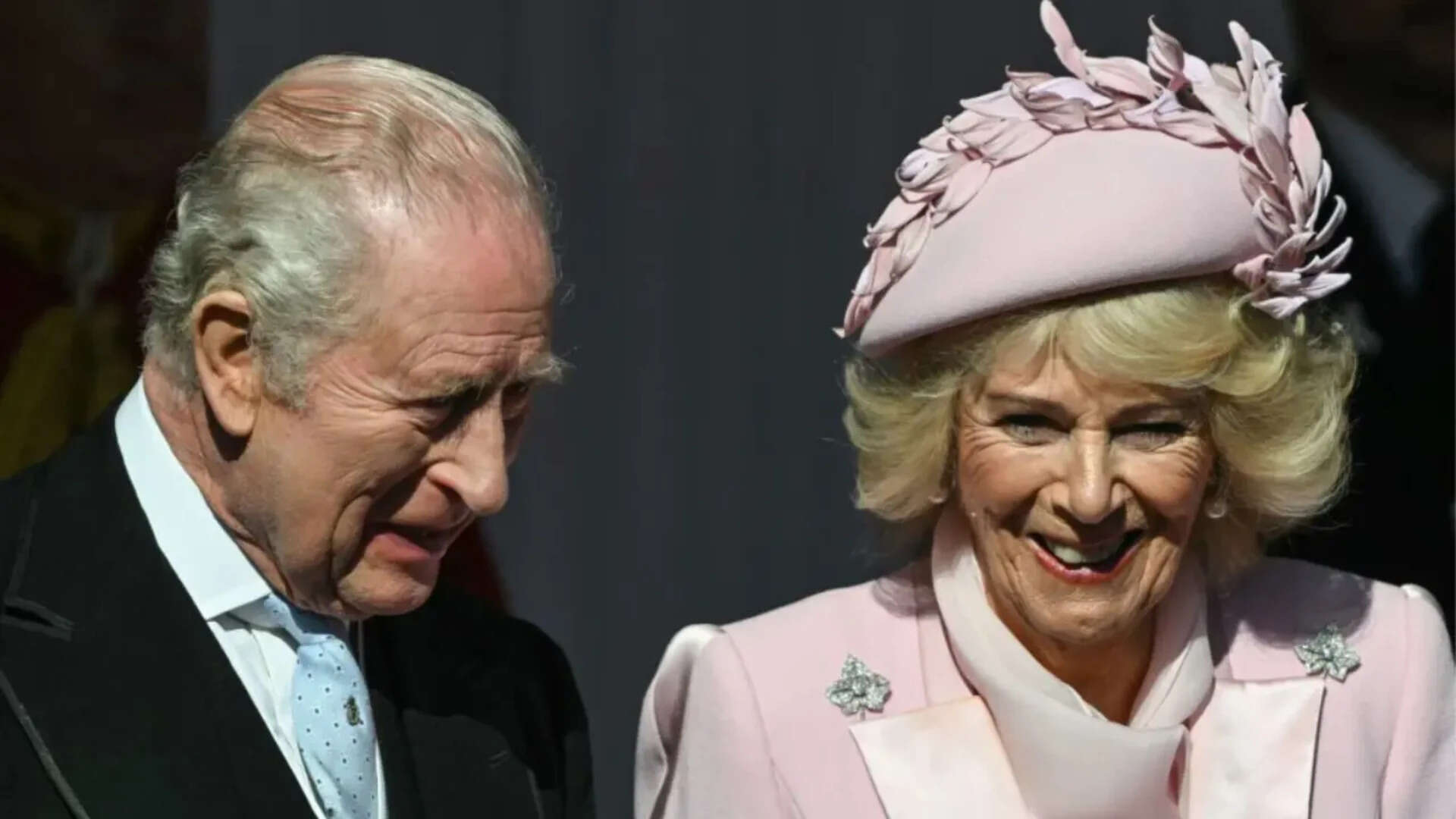
Buckingham Palace has formally spiked any possibility of King Charles III meeting with survivors of Jeffrey Epstein during his four-day state visit to the United States this month. The decision, framed by officials as a necessary legal safeguard, effectively shuts the door on a high-stakes campaign by victims' advocates and US lawmakers who sought a symbolic gesture of reconciliation. As the King and Queen Camilla prepare for an itinerary centered on the 250th anniversary of American independence, the ghost of the Epstein scandal remains the one guest the British monarchy cannot successfully uninvite.
Palace sources confirm that while the King "profoundly" acknowledges the suffering of survivors, any face-to-face interaction is a non-starter. The reason cited is a rigid adherence to constitutional and legal neutrality. With the King’s brother, the man formerly known as Prince Andrew, currently the subject of ongoing police assessments and potential criminal inquiries regarding his past conduct, the Palace view is that any meeting between the Sovereign and Epstein survivors could be interpreted as a comment on the judicial process. It is a calculated retreat behind the ramparts of royal protocol.
Diplomacy in a Minefield
The visit, scheduled for April 27 to 30, was designed to be a soft-power triumph. King Charles is set to address a joint meeting of the US Congress—a rarity for a British monarch—and attend a state dinner hosted by President Donald Trump. However, the backdrop is fraught. UK-US relations have hit a rough patch, largely due to disagreements over military strategy in the Middle East and the Trump administration's vocal criticism of the British government’s stance.
In this climate, the monarchy’s primary objective is stability. A meeting with Epstein survivors would represent a radical departure from the "never complain, never explain" mantra that has served the House of Windsor for a century. For the Palace, the risk of a survivor making a public demand or a specific allegation against a member of the royal family in the presence of the King is a variable they are unwilling to manage.
The Andrew Problem
The shadow of Andrew Mountbatten-Windsor looms over every mile of the King’s journey to Washington, New York, and Virginia. Following the removal of his royal titles and his "Royal Highness" style in late 2025, the disgraced former prince has become a private citizen in name, but remains a public liability in practice.
The legal reality is cold and precise. If King Charles were to meet with individuals such as Virginia Giuffre or other advocates, he would be stepping into a territory where every handshake is a headline and every word is evidence. Sources close to the royal legal team suggest that even a private, untelevised meeting carries the "unacceptable risk" of being characterized as an attempt to influence or validate specific testimonies while police investigations in the UK remain active.
Camilla’s Parallel Path
While the King avoids the Epstein controversy, Queen Camilla is taking a markedly different approach to the broader issue of sexual violence. Her schedule is packed with engagements alongside organizations supporting survivors of domestic abuse and violence against women. This is not accidental.
By focusing on institutional advocacy rather than individual cases tied to the Epstein network, the Queen provides a "safe" outlet for the monarchy’s philanthropic efforts in this sector. It is a strategic partitioning of royal duty. One side of the family deals with the fallout of past associations, while the other maintains the public-facing commitment to modern social issues. This allows the Palace to claim it is supporting survivors in a general sense while specifically avoiding those who could point a finger at the family tree.
The Limits of Soft Power
The refusal to meet with these survivors highlights the hard limits of royal diplomacy. While the King can use his influence to bridge gaps between Prime Minister Keir Starmer and the White House, he cannot use that same influence to heal the wounds of a scandal that reached into the heart of the royal household.
Advocacy groups have pointed out the irony of the King visiting the US to celebrate "liberty" and "independence" while refusing to engage with women who allege they were trafficked into the orbits of the powerful men he represents. To these groups, the constitutional excuse feels like a convenient shield. However, from the perspective of the British state, the preservation of the crown’s neutrality—especially when a criminal investigation is looming over a family member—is the higher priority.
The Washington Agenda
In Washington, the King’s focus will remain on the "special relationship." His address to Congress will likely lean heavily on shared history and the 250-year evolution from colonial subjects to democratic allies. He will participate in a ceremonial military review and hold bilateral talks with President Trump that are expected to touch on the war in Iran and transatlantic trade.
- April 27: Arrival in Washington, D.C., and private tea with the President and First Lady.
- April 28: Address to Congress and White House state dinner.
- April 29: 9/11 memorial visit in New York and community events in Virginia.
- April 30: Final US engagements before departing for Bermuda.
In New York, the King and Queen will meet with families of 9/11 victims, a move designed to show solidarity in the face of shared tragedy. But even here, the silence regarding Epstein will be deafening for those who believe the monarchy owes the survivors more than just legalistic distance.
A Legacy of Avoidance
The decision to stay away from the Epstein survivors is a reminder that for the House of Windsor, survival often depends on silence. The King is operating within a framework that prioritizes the institution over the individual. To meet with the survivors would be to admit that the Epstein scandal is a royal problem, not just an "Andrew problem."
By maintaining this distance, King Charles preserves his ability to act as a neutral diplomat on the world stage, but he does so at the cost of a significant moral gesture. The Palace has bet that the public will be more interested in the pomp of a state dinner and the historical weight of a speech to Congress than in a meeting that was never on the official books. It is a bet they have won many times before, yet the questions about the Epstein connection are unlikely to disappear simply because the King refuses to hear them in person.
The King's flight will eventually leave for Bermuda, then back to London, but the unresolved tension of the Epstein victims will remain on American soil, waiting for the next time the British monarchy attempts to project a moral authority it has yet to fully reconcile with its own past.