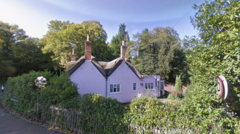
The long-standing stalemate over Royal Lodge has finally broken. Prince Andrew is reportedly vacating the 30-room mansion in Windsor Great Park, ending a multi-year standoff with King Charles III that tested the limits of fraternal loyalty and the Crown Estate’s patience. For years, the Duke of York clung to the property as his last remaining vestige of royal status, but the financial burden of maintaining a Grade II listed structure without a sovereign grant proved insurmountable. This is not merely a story of a brother being kicked out of his home. It is a calculated restructuring of the monarchy’s real estate portfolio and a brutal lesson in the liabilities of a disgraced public figure.
The transition from Royal Lodge to a smaller residence, likely Frogmore Cottage, represents more than a downsizing. It signals the end of an era where secondary royals could occupy palatial estates with minimal transparency regarding upkeep costs. The King’s decision to cut off Andrew’s private security allowance—a sum estimated at £3 million annually—served as the ultimate lever. Without that funding, and with the property requiring millions in urgent repairs to combat rising damp and crumbling masonry, the Duke’s position became physically and financially untenable.
The Crown Estate and the Business of Sovereignty
To understand why this exit was inevitable, one must look at the unique legal machinery of the Crown Estate. It is not the private property of the King, nor is it government property in the traditional sense. It is a corporation managed by independent commissioners, with profits flowing to the Treasury. When Andrew signed a 75-year lease in 2003, he paid a £1 million lump sum. In exchange, he was expected to invest significantly in the property’s preservation.
Under the terms of the lease, the tenant is responsible for the structural integrity of the building. Royal Lodge is a sprawling, Regency-era behemoth that demands constant attention. Sources familiar with the estate’s management suggest that the required renovations have fallen behind schedule. For the Crown Estate, a tenant who cannot afford the repairs is a liability. If the building falls into disrepair, the asset value drops, and the commissioners have a fiduciary duty to intervene. The King’s move to withdraw financial support was a masterclass in bureaucratic pressure. He didn’t have to evict his brother; he simply had to stop subsidizing the Duke's ability to stay.
The Security Paradox
Security was the real battlefield. After the Duke was stripped of his military titles and royal patronages following the fallout from his association with Jeffrey Epstein, his right to taxpayer-funded police protection vanished. For a time, the late Queen Elizabeth II and subsequently King Charles covered the cost of private security teams.
Maintaining a perimeter around a 90-acre estate in the middle of Windsor Great Park is an logistical nightmare. It requires 24-hour monitoring, sophisticated surveillance tech, and a rotation of highly trained personnel. When the King informed the security team that their contract would not be renewed, the message was clear. Royal Lodge became a gilded cage that the Duke could no longer afford to lock. Moving to a smaller, more secure perimeter within the protected "Ring of Steel" around Windsor Castle reduces the cost and the complexity of his protection. It is a pragmatic retreat masquerading as a family compromise.
Structural Decay and the £2 Million Bill
A house of 30 rooms is not a home; it is a full-time infrastructure project. Royal Lodge has suffered from years of visible neglect. Scaffolding has become a permanent fixture on parts of the facade. Reports indicate that the internal state of the house includes peeling paint and significant mold issues—problems that require specialized, expensive restoration techniques allowed for heritage buildings.
The Duke reportedly spent roughly £7.5 million on renovations since moving in, but the ongoing "burn rate" for a property of that size is astronomical. In the world of high-end real estate, deferred maintenance is a debt that eventually calls for payment. By surrendering the lease, Andrew avoids the immediate pressure of a multi-million pound renovation bill he has no clear way of paying. For the King, reclaiming the property allows the Crown to potentially lease it to a high-net-worth individual or a working royal who can actually afford the "heritage tax" that comes with such an address.
The Prince’s Diminishing Portfolio
The loss of Royal Lodge is the final chapter in the Duke’s professional and social contraction. Since 2019, his world has shrunk from international trade envoy duties to the confines of the Windsor estate. His previous sale of Sunninghill Park—the "Dallas" style mansion gifted by the Queen—and the more recent sale of his Swiss ski chalet were supposed to provide a financial cushion. However, legal settlements and the sheer cost of living a royal lifestyle without a royal income have drained those reserves.
His relocation marks a shift in the monarchy's internal policy toward "non-working" royals. The King is moving toward a leaner operation. Large estates are being reconsidered for their commercial potential or their utility for working members of the family, such as the Prince and Princess of Wales. Andrew's insistence on staying at Royal Lodge was viewed by many in the Palace as an optics disaster—a man with no public role living in a house larger than those occupied by the future King.
The Future of Royal Lodge
What happens to a 30-room mansion once the most controversial tenant in Britain leaves? The Crown Estate has several options. They could find a new commercial tenant, though the security implications of having a private citizen living so close to the King’s primary residence are significant. Alternatively, it could be repurposed for the Prince of Wales, providing William and Catherine with the space and privacy they lack at their current, more modest home, Adelaide Cottage.
There is also the possibility of the property being opened to the public in some capacity, though its location within the private Home Park makes that unlikely. Whatever the outcome, the departure of Prince Andrew removes a significant headache for the Palace's communications team. It ends the daily stories of "The Siege of Royal Lodge" and allows the King to present a unified front of fiscal responsibility.
The Duke's exit is a cold, hard business decision. In the modern era, the monarchy cannot afford the luxury of sentimentality when it comes to assets that cost millions in upkeep and generate zero public goodwill. The Duke of York is finding out that a lease is only as strong as the bank account behind it.
Verify the status of the Duke’s remaining assets and his transition to Frogmore Cottage to understand how the royal footprint in Windsor is being redrawn for the next decade.