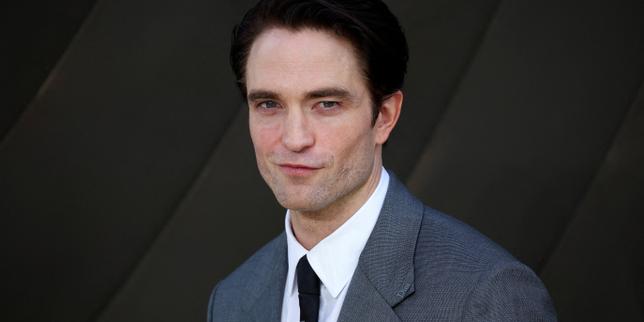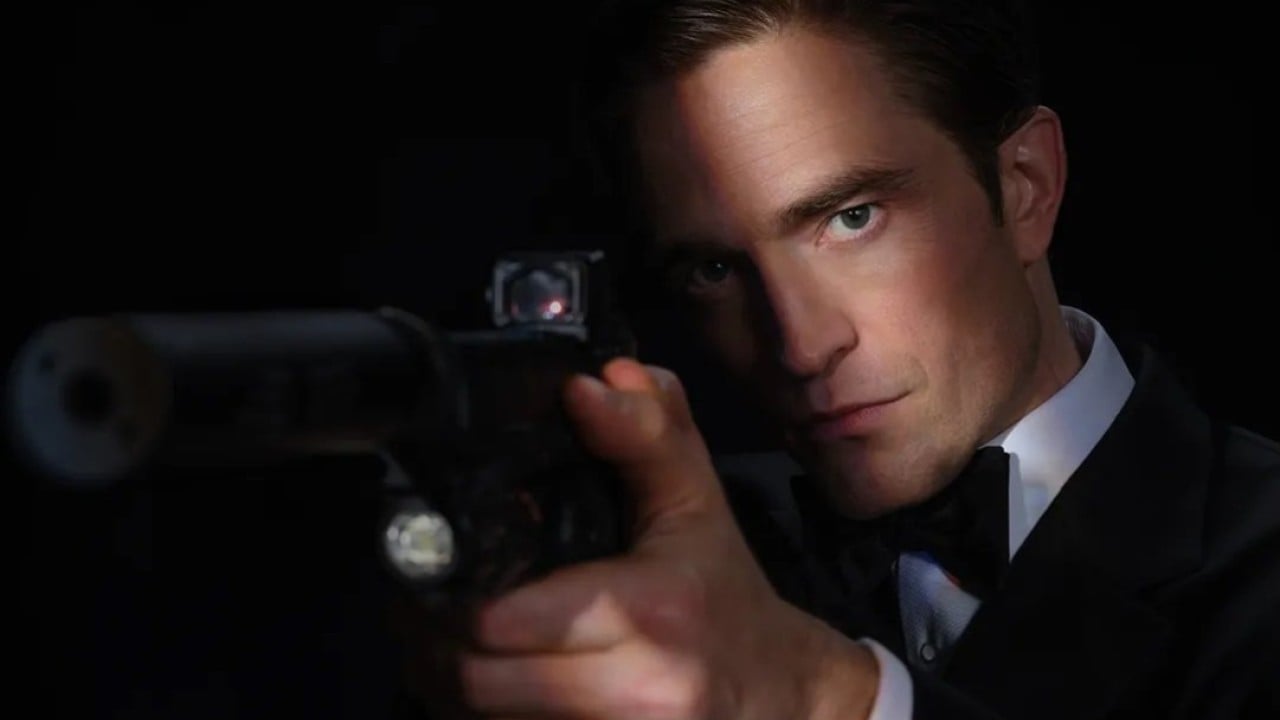
Rumors surrounding the next actor to inherit the tuxedo after Daniel Craig have dominated Hollywood trade coverage for years, yet the push to install Robert Pattinson as the 7th James Bond reveals far more about studio survival than simple celebrity casting. Eon Productions and Amazon MGM Studios face a severe structural dilemma. They must transition a sixty-year-old theatrical franchise into a streaming-first corporate ecosystem without alienating the legacy audience that kept the brand solvent through decades of shifting box office trends.
Most entertainment outlets treat the casting of James Bond like a glorified popularity contest, tallying betting odds from British bookmakers and debating who looks sharpest in a bespoke Savile Row suit. That surface-level coverage misses the actual mechanics of how Barbara Broccoli and Michael G. Wilson operate. Casting Bond is never an isolated creative decision. It is a multi-hundred-million-dollar risk-management strategy designed to lock in a specific tonal direction for at least a decade. When a headline claims Robert Pattinson has been named the 7th James Bond, whether as a premature scoop or an outright fabrication designed to farm clicks, it taps into a very real industry calculation.
The Anatomy of a Premature Casting Scoop
Let us look at the cold facts first. A competitor headline declaring that Robert Pattinson has officially taken over from Daniel Craig relies on the oldest trick in entertainment journalism—presenting persistent industry chatter as a done deal. Because the URL provided in the reference is undefined, we cannot audit the specific anonymous sources that outlet leaned on, though the pattern is immediately recognizable to anyone who has covered Pinewood Studios since the Pierce Brosnan era.
Whenever Eon Productions enters an extended development cycle, information vacuums form. Agents plant stories to elevate their clients' quote prices. Tabloids recycle old quotes from directors like Christopher Nolan or Denis Villeneuve to manufacture momentum. And readers, exhausted by a multi-year wait following the definitive ending of No Time to Die in 2021, click on anything promising finality.
Yet dismissing the Pattinson connection entirely ignores why his name refuses to leave the shortlist. Unlike younger contenders whose resumes consist mostly of streaming romances or mid-budget period dramas, Pattinson has already survived the exact kind of suffocating franchise scrutiny that breaks most leading men.
Why Eon Productions Needs a Post-Craig Reset
Daniel Craig left a scorched-earth problem behind him. For fifteen years across five films, Eon systematically dismantled the traditional Bond formula. They stripped away the invincibility, introduced serialized continuity, gave the character a biological daughter, and finally killed him off with a missile strike. You do not simply pivot from that level of operatic finality back to a breezy, Roger Moore-style adventure without giving the audience whiplash.
The next actor cannot just wear the watch and order the martini. He has to justify why the franchise still exists in a theatrical marketplace dominated by spectacle fatigue and shrinking theatrical windows.
Consider the demographic math that Amazon MGM executives stare at every quarter. The core theatrical audience that propelled Skyfall past the billion-dollar mark in 2012 is aging out of regular cinema attendance. Meanwhile, Gen Z viewers treat theatrical releases as optional unless the event carries distinct auteur credibility or massive cultural meme value. Hiring a safe, square-jawed television actor might satisfy traditionalists, but it risks turning Bond into a museum piece—a polished, predictable relic that feels irrelevant next to modern action cinema.
Pattinson represents the exact opposite bet. Over the last decade, he deliberately burned down his Twilight teen-idol persona by working exclusively with uncompromising auteurs—David Cronenberg, the Safdie brothers, Claire Denis, Robert Eggers, and Bong Joon Ho. He proved he could vanish into grotesque, unlikable, or deeply eccentric roles before stepping back into mainstream studio tentpoles with Christopher Nolan's Tenet and Matt Reeves's The Batman.
The Financial Logic Behind the Auteur Pivot
To understand why a studio would pursue an actor famous for resisting traditional Hollywood polish, look at how modern blockbusters actually turn a profit. Production budgets for global action tentpoles routinely exceed $250 million before a single dollar is spent on global prints and advertising. At that price point, a film cannot rely solely on opening-weekend nostalgia. It requires critical prestige to sustain theatrical legs across international markets, particularly in Europe and Asia where the Bond brand carries outsized weight.
An actor with Pattinson's specific filmography acts as an immediate signal to top-tier directors. Auteur filmmakers who would normally reject a studio-controlled franchise—directors who demand final-cut leverage and script autonomy—suddenly take the meeting when the leading man brings built-in arthouse legitimacy. In a hypothetical scenario where Eon secures a director like Alfonso Cuarón or Edward Berger, having a lead actor comfortable with psychological ambiguity allows the production to pitch the film as prestige cinema rather than mere intellectual property maintenance.
The Scheduling Trap Nobody Mentions
If Robert Pattinson makes complete strategic sense on paper, why has an official announcement remained elusive? The answer lies in the brutal logistics of modern franchise contracts.
Eon Productions historically demands absolute exclusivity and multi-picture commitments that span ten to fifteen years. When Daniel Craig signed on for Casino Royale, his schedule effectively belonged to Pinewood Studios. Every passion project, every independent film, and every stage play had to be wedged into the shrinking gaps between massive global press tours and six-month physical shoots.
Pattinson is already anchored to Warner Bros. through The Batman universe, a franchise with its own notoriously slow development cycle and sprawling spin-off ambitions. Furthermore, he maintains an active slate of prestige projects, including high-profile collaborations that require extensive location shooting. For Eon to lock him in as the 7th James Bond, Amazon MGM would have to negotiate an unprecedented scheduling truce with a rival studio, or drastically shorten the traditional Bond production pipeline.
There is also the matter of age. Historically, Eon prefers to cast actors in their early-to-mid thirties so they can squeeze four or five installments out of them before physical wear and tear forces a recast. Sean Connery was 32 when Dr. No released. George Lazenby was 30. Daniel Craig was 38, and by his fifth film, the physical toll had become a recurring talking point in every promotional interview. Born in 1986, Pattinson is already forty years old in 2026. If he steps onto a soundstage today, he would be pushing fifty by the time his third outing hits theaters.
How the Amazon Merger Altered the Bond Equation
Any serious analysis of the 7th James Bond must account for the elephant sitting in the Culver City boardroom. When Amazon acquired MGM in 2022, it paid $8.5 billion largely for the crown jewels of its catalog, with 007 sitting squarely at the top of the valuation sheet.
For decades, Eon Productions operated like an artisanal family business disguised as a blockbuster factory. Albert "Cubby" Broccoli and Harry Saltzman established a strict creative firewall that survived studio bankruptcies, leadership purges at Sony, and shifting distribution models. Barbara Broccoli and Michael G. Wilson inherited that ironclad control. Amazon cannot legally force a casting choice, greenlight a streaming spin-off, or alter the release strategy without Eon's explicit sign-off.
Yet corporate gravity always exerts pressure. Amazon Prime Video desperately needs flagship theatrical events to drive subscriber retention and justify its massive capital expenditures. A traditional, old-fashioned Bond casting—someone safe, compliant, and predictable—gives Amazon a reliable corporate asset. A volatile, unconventional choice like Pattinson hands immense creative leverage back to the talent and the producers, making it far harder for a tech conglomerate to sand down the edges for algorithmic appeal.
The Counter-Argument Against Casting a Mega-Star
Industry veterans know that Eon usually avoids hiring actors who already carry massive franchise baggage. They passed on established stars for decades because the role of James Bond works best when the actor disappears into the silhouette of the character.
Look at the historical precedent. Pierce Brosnan was famous from television's Remington Steele, not a billion-dollar theatrical universe. Timothy Dalton was a respected stage actor. Daniel Craig was a critically acclaimed character actor best known for Layer Cake and Munich before he walked out of the ocean in the Bahamas. Even Sean Connery was virtually unknown to global audiences before 1962.
When an actor arrives with an existing, hyper-visible superhero identity, the audience spends the first twenty minutes of the movie reconciling two competing pop-culture icons. Watching Bruce Wayne order a vodka martini creates a cognitive friction that Eon has spent sixty years trying to avoid. If the producers ultimately pivot toward a lesser-known British actor in his early thirties—someone like Aaron Taylor-Johnson, Callum Turner, or an undiscovered stage performer—it will be because they decided that preserving the purity of the Bond brand outweighs the immediate box-office insurance of a global movie star.
What the Next Era of 007 Actually Requires
Strip away the tabloid noise, the fake casting announcements, and the endless social media fan-casting, and the blueprint for the next James Bond becomes remarkably clear. The franchise is standing at the exact same crossroads it faced in 1995 with GoldenEye and in 2006 with Casino Royale.
In 1995, the Cold War had ended, the Soviet Union had collapsed, and critics openly questioned whether a relic of British imperial fantasy had any place in the modern world. Eon responded by leaning into self-awareness, acknowledging Bond's anachronistic nature while updating the spectacle. In 2006, the hyper-realistic, shaky-cam brutality of the Jason Bourne films made the invisible cars and laser watches of Die Another Day look ridiculous overnight. Eon responded by stripping the character down to raw muscle, trauma, and parkour.
Today, the threat to James Bond is not a rival spy franchise. It is audience apathy toward formulaic intellectual property. Viewers have become hyper-literate in studio mechanics; they can spot a committee-designed script within ten minutes.
Whether Robert Pattinson ultimately steps into the gunbarrel sequence or serves merely as the benchmark against which every other contender is measured, his presence at the center of the conversation proves one undeniable reality. Eon Productions knows that playing it safe is the single most dangerous move left on the board. The next Bond cannot simply repeat the past—he has to make audiences care about going to a movie theater again.