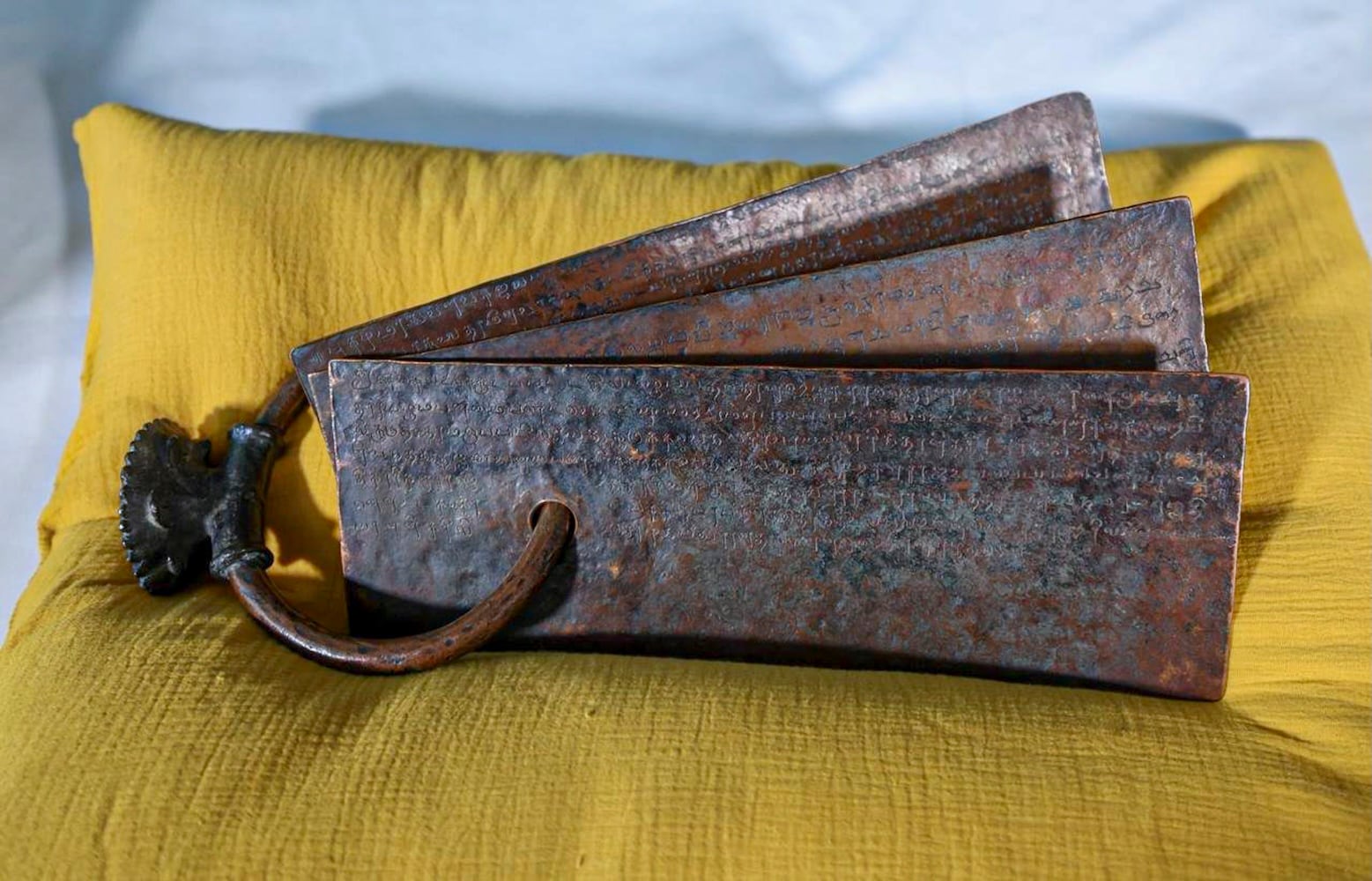
India just pulled off a major historical heist in reverse. During his official visit to The Hague, Prime Minister Narendra Modi stood alongside Dutch Prime Minister Rob Jetten as the Netherlands officially handed back the legendary 11th-century Chola copper plates. If you think this is just about some old, dusty metal changing hands, you're missing the entire point.
Known globally as the Leiden Plates, or the Anaimangalam Plates back home, these artifacts aren't just museum pieces. They're the highly sophisticated legal deeds of a massive seafaring empire. For 14 long years, Indian diplomats and cultural activists fought to get these specific items back. Their successful return marks a massive shift in how the world views colonial plunder and cultural restitution. Building on this topic, you can also read: The Real Reason India is Arming the South China Sea.
The plates represent a gold standard of historical documentation. They weigh a massive 30 kilograms, bound by a heavy bronze ring that bears the unmistakable royal seal of Rajendra Chola I. They don't just tell us about who ruled; they tell us exactly how the Cholas managed global trade, religion, and international law 1,000 years ago.
The Story Behind the 30 Kilo Royal Deed
Let's clear up a common misconception right away. People often assume ancient empires were primitive. The Chola dynasty was anything but. They ran a complex administrative machine. Analysts at Al Jazeera have shared their thoughts on this matter.
The Leiden Plates are actually split into two distinct parts. One part is written in Sanskrit, the other in Tamil. This dual-language setup wasn't random. It served a precise legal purpose. The plates record a massive financial decision made by the great Emperor Rajaraja Chola I, the man who built the Brihadisvara Temple in Thanjavur. He made a verbal promise to donate the tax revenues of 26 entire villages surrounding the port town of Nagapattinam to a Buddhist monastery called Chulamanivarmavihara.
Here is where the story gets fascinating. Rajaraja made the promise verbally, and scribes wrote it down on fragile palm leaves. But palm leaves rot. When his equally legendary son, Rajendra Chola I, took the throne, he decided to make his father's promise permanent. He ordered the entire agreement etched into 21 massive copper plates and three smaller ones. By binding them with a bronze ring and stamping it with the royal seal, Rajendra created an unforgeable, weatherproof legal contract.
This tells us two huge things about the 11th-century Chola world:
- Religious Tolerance: The Chola kings were staunch Hindus, yet they spent massive state resources to permanently secure the funding of a Buddhist shrine built by a Malay king from the Srivijaya Empire (modern-day Indonesia).
- Global Diplomacy: Nagapattinam wasn't just a local beach town. It was a buzzing global trade hub where Southeast Asian royalty built monuments and Indian kings funded them to keep trade routes smooth.
How the Plates Wound Up in a Dutch University
You might wonder how a 30-kilogram stack of royal Indian copper ended up sitting in the Leiden University Library since 1862. The journey highlights the murky ways colonial powers collected their treasures.
Between 1687 and 1700, the Dutch East India Company (VOC) controlled the port of Nagapattinam. During excavations or raids around the old Buddhist sites, Dutch officials stumbled upon these plates. Around 1712, a Christian missionary named Florentius Camper took possession of them and transported them across the ocean to Batavia (modern Jakarta) and eventually to the Netherlands.
For centuries, the precise legal and personal circumstances of how Camper got his hands on the plates remained blank. The Dutch records simply stated he brought them over. But let's be honest. Nobody willingly hands over their civilization's foundational legal charters to a foreign missionary.
The breakthrough came recently when the Colonial Collections Committee investigated the provenance of the artifacts. They concluded what cultural activists had been saying for years: the removal of the plates from India amounted to an "involuntary loss of possession." Basically, it was theft. Leiden University accepted the finding, clearing the legal path for the plates to finally come home.
The 14 Year Battle for Restitution
Getting these plates back wasn't a quick or easy process. India officially started campaigning for the return of the Anaimangalam Plates way back in 2012. For years, the paperwork languished in diplomatic loops.
The momentum turned decisive in October 2023. India's Ambassador to UNESCO pushed hard to get the Chola Dynasty Copper Plates on the agenda for the 24th session of the Intergovernmental Committee for Promoting the Return of Cultural Property (ICPRCP). The UNESCO committee reviewed the evidence, agreed that India's claim as the country of origin was indisputable, and told the Netherlands to start talking directly with New Delhi.
It's a numbers game that India is suddenly winning. Out of 668 ancient antiquities successfully brought back to India from foreign countries over the decades, a staggering 655 have been recovered since 2014. The return of the Leiden Plates is the crown jewel of this ongoing repatriation push.
Activists like S. Vijay Kumar from the India Pride Project have spent years tracking these pieces down. Standing in front of the plates in Western libraries, you realize these aren't just pretty objects to look at. They're a living documentary archive of a global maritime empire. They belong where they were minted.
What Happens to the Plates Now
Now that the diplomatic handshakes in The Hague are over, the real work begins. The copper plates are being flown directly to New Delhi, where they will be handed over to the Archaeological Survey of India (ASI).
The ASI holds the keys to what happens next. Experts will assess the physical condition of the copper and the bronze ring after their long stay in Europe. The big question now is where they will live permanently. There is already a strong push from historians and cultural groups to have them exhibited in Tamil Nadu, the literal heartland of the Chola Empire, rather than keeping them locked away in a capital city museum.
If you want to see these incredible pieces of history yourself, keep an eye on official ASI announcements over the coming months. They'll likely anchor a brand-new exhibition dedicated to ancient Indian maritime diplomacy. For now, you can dive deeper into the history of Rajendra Chola's naval expeditions to understand exactly why these plates matter so much to global trade history.