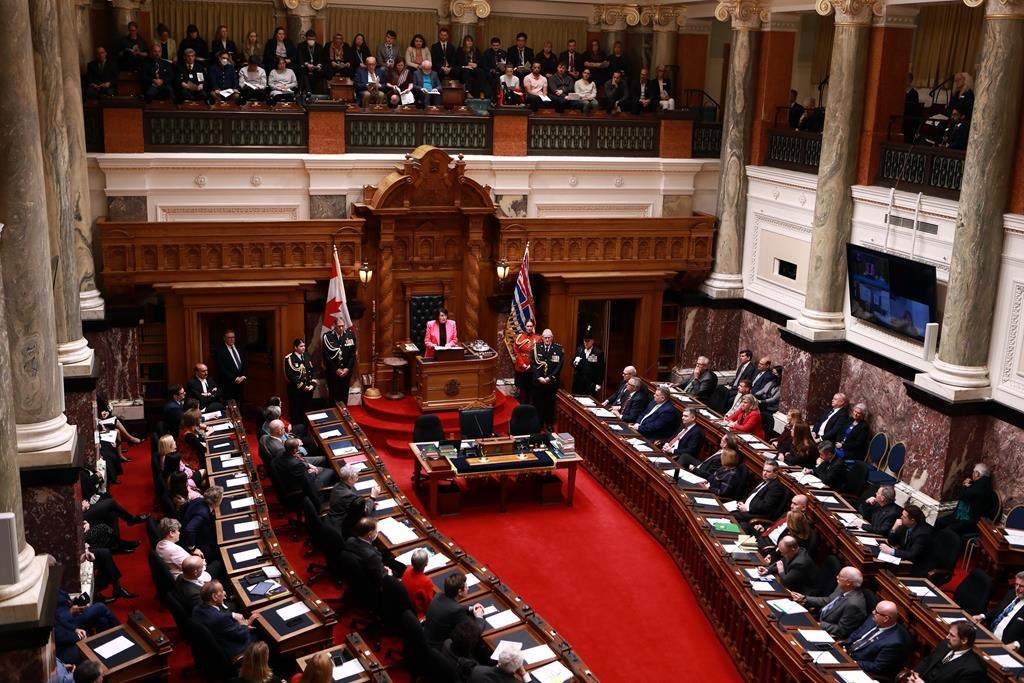
Repealing British Columbia's Declaration on the Rights of Indigenous Peoples Act (DRIPA) will not restore legislative supremacy to the provincial Crown; it will immediately trigger a cascade of injunctions, freeze natural resource capital allocation, and shift governance from negotiated co-management back to adversarial litigation. When First Nations leadership characterizes the potential dismantling of DRIPA as a declaration of war, that rhetoric reflects a hard legal and economic reality rather than political hyperbole. Removing the statutory framework that aligns provincial laws with the United Nations Declaration on the Rights of Indigenous Peoples (UNDRIP) destroys the primary risk-mitigation mechanism currently preventing systemic paralysis across British Columbia's land base.
The Structural Architecture of DRIPA
Passed unanimously in November 2019, DRIPA was never designed as a symbolic gesture. It functions as an operational framework intended to resolve the fundamental legal friction in British Columbia: the coexistence of Crown sovereignty with unceded Indigenous title. Unlike the rest of Canada, where historic numbered treaties extinguished or defined land rights, roughly 95 percent of British Columbia consists of unceded First Nations territory.
DRIPA operates through three specific statutory mechanisms:
- Legislative Alignment (Section 3): The provincial government is legally mandated to take all measures necessary to ensure the laws of British Columbia are consistent with UNDRIP. This requires a systematic audit and amendment of existing statutes, ranging from the Mineral Tenure Act to the Heritage Conservation Act.
- Action Plan Execution (Section 4): The province must prepare and implement an actionable roadmap to achieve the objectives of UNDRIP, tracked through annual public reporting (Section 5) to enforce accountability.
- Decision-Making Agreements (Section 6 and Section 7): This is the operational core of the legislation. Section 7 empowers the provincial government to negotiate and enter into binding agreements with Indigenous governing bodies regarding the exercise of statutory powers of decision. This moves Indigenous nations from passive consultees to active co-decision-makers.
Without these mechanisms, the province reverts entirely to the common law duty to consult and accommodate—a reactive, project-by-project legal standard established by the Supreme Court of Canada in cases like Haida Nation v. British Columbia and Tsilhqot’in Nation v. British Columbia.
The Illusion of Legislative Repeal
Political actors advocating for the repeal of DRIPA operate under a flawed premise: they assume that because DRIPA is provincial legislation, repealing it removes the underlying Indigenous rights it references. This confuses statutory implementation with constitutional reality.
Indigenous rights and title are protected under Section 35 of the Constitution Act, 1982. The Canadian judiciary has consistently affirmed that Aboriginal title confers the right to exclusive use and occupation of the land, the right to choose to what uses the land can be put, and the right to the economic benefits of that land. UNDRIP itself has been recognized by Canadian courts as an interpretive aid for Section 35 rights, and the federal government has enacted its own parallel legislation, the United Nations Declaration on the Rights of Indigenous Peoples Act (UNDA).
Repealing DRIPA achieves only one outcome: it eliminates the structured, administrative pathway for resolving jurisdictional conflicts outside the courtroom. It leaves Section 35 intact while stripping away the institutional machinery built to operationalize it.
The Cause-and-Effect Chain of Dismantling DRIPA
Eliminating DRIPA sets off a predictable sequence of legal, operational, and financial disruptions across the provincial economy.
Phase 1: Immediate Collapse of Negotiated Certainty
Under Section 7 of DRIPA, First Nations and the province have established shared decision-making frameworks, such as the Tahltan Nation consent-based agreement regarding the Eskay Creek mine revitalization. These agreements define clear rules of engagement for industry. Repealing the enabling legislation invalidates the statutory basis for future agreements and casts immediate doubt on the enforceability of existing ones. First Nations leadership will view the repeal as a breach of good faith, terminating ongoing bilateral negotiations across forestry, mining, and infrastructure sectors.
Phase 2: Surge in Injunctive Litigation
When administrative pathways close, legal pathways become the sole recourse. Without DRIPA's mandate for proactive alignment and consent-based negotiation, First Nations will immediately pivot to seeking interlocutory injunctions to halt resource extraction, pipeline construction, and infrastructure development. In Canadian law, obtaining an injunction requires proving a serious issue to be tried, irreparable harm, and a favorable balance of convenience. Given the established jurisprudence on unceded title in British Columbia, First Nations possess high leverage in meeting these thresholds, resulting in immediate project stoppages.
Phase 3: Capital Flight and Risk Premium Escalation
Institutional investors and project financiers evaluate jurisdictions based on regulatory predictability and rule-of-law stability. Prior to DRIPA, British Columbia suffered from chronic investment uncertainty due to protracted litigation over major projects. While DRIPA introduced new compliance requirements—such as Free, Prior, and Informed Consent (FPIC) protocols—it provided a legible framework that capital markets could price into project timelines. Repealing DRIPA reintroduces unquantifiable political and legal risk. Mining executives, forestry operators, and energy developers will face escalating cost of capital, and institutional funds will reallocate capital to jurisdictions with settled treaty frameworks or stable regulatory regimes.
Phase 4: Direct Economic Disruption
The economic footprint of British Columbia is heavily concentrated in sectors directly intersecting with unceded land: forestry, mining, natural gas, hydroelectric power, and transportation corridors. Sustained legal challenges combined with on-the-ground blockades—the physical manifestation of the "war" warned against by First Nations chiefs—will sever supply chains. Port access, rail corridors, and highway arteries running through Indigenous territories face immediate vulnerability to disruption, impacting provincial gross domestic product and sovereign credit ratings.
Deconstructing the Consent Friction
The primary political critique driving calls to repeal DRIPA centers on the concept of Free, Prior, and Informed Consent (FPIC). Critics argue that FPIC grants First Nations a unilateral veto over public infrastructure and private enterprise, paralyzing economic development.
This interpretation mischaracterizes how FPIC functions within British Columbia's legal architecture. Under DRIPA, consent is not an arbitrary veto exercised in a vacuum; it is a structured objective pursued through negotiated decision-making agreements. When a First Nation and the Crown establish a Section 7 agreement, they co-design the assessment criteria, environmental standards, and revenue-sharing models upfront. Consent is achieved through alignment of interests rather than unilateral refusal.
The alternative to FPIC is not streamlined permitting; it is the pre-2019 status quo. During that era, the province unilaterally issued permits based on minimal consultation, only to have those permits quashed years later by the courts—as seen in the Northern Gateway pipeline litigation and the Yahey v. British Columbia cumulative impacts ruling involving the Blueberry River First Nations. In Yahey, the British Columbia Supreme Court ruled that the cumulative impact of provincial permitting infringed treaty rights, effectively halting industrial development across a massive swath of northeastern British Columbia until a negotiated settlement was reached. Unilateral Crown permitting does not produce economic velocity; it produces delayed, expensive legal defeat.
Operational Realities for Industry and Government
Managing land and resource governance in a jurisdiction where 95 percent of the territory is unceded requires treating Indigenous nations as co-sovereign governments rather than stakeholder groups. Stakeholder management relies on communication and mitigation; government-to-government management requires jurisdictional alignment and shared authority.
The implementation of DRIPA has undeniably created operational bottlenecks. The provincial bureaucracy has struggled to scale its capacity to conduct legislative audits under Section 3, resulting in confusion over how legacy laws—such as the automatic online staking system under the Mineral Tenure Act—interact with UNDRIP principles. Following the British Columbia Supreme Court ruling in Gitxaala v. British Columbia, which found that the automated mineral claim staking regime breached the duty to consult, the province was forced to overhaul its mining tenure system. Critics blamed DRIPA for this disruption, overlooking the fact that the court ruled on the constitutional duty to consult, which exists entirely independent of DRIPA.
The friction experienced by industry stems from the transition period between an outdated, unilateral permitting system and a modern, co-governed system. Aborting that transition midway leaves the province without a functional permitting architecture.
Limitations of the Current DRIPA Model
A rigorous analysis must acknowledge the structural flaws within DRIPA's current execution. The legislation is not a frictionless solution, and its implementation has exposed significant operational vulnerabilities:
- Asymmetric Capacity: Many First Nations lack the administrative, technical, and financial bandwidth to process the sheer volume of referrals and legislative consultations generated by provincial ministries, creating systemic bottlenecks in project approvals.
- Overlapping Claims: In regions where multiple First Nations assert overlapping traditional territories, the requirement to secure consent creates complex multi-party negotiations that the provincial government has failed to adequately mediate.
- Regulatory Ambiguity: During the multi-year process of aligning existing statutes with UNDRIP, businesses face an interim period where the letter of the old law conflicts with the policy direction of the new framework, complicating compliance and permitting timelines.
Addressing these limitations requires operational reform—such as funding Indigenous technical capacity, establishing clear timelines for Section 7 negotiations, and creating dispute-resolution mechanisms for overlapping territories. Repealing the foundational statute solves none of these operational problems while amplifying every underlying legal risk.
The Strategic Imperative
Policymakers and industry leaders must recognize that the fundamental variable in British Columbia's political economy is constitutional law, not provincial legislation. The province cannot legislate away Section 35 of the Constitution Act, 1982, nor can it nullify Supreme Court precedents establishing Aboriginal title.
The strategic choice is binary: manage jurisdictional coexistence through structured, predictable statutory frameworks like DRIPA, or manage it through chaotic, high-cost litigation and physical blockades. To stabilize the investment climate and prevent systemic disruption, the provincial government must retain DRIPA while aggressively reforming its operational execution. This requires shifting focus from broad legislative reviews to targeted, sector-specific Section 7 decision-making agreements with strict statutory timelines, dedicated funding for Indigenous regulatory capacity, and standardized revenue-sharing formulas that align First Nations economic incentives directly with industrial project execution.