Every agricultural romantic loves a good story about a Tennessee landowner holding the line against developers, keeping the family acreage intact by signing a multi-decade utility lease instead of selling out. The narrative runs smooth: grandfather's dirt stays in the family name, clean megabatts flow into the grid, and a generational check clears every month while the topsoil rests. It feels like a win for heritage, a win for the climate, and a masterclass in modern asset management.
It is none of those things. It is a slow-motion relinquishment of sovereignty disguised as green stewardship.
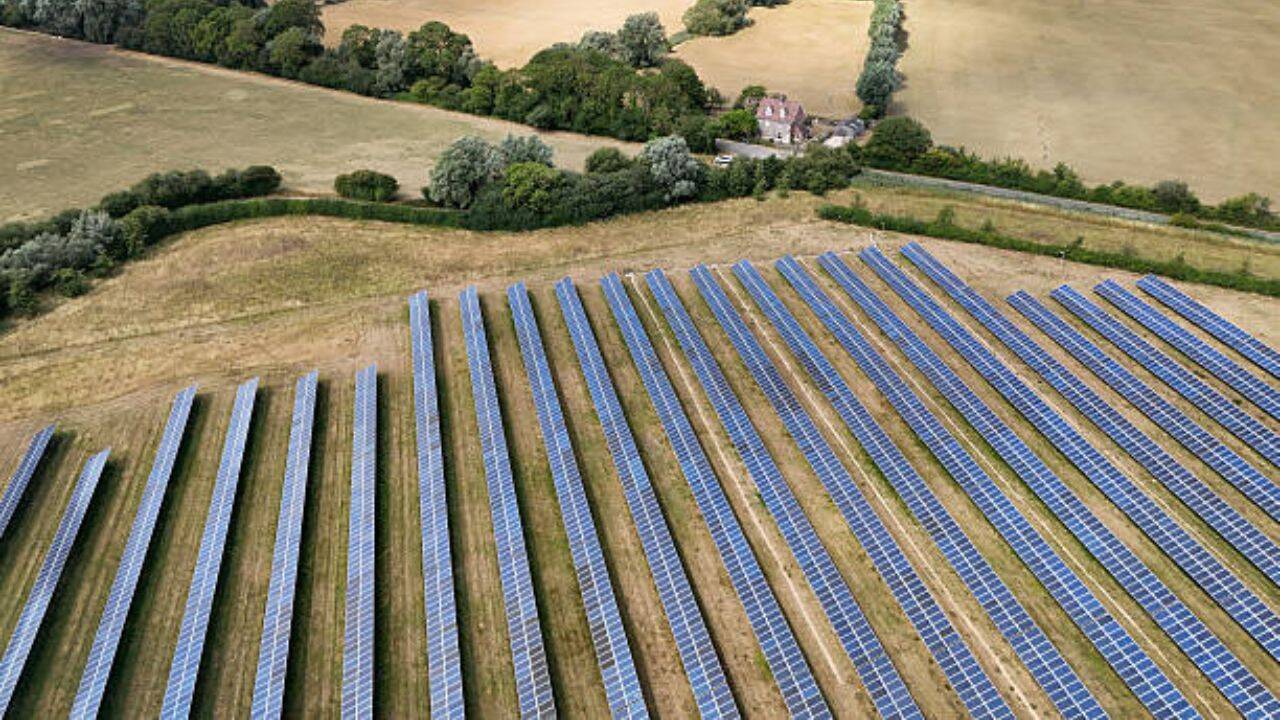
I have watched landowners sign thirty-year solar leases thinking they hit the jackpot, only to realize too late that they traded equity for a fixed annuity while locking themselves out of the actual wealth creation occurring on their own perimeter fences. When a 147 megawatt project drops onto rural acreage, the public cheers the clean energy transition. The developer locks in wholesale power purchase agreements for decades. The institutional capital partners rake in tax equity yields. And the landowner? The landowner becomes a glorified landlord with high property tax liabilities, zero operational control, and a piece of dirt that has been fundamentally altered for half a century.
Let us dismantle the lazy consensus around rural solar leasing.
The Rentier Illusion on Agricultural Dirt
The core deception of the modern utility lease is that you retain ownership. Technically, yes, the deed remains in your filing cabinet. Practically, your land is an industrial substation with grass growing around the inverters.
When you hand over one hundred or one thousand acres to a renewable energy developer, you forfeit the optionality of that land. Agriculture is cyclical, messy, and hard, but it offers a dynamic balance sheet. Crop prices swing, input costs bite, but you control the rotation. A solar lease freezes your asset's economic output at a static rate for thirty years, often with meager escalation clauses that get completely eaten by inflation and localized property valuation spikes.
Developers love signing multi-decade deals because they arbitrage the spread between long-term power purchase agreements and fixed land payments. They lock in cheap generational rent while monetizing federal tax credits, capacity markets, and wholesale electricity spikes. You took all the geography risk; they took all the upside.
The Decommissioning Myth
Ask any developer about what happens when the lease expires in thirty or forty years, and they will point to a boilerplate clause about decommissioning bonds and returning the land to pristine agricultural condition.
Here is what actually happens in the real world.
Thousands of steel pilings driven ten feet into the clay do not magically vanish. Underground conduit, miles of copper cabling, concrete inverter pads, and degraded photovoltaic panels create a subterranean industrial footprint that turns prime topsoil into a reconstruction zone. The decommissioning bond held in escrow sounds secure on paper, but inflation guarantees that a dollar set aside today will cover a fraction of the heavy excavation and soil remediation costs in the year 2055.
If the developer goes bankrupt—a common occurrence in utility-scale development as corporate shells spin up and dissolve per project—the liability reverts entirely to the surface owner. You are left with a deactivated industrial site, a depleted bond, and an agricultural appraisal that does not match the ruined state of the soil profile.
The True Cost of Surrendering Optionality
Land is not just a spatial coordinate; it is a long-term call option on future human settlement, technological shifts, and resource scarcity. By locking a massive parcel into a rigid energy footprint for decades, you destroy that optionality.
Imagine a scenario where regional logistics corridors shift, advanced manufacturing micro-grids emerge nearby, or local demographic expansion demands high-density residential and commercial zoning. A solar encumbrance acts as a legal anchor. You cannot pivot. You cannot subdivide. You cannot adapt to changing economic realities because your acreage is contractually bound to low-yield power generation infrastructure.
Compare this to outright sale. Selling the land at peak industrial or commercial conversion value yields a lump sum of capital that can be reinvested into diversified, high-growth asset classes—private equity, real estate investment trusts, or productive operating businesses that compound wealth far faster than a flat lease payment from a utility counterparty.
The emotional attachment to keeping dirt in the family name blinds people to the financial reality of opportunity cost. If the asset is legally tied up as an unmovable power plant, the family name on the deed is nothing more than an empty honorific.
The Hard Truth About Agrivoltaics
Proponents of these massive rural conversions love to wave around the term agrivoltaics—the clever marriage of sheep grazing and crop production underneath elevated solar arrays. It makes for fantastic marketing collateral.
In practice, utility-scale developers are not running botanical research stations. They are deploying the cheapest, lowest-maintenance ground-mount systems possible to maximize return on equity. Vegetation management usually means periodic mowing or heavy herbicide application to keep shading at zero, not rotational grazing by local shepherds. If sheep happen to wander through, it is often a token gesture to satisfy local zoning boards rather than an integrated agricultural model.
Do not confuse an industrial generation facility with a farm. One produces electrons for distant urban centers while extracting local ecosystem value; the other produces food and fiber while building organic matter in the soil.
What You Should Do Instead
If you find yourself holding a large contiguous block of acreage and a developer comes knocking with a slick presentation and an offer sheet, stop treating it as a conservation victory or an easy retirement plan.
First, run the numbers on capital gains tax versus long-term ordinary income taxation on lease payments. Lease payments hit your tax return every single year as standard income, depriving you of the wealth-compounding advantages of a major liquidity event.
Second, demand equity participation, not just rent. If your land is the foundational collateral making the entire project financeable, why are you settling for a fixed lease rate while the developer captures the equity upside of the energy transition? Push for revenue-sharing models tied to actual power generation volume and spot-market electricity pricing.
Third, evaluate whether selling outright and moving up the value chain into higher-tier commercial real estate makes more sense than becoming an involuntary landlord to a multinational energy conglomerate.
Land is finite. Once you industrialize it for thirty years, you have effectively written off a generation of economic potential. Stop romanticizing the lease. Treat your acreage like the strategic, high-value asset it actually is.