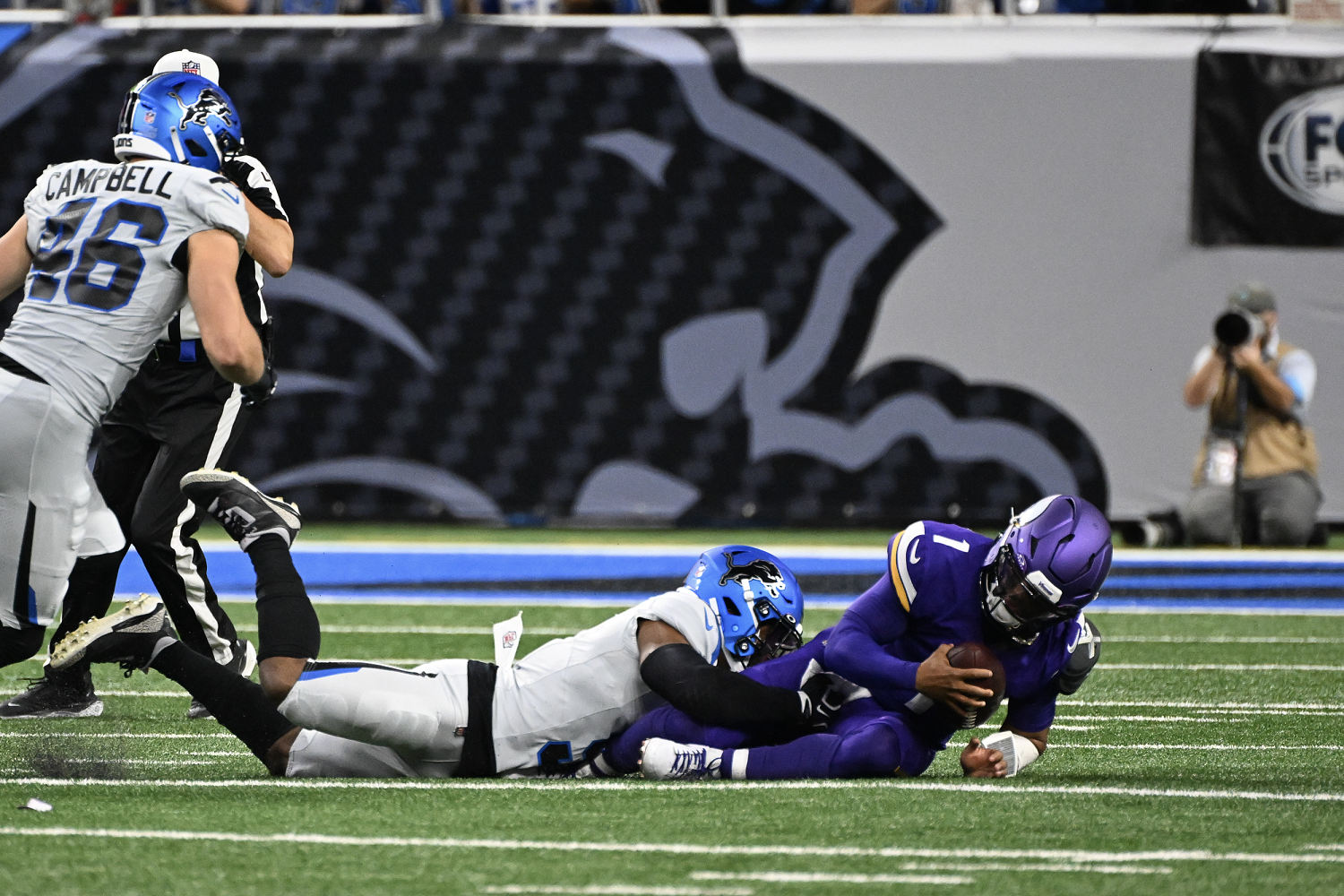
Every NFL season produces a temporary illusion of invincibility, and the 2026 campaign is no exception. When the final undefeated franchise eventually absorbs its first loss, mainstream sports coverage defaults to emotional narratives about complacency, trap games, or a sudden collapse in locker room focus. Those explanations confuse symptoms with structural reality. In a league engineered around hard salary caps, draft order inversion, and scheduling parity, an unblemished record is not proof of permanent dominance; it is a statistical anomaly operating against relentless mathematical gravity.
Understanding why the last unbeaten team falls requires stripping away box-score mythology and examining the mechanics of variance, opponent adaptation, and attrition. An undefeated streak survives on narrow margins—one-score victories, favorable turnover bounces, and temporary health advantages—that inevitably revert toward league baselines over a 17-game schedule.
The Mathematics of Parity and Variance
The National Football League functions as a closed ecosystem designed to compress talent distribution. Unlike European football leagues where capital concentration allows top clubs to stockpile superior rosters indefinitely, the NFL enforces strict financial ceilings. When a team opens a season 7-0, 8-0, or 10-0, it rarely possesses a talent differential wide enough to justify a 1.000 winning percentage. Instead, it is benefiting from positive variance in high-leverage moments.
Turnover Asymmetry and Fumble Recovery Rates
Turnovers represent the single highest-variance metric in professional football. While interceptions correlate moderately with quarterback decision-making and defensive back skill, fumble recoveries are statistically close to a coin flip. A team riding an undefeated streak almost always exhibits an unsustainable turnover differential during its winning run.
When a ball carrier loses possession, the oblong geometry of the football introduces chaotic bounce physics. Over a small sample size of six to nine games, a defense might recover 75 percent of forced fumbles, extending drives and erasing opponent scoring opportunities. Over a full season, recovery rates regress toward 50 percent. The moment that mathematical correction occurs against a quality opponent, a team accustomed to winning by four points suddenly loses by three.
One-Score Game Volatility
Historical NFL data demonstrates that games decided by eight points or fewer are heavily influenced by late-game randomness—a missed field goal, a borderline pass interference penalty, or a tipped pass at the line of scrimmage. Undefeated teams rarely blow out every opponent on their schedule; they survive close contests through superior execution in the final two minutes.
However, winning consecutive one-score games creates a false sense of repeatability. Analysts often credit a quarterback's "clutch gene" or a coach's late-game poise, ignoring that operating on a razor-thin margin leaves zero buffer against standard operational mistakes. A single red-zone false start or a miscommunication in pass protection flips the expected value of a drive from seven points to three, or zero. When the final undefeated team of 2026 drops its first contest, the primary driver is almost always the expiration of its one-score luck rather than a sudden drop in baseline competence.
The Tape Accumulation Penalty
Success in the NFL generates an immediate informational tax. Every snap an undefeated team plays is dissected by opposing coaching staffs looking to neutralize its primary offensive and defensive engines. By midseason, an unbeaten roster faces a structural disadvantage: it has put eight to ten weeks of high-leverage film on tape, while opponents have dedicated extra preparation cycles specifically to dismantling its tendencies.
Defensive Disguise Erosion
Early in the season, innovative defensive coordinators gain an edge through disguised coverages and exotic pressure packages. Quarterbacks face pre-snap pictures that contradict post-snap rotations, leading to hesitation and sacks.
By November, opposing offensive staffs have cataloged every alignment tell. They identify which linebacker creeps toward the line of scrimmage before dropping into zone coverage, and which safety rotates down only when the offense aligns in a specific tight-end set. Once opponents map these triggers, the defense's schematic advantage evaporates. The unit must win purely on individual physical matchups—a difficult proposition when injuries have already thinned the depth chart.
Offensive Tendency Mapping
The same erosion affects dominant offenses. An undefeated team usually relies on a core series of concepts—such as wide-zone run actions or motion-heavy passing concepts—that stress defensive rules. Early-season opponents struggle to communicate against pre-snap motion at full game speed.
Later in the year, defensive coordinators install specific check-calls designed solely to counter those exact motions. They force the undefeated offense out of its primary rhythm and into secondary, less efficient concepts. If an offense relies on a star receiver to win isolated matchups on third down, opponents begin bracketing that target with a cornerback underneath and a safety over the top, daring the quarterback to execute patient, 12-play drives without committing a mistake.
The Attrition Curve and Depth Chart Stress
Football is a collision sport where roster quality is measured not by the top 22 starters, but by players 23 through 53. An undefeated streak frequently coincides with a period of abnormal health, allowing a team to deploy its optimal lineup week after week. As the season progresses into its second half, physical attrition degrades both efficiency and schematic flexibility.
Trench Degradation
The clearest manifestation of attrition occurs along the offensive and defensive lines. Interior linemen absorb high-force impacts on every play, leading to cumulative soft-tissue damage, sprained ankles, and shoulder injuries that rarely appear on the active/inactive report as full absences but significantly reduce functional power.
When a starting left tackle plays through a turf toe injury, his lateral kick-slide slows by a fraction of a second. That slight delay forces the offensive coordinator to keep a tight end or running back in to chip the opposing edge rusher. Removing a route runner from the passing concept shrinks the field for the quarterback, allowing the defense to drop extra defenders into coverage zones. The undefeated offense does not break all at once; it loses structural integrity piece by piece until a competent defensive front exploits the compromised protection.
Special Teams Hidden Yardage
As injuries accumulate across the roster, backup players who normally anchor special teams units are promoted into starting roles on offense or defense. Coaches replace them on kickoff and punt coverage with newly signed practice-squad players or rookies lacking spatial discipline.
This downstream effect creates hidden yardage deficits. A team that consistently started drives at its own 32-yard line during its winning streak suddenly begins drives at its own 19-yard line. Over the course of four quarters, losing 13 yards of field position per possession forces the offense to cover an extra 50 to 60 yards just to generate the same scoring opportunities. Against a disciplined opponent, that hidden yardage deficit proves fatal.
The Psychology of the Target Effect
While sports media overstates emotional narratives, behavioral economics confirms that asymmetrical motivation alters competitive dynamics. An undefeated team enters every stadium carrying the weight of preservation, whereas its opponent enters with the freedom of disruption.
Risk Aversion vs. Aggressive Variance
Coaching staffs leading an unbeaten team subtly shift toward risk aversion as the streak lengthens. Protecting an undefeated record subconsciously encourages conservative fourth-down decisions, predictable early-down run calls to avoid turnovers, and prevent-style defensive shells late in games.
Conversely, an underdog facing the league's last unbeaten team has every incentive to embrace high-variance strategies. Opposing coaches deploy fourth-down fakes, onside kicks, aggressive zero-blitzes, and trick plays because standard conservative play offers a low probability of victory. When one side plays to avoid losing and the other plays to maximize variance, the underdog gains a measurable strategic edge in leverage moments.
The Schedule Compression Trap
The NFL scheduling formula punishes prior success. Teams that finished atop their divisions the previous year face first-place schedules, meaning their toughest matchups are often clustered in the middle and final thirds of the season. An undefeated start frequently reflects front-loaded schedule softness—facing rebuilding rosters, teams breaking in new quarterbacks, or franchises dealing with early-season coaching transitions.
When the calendar flips to November, the schedule compresses. The unbeaten team encounters well-rested opponents coming off bye weeks, divisional rivals familiar with its personnel, and road environments where crowd noise disrupts snap counts. The collision of peak opponent quality with peak roster fatigue creates the exact conditions required to snap an undefeated run.
Evaluating Post-Loss Trajectory
The critical analytical mistake after the final undefeated team loses is treating the defeat as a permanent downgrade. A single loss does not invalidate the underlying metrics that built the winning streak; it simply recalibrates expectations to a sustainable baseline.
To determine whether a newly defeated contender remains a legitimate championship favorite or was merely a product of early-season variance, evaluators must isolate three operational indicators:
- Net Success Rate Per Play: Unlike total yards or points, success rate measures whether an offense gains a specific percentage of needed yardage on each down (typically 40 percent on first down, 60 percent on second down, and 100 percent on third or fourth down). If the team lost despite maintaining a higher play-by-play success rate than its opponent, the defeat was driven by turnover luck or red-zone variance rather than systemic failure.
- Pressure Rate Differential: Sustainable contenders generate pressure on the opposing quarterback without blitzing at high rates, while simultaneously protecting their own quarterback against four-man rushes. If the loss exposed an inability to win at the line of scrimmage without schematic help, the team faces a structural flaw that will resurface in the postseason.
- Adjusted EPA Per Dropback: Expected Points Added (EPA) strips away field-position noise to measure true passing efficiency. If the quarterback's EPA per dropback remained positive despite the loss, the offensive engine is intact. If it collapsed against basic zone coverage, opposing coordinators have successfully mapped the offense's core concepts.
Strategic Allocation for the Remainder of the 2026 Season
For front offices, coaching staffs, and analysts evaluating the fallout of the 2026 season's final unbeaten streak ending, the immediate priority is resisting overreaction. Coaching staffs must audit their self-scouting reports to identify where early-season tendencies have become predictable, deliberately breaking their own formation rules on early downs to punish defenses sitting on film-studied triggers. Simultaneously, sportsbooks and predictive models should avoid over-adjusting power ratings downward based on a single high-variance loss, focusing instead on trench health and play-by-play success rates. The disappearance of the zero in the loss column removes a distracting media narrative and reveals the only metric that matters in January: whether the roster's underlying efficiency can survive against elite competition when luck runs neutral.


