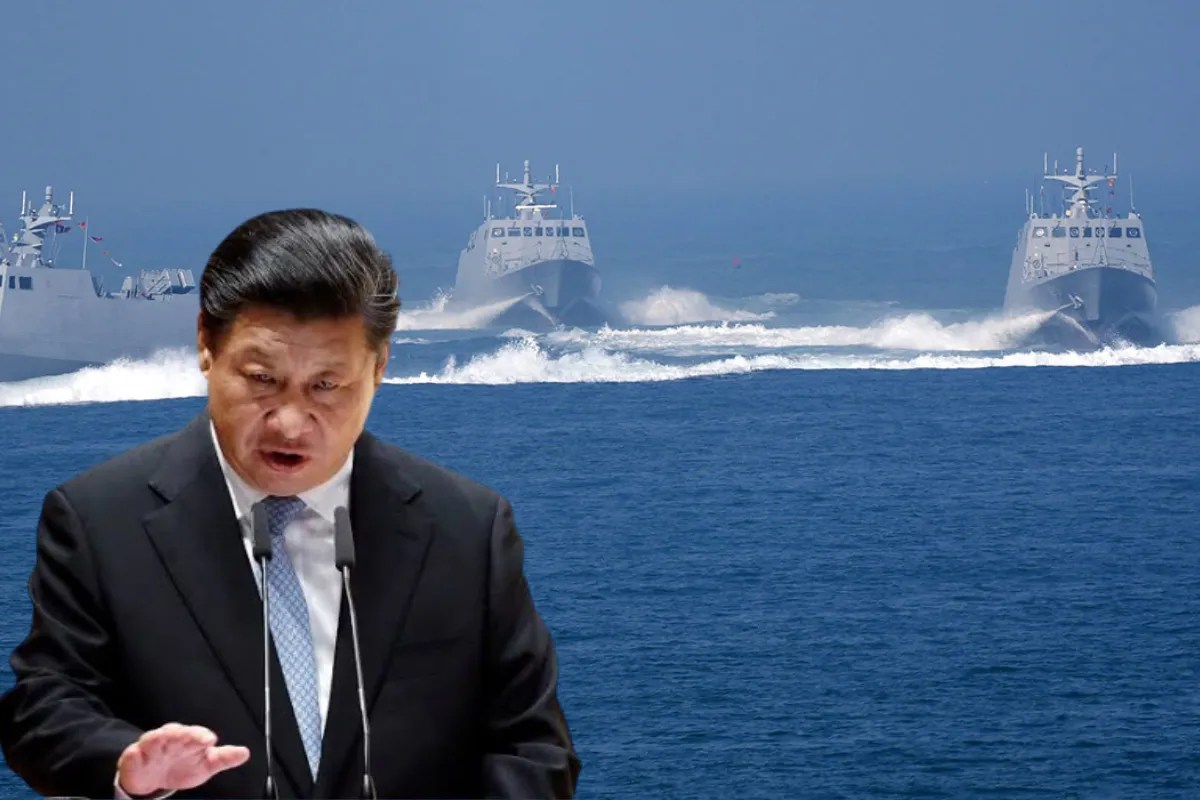
Asymmetrically enforced maritime blockade in the Bab el-Mandeb Strait forces an structural recalculation of international freight economics. The operational reality of global shipping relies on thin margin efficiency, predictable transit windows, and low asset idling time. When non-state actors disrupt passage through the Suez Canal corridor—a transit point historically accommodating roughly 12% of worldwide trade—the resultant shocks expand far beyond localized maritime risk. The economic friction converts directly into operational capital drain, supply chain bullwhip effects, and broad inflationary pressure.
The Tri-Factor Cost Mechanics of Maritime Re-Routing
Rerouting vessel traffic away from the Red Sea around the Cape of Good Hope fundamentally alters the capital allocation model for global ocean carriers. The shift is not merely a geographic detour; it alters three interdependent financial variables.
1. Fuel and Velocity Functions
Circumnavigating Africa adds between 3,000 to 3,500 nautical miles to a standard Asia-to-Europe voyage. At an average cruising speed of 18 knots, this geographical displacement extends transit duration by 10 to 14 days per leg.
To maintain scheduled weekly port rotations, ocean carriers face a structural paradox:
- Option A: Maintain fleet velocity and absorb higher fuel burn rates. Increasing speed from 18 to 22 knots increases fuel consumption exponentially due to hydrodynamic drag power laws, raising bunker fuel expense per voyage significantly.
- Option B: Sustain slow steaming to control fuel costs, thereby extending total transit time. This choice immobilizes capital in transit and reduces the operational capacity of the active fleet.
2. Fleet Capacity Absorption
The operational extension of round-trip transit timelines creates an artificial deficit in global container ship capacity. When a round-trip voyage expands from 60 days to 80 days, carriers require 33% more vessel assets simply to maintain identical sailing frequencies. This dynamic absorbs floating supply, driving up spot freight rates across routes that do not physically touch the Red Sea, as ships are redeployed to cover longer East-West service loops.
3. Risk Premium Escalation and Capital Allocation
For vessels continuing to risk Bab el-Mandeb passage, the direct variable cost manifests through war risk insurance surcharges. Insurance underwriters price risk according to real-time threat intelligence and hull valuations. War risk premiums can jump from nominal fractions of a percent of hull value to multi-percentage surcharges per transit, rendering the passage cost-prohibitive for high-value assets and closing the margin differential relative to the Cape of Good Hope route.
Cascading Inventory and Working Capital Distortions
The primary macroeconomic threat of trade disruption is not the temporary spike in ocean container rates, but the downstream impact on corporate working capital and inventory buffers.
[Geopolitical Disruption in Maritime Chokepoint]
                         │
                         ▼
[Rerouting via Cape of Good Hope (+10-14 Days Transit)]
                         │
                         ▼
[Capacity Absorption & Container Imbalances at Destination Ports]
                         │
                         ▼
[Safety Stock Escalation + Increased Cash Conversion Cycle]
                         │
                         ▼
[Upstream Working Capital Strain & Consumer Price Pass-Through]
Cash Conversion Cycle Expansion
Manufacturing and retail enterprises operating lean, just-in-time inventory models experience an immediate lengthening of their cash conversion cycles. Capital tied up in inventory in transit cannot be liquidated or converted into finished product sales. To prevent stockouts caused by transit variance, supply chain managers must increase safety stock buffers. This shifts operational models from just-in-time to just-in-case, requiring larger credit lines and higher holding cost reserves.
Equipment Container Disconnects
Global trade relies on structural equilibrium in container equipment. Asia-bound trade flows primarily consist of empty containers returning to manufacturing hubs. Extended ocean voyages disrupt empty container return schedules, generating equipment shortages at major Asian export ports (e.g., Ningbo, Shanghai, Shenzhen) while accumulation builds up at European discharge terminals. The resulting equipment imbalance raises container leasing rates globally, penalizing shippers across unrelated trade lanes, including Transpacific and Intra-Asia routes.
Macroeconomic Pass-Through Dynamics
The translation of maritime transit shocks into consumer price inflation follows a distinct multi-stage lag structure.
- Immediate Carrier Adjustment: Carriers implement peak season surcharges, war risk fees, and emergency operational adjustments within 7 to 14 days of disruption.
- B2B Contract Rate Reset: Shippers operating on long-term annual contracts see spot rate surges spill over into contract renegotiations, raising baseline transport costs over a 3-to-12-month horizon.
- Wholesale Margin Compression: Importers absorb initial landed-cost increases within their margin buffers until contract renewals force wholesale price revisions.
- Consumer Inflation Transmission: Retailers pass accumulated logistics costs to consumers after a 4-to-9-month lag, particularly impacting price-sensitive, low-margin goods with low value-to-weight ratios (e.g., furniture, apparel, low-cost electronics).
High value-to-weight commodities like semiconductors absorb freight rate fluctuations easily due to freight representing a negligible percentage of total unit cost. Low value-to-weight goods bear a disproportionate burden, as shipping cost surges directly erode baseline product profitability.
Structural Vulnerability Assessment of Global Trade Arteries
The Red Sea crisis highlights systemic fragilities in maritime choke points. Global supply chains rely heavily on narrow passages that present concentrated operational exposure:
- Strait of Malacca: High volume density; vulnerable to physical blockage or regional security escalation.
- Panama Canal: Vulnerable to climatic and freshwater availability fluctuations that restrict daily vessel transits and draft limits.
- Suez Canal / Bab el-Mandeb: Exposed to regional geopolitical friction and land-based strike capabilities.
When one choke point experiences capacity reduction or closure, global shipping cannot seamlessly absorb the diverted tonnage without structural pricing shocks and operational delays.
Strategic Capital Allocation Protocols for Disruption Risk
Organizations attempting to de-risk supply chain networks against persistent maritime vulnerability must execute three structural operational shifts rather than relying on short-term spot market hedging.
Dual-Sourcing and Regional Nearshoring
Shift procurement strategies away from single-source mega-factories concentrated in single geographies. Establish secondary sourcing networks in regional trade blocs (e.g., Nearshoring in Mexico for North America, or Eastern Europe and North Africa for the European Union) to reduce reliance on long-haul ocean corridors.
Buffer Inventory Dynamic Rescaling
Reconfigure safety stock algorithms to continuously integrate real-time maritime reliability data. Instead of static 30-day inventory buffers, implement dynamic buffer sizing that automatically expands holding targets based on transit variance indices along critical trade lanes.
Multi-Modal Ocean-Air and Overland Integration
Establish pre-negotiated contingency routing protocols using alternative transport combinations. Utilize sea-air solutions—such as shipping via ocean to Persian Gulf hubs followed by air freight into European destinations—to bypass maritime chokepoints when time-to-market criticalities outweigh pure transport expense.
Shippers relying entirely on unhedged spot ocean transport face structural margin compression during sustained operational delays. Resilient supply chain execution requires balancing transport cost minimization against the structural cost of operational downtime.