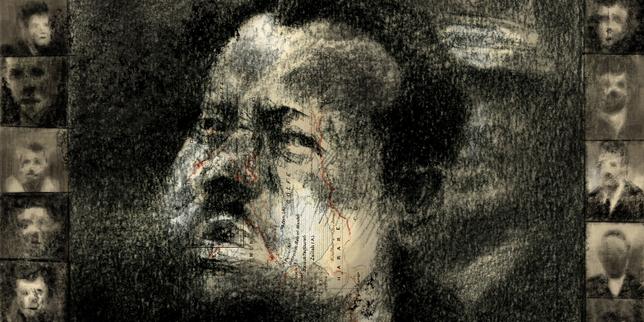
He is almost ninety years old now, a quiet old man living in an upscale neighborhood of Harare. Neighbors see him occasionally, a frail figure under heavy guard, enjoying a life of luxury that contrasts sharply with the horror he left behind. This is Mengistu Haile Mariam. To the Western world, he was the Red Negus or the Butcher of Addis Ababa. To hundreds of thousands of Ethiopian families, he remains the architect of one of the darkest eras in modern African history.
While the world focuses on modern despots, Mengistu holds a bizarre and infuriating record. He is the longest-surviving deposed African dictator in comfortable exile. He outlived Robert Mugabe, his original protector. He outlived the Marxist global order that funded his terror. He even outlived many of the prosecutors who sought his execution.
How does a man convicted of genocide in absentia manage to live out his twilight years in peace? The story isn't just about one man fleeing justice. It reveals the messy reality of continental diplomacy, historical debts, and the ultimate failure of international law to catch up with sovereign protection.
The Rise of a Master Manipulator
You don't understand Mengistu without understanding the deep-seated resentment that fueled his early life. Born in 1937 to a mother who worked as a domestic servant and a father who was a low-ranking corporal, Mengistu grew up on the periphery of Ethiopia's rigid, aristocratic feudal system. The ruling class looked down on people from the south like him. They mocked his darker skin and his modest lineage. He didn’t forget the slights.
When the Ethiopian revolution erupted in 1974, it wasn't a sudden, clean break. It was a slow, chaotic collapse of an ancient empire. Emperor Haile Selassie, a man revered as a living god by millions, had failed to manage a catastrophic famine in the Wollo province. The military grew restless. Lower-ranking officers formed a committee known as the Derg.
Mengistu wasn't the top man initially. He was just a major from the third division in Harar. But he had an innate sense for survival and a ruthless streak that terrified his peers. One by one, senior officers disappeared. Some were shot in committee meetings. Others were dragged out and executed. By 1977, Mengistu had cleared the board. He took complete control of the Derg and aligned Ethiopia squarely with the Soviet Union.
Blood on the Streets of Addis Ababa
What followed was the Red Terror. This wasn't a hidden purge behind closed doors. It was a public, state-sponsored slaughter designed to break the spirit of any political opposition, primarily the Ethiopian People's Revolutionary Party.
Mengistu didn't hide his intentions. In a famous public speech in Meskel Square, he smashed bottles filled with a red liquid to symbolize the blood of his enemies. It was a literal cue for his supporters to kill.
Imagine waking up every morning to find the bodies of teenagers dumped on the sidewalks. That was daily life in Addis Ababa between 1977 and 1978. The Derg instituted a system where families had to pay a fee to reclaim the bodies of their murdered children. They called it paying for the wasted bullet.
Human rights groups estimate that the Red Terror claimed between 500,000 and two million lives. The exact number will never be known because the state didn't keep records of the anonymous graves.
Then came the mid-1980s famine. A natural drought turned into a man-made apocalypse because of Mengistu's forced collectivization and resettlement programs. He spent millions of dollars celebrating the tenth anniversary of the revolution while citizens starved to death on national television. The world responded with Live Aid, but Mengistu used the international food aid to feed his massive military machine instead of the starving peasants.
The Flight and the Golden Cage
By 1991, the Soviet Union was collapsing, and with it went Mengistu's supply of weapons and fuel. A coalition of rebel groups, led by the Tigray People's Liberation Front, closed in on Addis Ababa.
Mengistu didn't stay to fight. He boarded a plane under the guise of visiting a military training camp in the south, but the flight path changed. He flew straight to Nairobi, and then to Harare. Robert Mugabe was waiting for him on the tarmac.
Why did Zimbabwe welcome a man with so much blood on his hands? The answer lies in the messy history of African liberation struggles. During the 1970s and 1980s, when Mugabe’s guerrilla forces were fighting the white-minority government of Rhodesia, Mengistu provided critical support. Ethiopia trained thousands of Zimbabwean fighters. They supplied ammunition, boots, and funding. In the code of old-school liberation leaders, that debt is sacred. You don't betray a comrade who armed you, no matter what he did to his own people.
For decades, Mengistu lived as a special guest of the state. He received a heavily guarded villa, a fleet of vehicles, and a generous stipend. He even advised Mugabe's government on security matters. Rumors in Harare persist that Mengistu helped design Operation Murambatsvina in 2005, a brutal slum-clearance campaign that displaced over 700,000 poor Zimbabweans. The methods looked suspiciously like the Derg's urban pacification strategies.
Why the System Cannot Touch Him
An Ethiopian court found Mengistu guilty of genocide in 2006. In 2008, after a lengthy appeal process, the sentence was upgraded to death. Yet, the warrants remain useless pieces of paper.
In 2017, the political world shook when Robert Mugabe was ousted in a coup. Activists in Addis Ababa cheered. They thought Mengistu's immunity would vanish with his patron. It didn't happen. The new president, Emmerson Mnangagwa, was Mugabe's right-hand man for decades. He shares the same view on liberation-era debts.
There was a brief moment of hope in 2022 when Zimbabwe’s Foreign Affairs Minister suggested that Harare might consider extradition if an official request came. But it was political posturing. No real steps followed.
The legal reality is even more complicated. Mengistu reportedly received Zimbabwean citizenship years ago. Most nations have constitutional provisions that forbid the extradition of their own citizens, especially to countries that maintain the death penalty. Zimbabwe isn't about to hand over an elderly citizen to face a firing squad, regardless of his past crimes.
There is also a prevailing sentiment among some African leaders that international justice is biased. They see Western powers pushing for the prosecution of African leaders while ignoring abuses elsewhere. This creates a circle-the-wagons mentality. Protecting Mengistu is seen by some hardliners as a statement of sovereignty against external meddling.
The Cost of Delayed Accountability
The failure to bring Mengistu to a courtroom has lasting consequences for the Horn of Africa. Ethiopia has never truly healed from the Derg era. The ethnic federalism system established after his fall was a direct reaction to his hyper-centralized, brutal rule. The current conflicts rocking Ethiopia can trace their ideological roots back to the fractures created during the Red Terror.
Without a public trial and a real reckoning, history gets distorted. Today, some younger Ethiopians who didn't live through the terror look back at the Derg era with a strange nostalgia. They see Mengistu as a strong nationalist who maintained the country's territorial integrity, forgetting the mountains of bodies that integrity required. That's what happens when justice is delayed until it becomes irrelevant.
If you want to understand the limits of international law, stop looking at the tribunals in The Hague. Look at the quiet, tree-lined suburbs of Harare. Look at the old man who watches the news from the safety of a state-funded villa, completely insulated from the consequences of his actions.
To prevent history from repeating itself, researchers, journalists, and citizens must keep the record clear. Do not let the passage of time sanitize a dictator's legacy. Read the testimonies of the survivors. Support documentation projects like the Red Terror Martyrs' Memorial Museum in Addis Ababa. Remember the names of the victims, because the man who killed them has been allowed to forget.