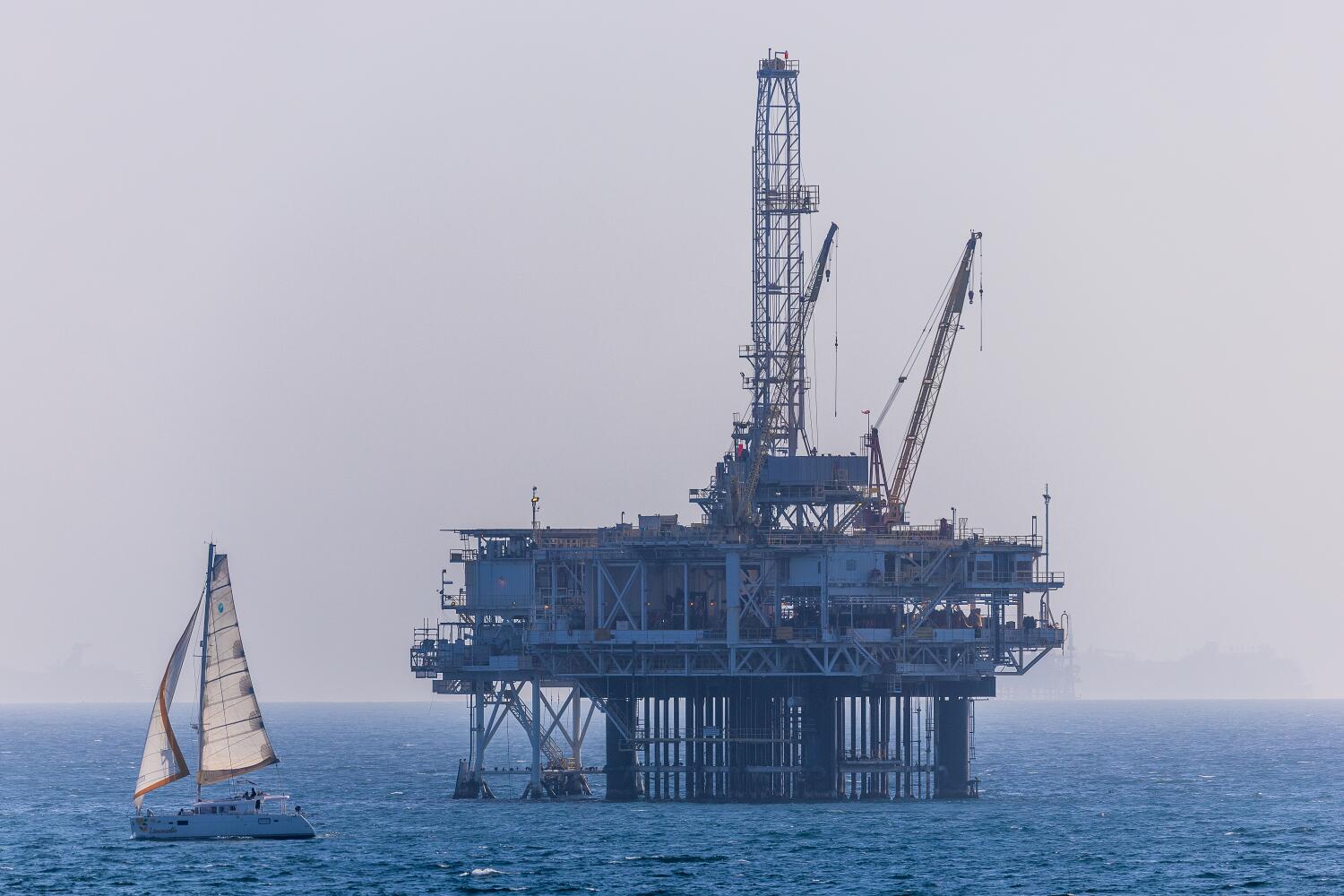
The federal government is moving to dismantle California’s fifty-year-old grip on its own shoreline, launching a sweeping administrative probe designed to strip the state of its ultimate veto power over major industrial projects. This sudden escalation directly targets the California Coastal Commission, a famously aggressive regulatory body that has blocked or restricted everything from coastal highway expansions to commercial rocket launches. By using an obscure federal audit mechanism, Washington is clearing a path for a massive expansion of offshore oil drilling, pipeline construction, and private spaceports along 1,100 miles of prime Pacific territory.
The strategy hinges on the Coastal Zone Management Act of 1972, a law that historically gave states the right to reject federal projects that conflict with local environmental rules. By declaring California’s oversight a threat to national security and economic growth, the Department of Commerce aims to rewrite the rules of coastal authority entirely.
The Secret Weapon in the Federal Procurement War
On the surface, the announcement by U.S. Commerce Secretary Howard Lutnick looks like routine bureaucratic oversight. The National Oceanic and Atmospheric Administration announced a formal performance evaluation of California’s Coastal Management Program under Section 312 of the federal coastal act. The official mandate is to investigate whether the state has failed to give adequate weight to national economic needs.
The true scope of the action is far more aggressive. Washington is using this audit as a diagnostic tool to find legal vulnerabilities in California’s consistency authority. This specific authority allows the state to block federal oil leases, military installations, or infrastructure projects if they violate California’s strict coastal protection laws.
If the audit concludes that California is abusing its powers, the federal government can pull the state’s federal funding or, more critically, revoke its certification under the federal coastal act. Stripping this certification would legally disarm the state. It would remove California’s ability to stop federal infrastructure decisions in federal waters, effectively handing the keys of the Pacific outer continental shelf back to federal agencies and private developers.
Rockets and Oil Rings on the Horizon
The immediate flashpoint for this federal crackdown is not just an abstract dispute over states' rights. It is driven by concrete corporate and military friction. Tensions boiled over when the California Coastal Commission repeatedly voted to limit SpaceX rocket launches from Vandenberg Space Force Base in Santa Barbara County.
The commission argued that the dramatic increase in sonic booms and launch debris threatened local wildlife and restricted public beach access. The decision infuriated federal officials and commercial space executives, who argued that national defense priorities and commercial satellite deployment were being held hostage by a state agency concerned about migratory birds.
Federal Space Launch Approvals in California Since 1980
Total Projects Proposed: 135
Total Projects Approved: 133
Total Projects Rejected: 2
While the state points to its historical record of approving nearly every space project, federal officials focus on the fact that the only two rejections in forty-five years targeted Elon Musk’s aerospace firm. This friction triggered an executive order directing federal agencies to evaluate whether state coastal reviews constitute an unacceptable obstacle to the space industry.
Beyond the space race lies an even larger economic target. The Department of the Interior is moving forward with a new five-year oil and gas leasing program designed to open federal waters off the California coast to drilling for the first time in decades. In early 2026, the Bureau of Ocean Energy Management issued formal calls for industry nominations, asking energy companies to pinpoint areas off the Southern and Central California coast for future oil platforms.
The primary obstacle to those drilling platforms is the California Coastal Commission. By launching the performance review now, the administration is attempting to weaken the commission's legal standing before the first lease sales are finalized later this year.
The Anatomy of an Unprecedented Regulatory Veto
To understand why Washington is deploying such heavy administrative artillery, one must understand how the California Coastal Commission operates. Created by a voter initiative in 1972 and formalized by the state legislature in 1976, the commission is an independent, quasi-judicial body with twelve voting members. Its jurisdiction extends from the three-mile state water limit inland anywhere from a few hundred yards to several miles.
Within this zone, the commission is king. Local cities and counties must have their development plans certified by the commission, and any significant project can be appealed directly to the state panel.
The commission’s power relies on a unique legal architecture. While most state environmental agencies merely enforce state laws, the Coastal Commission wields federal authority through the federal consistency mechanism. When Congress passed the Coastal Zone Management Act, it offered states a bargain. If a state created a coastal protection plan that met federal standards, the federal government would agree to respect that plan.
For half a century, this gave California an effective veto over federal activities. If the Navy wanted to conduct sonar testing that harmed marine mammals, or if a federal agency wanted to build a highway through a wetland, the commission could demand modifications or block the project entirely.
The Counter-Argument for National Infrastructure Priorities
Supporters of the federal intervention argue that the commission has expanded its mandate far beyond its original scope, transforming from a conservation panel into a rogue entity that actively damages national security and economic infrastructure.
Commerce officials stress that global supply chains, energy security, and technological dominance require rapid infrastructure deployment. Undersea fiber-optic cables that carry transpacific internet traffic must land on California shores. Desalination plants are desperately needed to combat severe regional water scarcity. Deepwater ports must expand to handle international shipping container volumes.
The federal argument posits that a single state regulatory agency should not possess the unilateral authority to disrupt projects that affect the entire nation’s economic health. When the commission insists on multi-year environmental reviews for critical infrastructure, or demands concessions that make projects financially unviable, it ceases to be a local guardian and becomes a national bottleneck.
Legal Warfare on the Western Front
The conflict is moving rapidly toward a massive courtroom showdown. California Governor Gavin Newsom, alongside the governors of Oregon and Washington, has already filed formal objections to the federal offshore drilling proposals, promising to deploy every available legal asset to defend state autonomy.
State attorneys are preparing a defense based on statutory precedent. They argue that the Coastal Zone Management Act explicitly requires the federal government to adhere to approved state policies, and that a politically motivated audit cannot arbitrarily erase decades of established legal frameworks.
Expected Timeline of the Coastal Authority Conflict
May 2026: Commerce Department directs NOAA to launch formal review
June 2026: Federal review officially initiated; public comment period opens
August 2026: In-person and virtual public hearings scheduled
Fall 2026: Finalization of federal offshore oil leasing program
Winter 2026: Anticipated filing of federal and state lawsuits
Environmental science and policy experts note that the path to stripping California of its authority is filled with procedural landmines. The federal government cannot simply dissolve the commission or rewrite California law. Instead, it must prove a systemic failure of the state to meet its federal obligations.
Any attempt to revoke California’s coastal program certification will trigger immediate injunctions and a lengthy appeals process that could take years to resolve. During that time, industrial projects will remain stalled, leaving energy companies and space corporations caught in a regulatory limbo.
The Threat to Coastal Programs Nationwide
The implications of this administrative assault extend far beyond the borders of California. Thirty-four states and territories have federally approved coastal management programs, ranging from Texas and Louisiana along the Gulf Coast to New York and Massachusetts along the Atlantic.
If the federal government successfully uses a Section 312 review to weaken California's authority because the state disagreed with federal energy or aerospace priorities, it establishes a dangerous precedent for every other coastal state. A future administration could use the exact same mechanism to force wind farms onto unwilling New England states, or compel southern states to accept hazardous waste facilities near their shorelines.
The historic balance of power between state conservation and federal industrialization is being fundamentally re-engineered. By targeting the nation’s most aggressive coastal watchdog, Washington is signaling that local environmental concerns must yield to federal economic mandates. The resulting battle will determine who truly owns the American coastline, altering the intersection of state sovereignty and national power for generations.