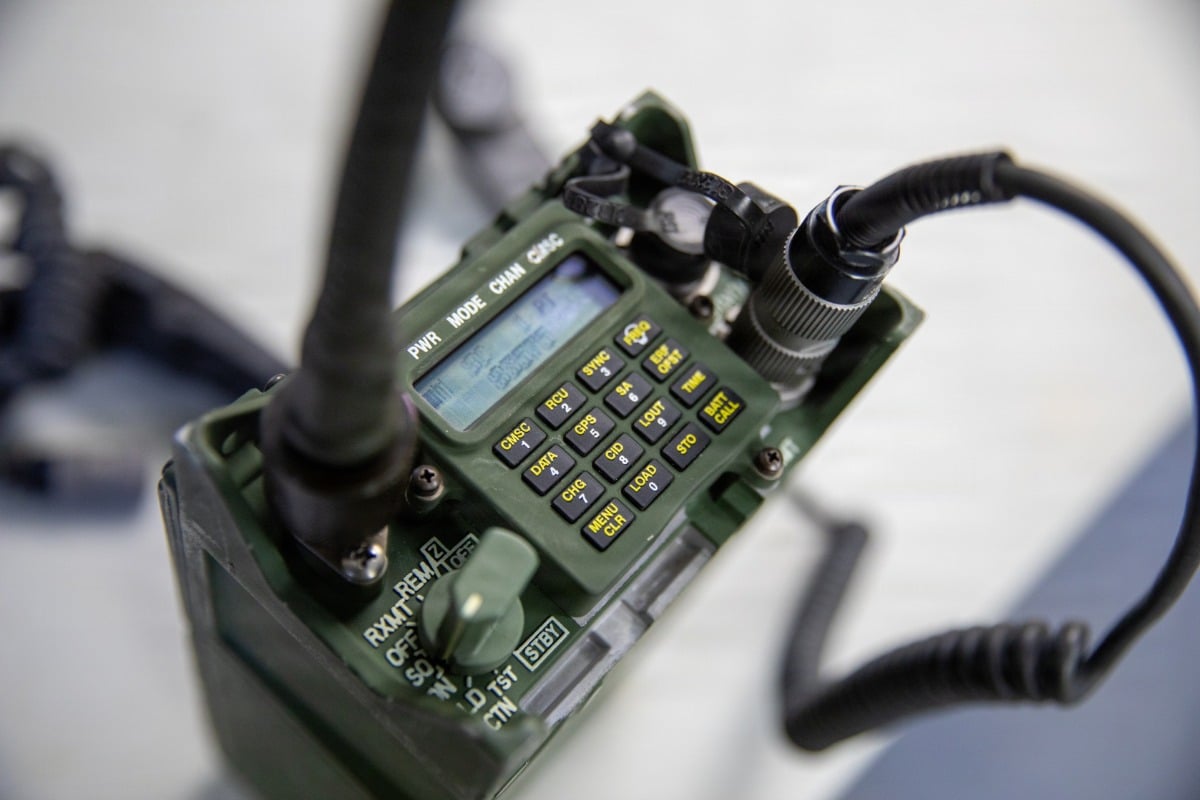
The Pentagon has a multi-billion-dollar silence problem. For decades, the United States military has watched its various branches purchase incompatible, proprietary radio systems that cannot talk to one another on the battlefield. When a Navy fighter jet flies over an Army infantry division, their respective communication systems often remain entirely blind to each other's transmissions. This fragmented reality is a critical point of failure in modern warfare.
To bridge this operational chasm, the Defense Advanced Research Projects Agency launched the Lightweight Universal Codec initiative under special notice DARPA-SN-26-86. The program seeks to field a universal decoder capable of processing virtually any known or future communication error correction code on the fly. By shifting the focus from rigid hardware adjustments to math-driven, algorithmic adaptability, the initiative aims to solve the interoperability crisis once and for all. For a different view, check out: this related article.
Yet, this ambitious technical fix must contend with deep-seated institutional friction, legacy procurement habits, and the hard physics of electronic warfare.
The Mathematical Engine Breaking the Silicon Monoculture
Traditional military communication relies on forward error correction to ensure data survives through atmospheric interference and enemy jamming. This process requires a transmitter to append specific mathematical data to a signal so the receiver can reconstruct corrupt packets. Historically, this meant both sides needed matching, specialized microchips built specifically for that single mathematical code. If an allied unit used a different code, the signal was unreadable. Further coverage on the subject has been shared by Ars Technica.
DARPA is attempting to bypass this constraint by commercializing an academic breakthrough called Guessing Random Additive Noise Decoding, or GRAND.
Instead of building a decoder for every specific code, a GRAND-enabled system works backward. It analyzes the noise and distortion introduced by the physical environment, guesses the likely error patterns, and strips them away from the received signal. The system acts as a universal key. It does not care what specific error-correcting language the radio is speaking; it simply cleans the static until the original data emerges.
This mathematical shortcut could fundamentally alter the hardware footprint of tactical operations.
[Legacy System] ------> Dedicated ASIC Chip ------> Single Waveform Only
[LUC System]   ------> GRAND Algorithm   ------> Universal Codec Decoding
By decoupling the software code from the physical silicon, the military can theoretically update entire fleets of tactical vehicles via software downloads rather than physical hardware overhauls.
The High Cost of Heavy Processing
The primary barrier to executing this universal approach is the physical power requirement.
Software-defined radios are notoriously power-hungry. Running complex decoding math across broad frequency bands requires massive computational processing. When deployed on an infantryman's back or a small drone, the necessary power supply becomes a literal and figurative burden.
+------------------------+---------------------------------------+
| Hardware Constraint    | Operational Impact                    |
+------------------------+---------------------------------------+
| High Processing Load   | Rapid battery depletion for infantry  |
+------------------------+---------------------------------------+
| Thermal Dissipation    | Overheating risks in enclosed spaces   |
+------------------------+---------------------------------------+
| Latency Overhead       | Delayed voice/data in active combat   |
+------------------------+---------------------------------------+
If a universal decoder demands a heavy battery pack that slows down a soldier on foot, it becomes an operational liability, regardless of how well it connects disparate networks. DARPA acknowledges this limitation by explicitly requiring record-setting low-power decoding from its program contractors. The challenge is no longer just solving the mathematics of the signal; it is shrinking the execution of those mathematics so they can run on a chip the size of a postage stamp without overheating.
The Invisible Threat of Algorithmic Jamming
While a universal decoder promises to unite allied forces, it also introduces a centralized vulnerability.
Modern electronic warfare relies heavily on deception. When an adversary encounters a radio system that dynamically adapts its code selection based on environmental noise models, the enemy's objective shifts from simple signal blocking to algorithmic manipulation.
If an opposing force can map the universal decoder's noise-guessing parameters, they can introduce precise, synthetic interference. This "smart jamming" can trick the decoder into picking inefficient configurations, effectively stalling the network with its own adaptive logic. A system that attempts to be compatible with everything remains inherently vulnerable to an adversary who understands how it thinks.
The Procurement Bottleneck
The grandest ideas coming out of defense laboratories frequently die in the transition to real-world acquisition.
Defense contractors have spent decades building lucrative business models around proprietary, closed-loop radio architectures. Selling a specialized radio that only talks to another identical radio ensures a captured market and decades of exclusive maintenance contracts.
A software-defined, universal decoder threatens this status quo by allowing generic hardware to run any wave protocol.
The success of this initiative will not be decided in a clean lab environment. It will be decided by whether the Pentagon can force entrenched defense contractors to adopt open-architecture standards that actively undermine their proprietary business models. Without a radical shift in how military technology is bought and paid for, universal decoding will remain an expensive laboratory curiosity.
The technology to unify the military's fractured airwaves is finally within reach, but the Pentagon must realize that writing the code is the easy part. Surviving the institutional and physical realities of the modern battlefield is the real test.



-annual-meeting.jpeg?width=1200&auto=webp&trim=0%2C0%2C0%2C0)