The sound of monsoon rain in Cox’s Bazar is not a gentle patter. It is a deafening, relentless roar that hammers against plastic tarp and bamboo poles day and night. For nearly a million Rohingya refugees living in the fiercely overcrowded camps of southeastern Bangladesh, that sound does not mean life or relief from the heat. It means fear. It means the very earth beneath their feet is turning into liquid.
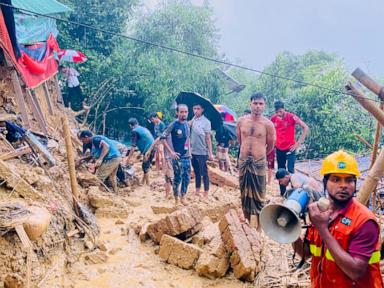
When the hillsides finally gave way under the weight of the water, it happened in an instant. A wall of thick, choking mud tore through the makeshift shelters. By the time the rain slowed, five children were dead.
They did not die in a grand, cinematic disaster. They died in the dark, buried under the earth that was supposed to be their temporary sanctuary. It is a tragedy that barely made a ripple in the global news cycle, compressed into a few cold sentences on a wire service. But to understand what happened in those camps is to understand a larger, more terrifying reality about what happens when human displacement collides with an angry climate.
The Weight of Water on a Fragile Haven
To comprehend the sheer vulnerability of this place, imagine building a city of a million people overnight. Now imagine building it on steep, sandy hills, using nothing but bamboo and thin sheets of tarpaulin.
When the Rohingya fled Myanmar in 2017 to escape unspeakable violence, Bangladesh opened its borders. It was an act of immense humanity. But the land allocated for the refugees was never meant to sustain a population of this size. To make room for hundreds of thousands of shelters, the hillsides were stripped of their trees. The deep, binding roots that once held the soil together were ripped away to clear space for tiny, side-by-side shelters.
Without those roots, the hills are defenseless.
During the monsoon season, Bangladesh receives torrents of water that defy imagination. The sandy soil absorbs the moisture until it reaches a tipping point. It becomes saturated, heavy, and unstable. It takes only one particularly violent downpour to trigger a landslide.
Consider a hypothetical mother named Sufia, a composite of the many women who watch the skies every July with terror. When the heavy rains start, she cannot sleep. She listens to the hill behind her small shelter. She knows that if the mud moves, she has seconds to grab her remaining children and run. There are no concrete walls to protect them. There are no reinforced foundations. There is only a thin layer of plastic between her family and the shifting mountain.
For five children, that thin layer was not enough.
The Invisible Stakes of a Forgotten Crisis
It is easy to look at this tragedy and see it as an isolated natural disaster. It is comfortable to blame the rain. But the rain is only the executioner; the conditions were created by human hands and global indifference.
The camps in Cox’s Bazar are the largest refugee settlement on earth. Over the years, the initial rush of emergency aid has dwindled into a sluggish, underfunded effort. The international community’s attention has shifted to newer conflicts, fresher headlines. Yet, the people in the camps remain, trapped in a geographic bottleneck. They are not legally allowed to work outside the camps, nor are they permitted to build permanent structures out of brick or concrete. They are trapped in a state of perpetual temporariness.
This enforced impermanence is precisely what makes the monsoon so lethal. Aid agencies work tirelessly to reinforce the slopes with sandbags and planting fast-growing bamboo, but these are band-aids on a gaping wound. When a hillside decides to slide, a sandbag cannot stop it.
The real problem lies in the intersection of displacement and geography. The Rohingya did not choose to live on unstable slopes. They were placed there because there was nowhere else for them to go. Bangladesh, a nation already grappling with its own immense climate vulnerabilities, has carried a massive burden by hosting them. But as global funding dries up, the infrastructure in the camps degrades. The drainage channels clog with debris. The walkways turn to treacherous mud. The stakes are raised with every passing season, and the price is paid in the lives of the most vulnerable.
A Rhythm of Survival and Loss
Life in the camps requires a brutal kind of resilience. After a landslide occurs, there are no heavy excavators or sophisticated rescue teams to dig through the debris. The community itself rushes toward the collapse with bare hands and plastic buckets. They dig through the suffocating mud, desperately hoping to find a pocket of air, a sign of life.
Usually, they find what they found this time: small, lifeless bodies.
The loss of a child in a place like Cox’s Bazar carries a specific, agonizing weight. These children were the future of a displaced people. They were the ones who carried the memories of a homeland they were too young to remember, the ones who were supposed to build something new when the exile finally ended. When the earth swallows them, it swallows a piece of the community’s collective tomorrow.
The survivors do not have the luxury of a prolonged mourning period. The rain does not stop for funerals. Families must immediately rebuild their shattered shelters in the exact same spot, because there is nowhere else to move. They patch the torn plastic, tie new bamboo strings, and lie down to sleep again beneath the very hills that just betrayed them.
The Long Shadow of the Monsoon
We often talk about climate change and displacement in the abstract, using statistics and projections about what might happen decades from now. But for the Rohingya, that future arrived years ago. They are living the reality of a world that is becoming increasingly inhospitable to those with the least power to protect themselves.
The monsoon will continue. The rains will come again tomorrow, and the day after that, and every year for the foreseeable future. The hills will continue to soften, and the families living on the edge will continue to watch the skies.
The five children who lost their lives in the mud of Cox’s Bazar were not casualties of an unpredictable act of God. They were the predictable victims of a world that has allowed a humanitarian crisis to rot into permanence, leaving a million people to fight against the elements with nothing but plastic and hope.
Somewhere in the camp tonight, a lantern flickers inside a shelter. A mother pulls her children close as the water drums against the roof, praying that the hillside holds until dawn.