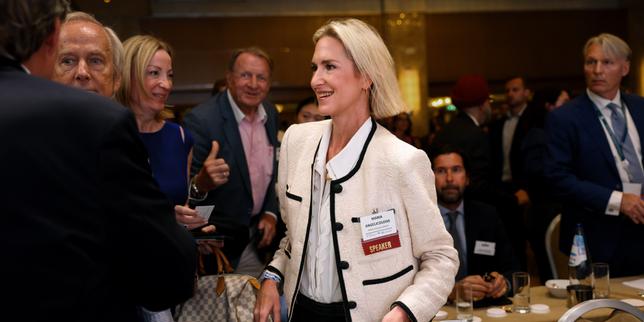
Maria Angelicoussis commands the largest private maritime empire on earth from a heavily guarded office complex in Athens, directing a fleet of over 150 vessels that transport the crude oil, liquefied natural gas, and dry bulk commodities powering the global economy. With a net worth surpassing seven billion dollars, she is the wealthiest woman in Greece and an apex predator in an industry historically dominated by old-school patriarchs. Yet mainstream financial media frequently mischaracterizes her immense influence as a passive inheritance.
This framing ignores the brutal, high-stakes operational reality of modern ship management. Shipping is not a static portfolio of floating assets. It is a hyper-volatile, capital-intensive war zone where a single miscalculation in vessel acquisitions or regulatory compliance can wipe out millions of dollars overnight.
When her father, John Angelicoussis, passed away suddenly in 2021, the maritime world held its breath. Family-run shipping dynasties frequently fracture upon generational transition, torn apart by sibling rivalries, excessive debt loads, or incompetent heirs. Maria Angelicoussis did not merely preserve the family business. She aggressively expanded its footprint, doubling down on fleet modernization and strategic acquisitions while steering clear of public grandstanding.
The Anatomy of a Maritime Monopoly
To understand how Angelicoussis maintains her grip on global supply chains, one must examine the structural architecture of the Angelicoussis Group. Operating primarily through three distinct pillars—Maran Tankers for crude, Maran Gas for liquefied natural gas, and Maran Dry for dry bulk—the enterprise functions with the precision of a Swiss clock and the liquidity of a major hedge fund.
Unlike many competitors who rely heavily on speculative secondhand vessel trading, the group builds high-specifications ships at elite South Korean shipyards. They order in batches, securing preferential pricing and top-tier engineering. This obsession with asset quality allows them to command premium charter rates from energy majors and oil conglomerates who cannot afford mechanical failures or environmental catastrophes on the high seas.
Consider the mechanics of liquefied natural gas transport. LNG requires cryogenic containment systems operating at minus 163 degrees Celsius. A minor failure in insulation or boil-off management can destroy an entire multi-million-dollar cargo. By heavily investing in advanced propulsion and dual-fuel technology long before environmental regulations mandated it, Maran Gas positioned itself as an indispensable partner for European and Asian importers scrambling for energy security.
Breaking the Mold of Greek Shipping Dynasties
Greek shipping has long been characterized by flamboyant risk-takers, flamboyant media profiles, and high-stakes gambling on old tanker cycles. Traditional titans built their fortunes on buying rusted tonnage at the bottom of the market and flipping it during freight rate spikes.
Angelicoussis operates differently. Trained originally as a medical doctor at Cambridge, she approaches market volatility with clinical detachment rather than emotional exuberance. Her decisions are rooted in long-term balance sheet resilience rather than short-term speculative adrenaline.
When geopolitical shocks disrupt traditional trade routes, such as the shifting flows of Russian crude or Red Sea security crises, her management style shifts from passive carrier to strategic navigator. For instance, when Western sanctions altered global energy maps, the group deliberately exercised extreme caution regarding the shadow fleet moving sanctioned oil, prioritizing strict regulatory compliance over quick, high-risk profits. Protecting the institutional reputation of the brand mattered more than capturing opportunistic spot market spikes.
This conservative risk management strategy occasionally draws criticism from aggressive market speculators who view high cash reserves as unoptimized capital. However, those reserves are precisely what enabled the group to execute massive expansions, such as acquiring large blocks of specialized shuttle tankers, without overleveraging their debt profile when credit markets tightened globally.
The Succession Crucible
Passing power from a legendary founder to an heir is the graveyard of family enterprises. John Angelicoussis was a titan who personally micro-managed commercial chartering and technical operations for decades. Replacing a figure of that magnitude requires institutionalizing institutional knowledge.
Maria Angelicoussis systematically dismantled the old bottleneck model of decision-making. She empowered specialized department heads, upgraded digital tracking infrastructure across the fleet, and instituted rigorous compliance frameworks. By professionalizing the corporate governance while retaining private ownership, she insulated the company from external market panics.
Her low public profile is an intentional shield. In an era where corporate executives court social media metrics and celebrity status, she understands that true power in international trade requires anonymity. Governments change, tax regimes fluctuate, and public sentiment shifts, but the fundamental need to move energy and raw commodities across oceans remains constant.
She sits quietly at the center of that movement, orchestrating a floating metropolis that never sleeps, quietly dictating terms to the global economy from the shadows of the Athenian waterfront.