Cold coffee tastes like copper when you have been staring at a cable news chyron since four in the morning.
Out in the flatlands of northeastern Ohio, where the rust on the corrugated warehouse roofs matches the color of November leaves, a man named Gary—let’s call him Gary, a composite of a dozen retired tool-and-die makers I have sat across from in vinyl diner booths over the last decade—is trying to make sense of the noise coming from his television. For ten years, Gary’s political universe had a single, immovable sun. Every policy, every grievance, every late-night rally speech orbited one man. Donald Trump was the movement, and the movement was Donald Trump. Also making news in this space: What Happens When Your Spouse Loses $700,000 in a Scam Before Divorce.
Then came the week the blades came out.
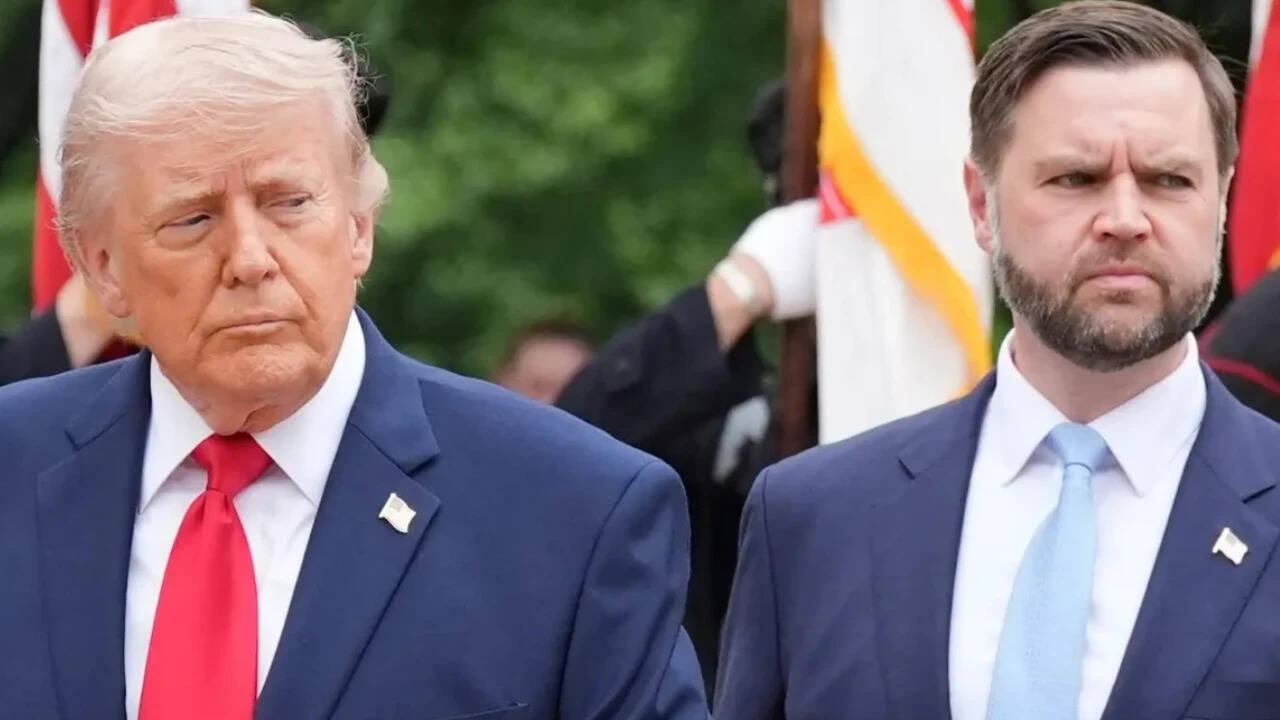
On screen, the faces are familiar. They are the architects, the loyalists, the heirs apparent who spent years polishing the armor of America First. Yet they are no longer swinging at the establishment in Washington or the coastal press. They are swinging at each other. And right at the center of the storm stands JD Vance—the son of the Rust Belt, the chosen apprentice—driving a sharp, calculated wedge straight into the heart of the coalition’s founding myth. Additional information on this are explored by The New York Times.
Betrayal.
That is the word hanging in the humid air of diners from Youngstown to Macon. To the casual observer in Washington, the sudden eruption of infighting inside the MAGA movement looks like standard palace intrigue—a routine power struggle as a second-term administration navigates the messy transition from campaign slogans to governing reality. Standard political reporting treats it like a box score: who said what on a podcast, which cabinet hopeful leaked a damaging memo, which donor threatened to close their checkbook.
Miss the human pulse behind that friction, and you miss the entire story. Because what is happening right now is not merely a spat between ambitious politicians. It is an existential identity crisis for millions of working-class Americans who bet their dignity on a populist promise, only to watch the movement’s generals turn their weapons inward during a brutal week of the long knives.
The Anatomy of a Populist Schism
To understand why JD Vance’s recent break with Donald Trump’s long-standing orthodoxy feels like an earthquake rather than a tremor, you have to look at the structural fault lines that were always hidden beneath the red hats.
Populist movements rarely die from external attacks. History shows they almost always fracture from within, usually at the exact moment victory forces them to choose between two incompatible promises. Think of a coalition like a wooden bridge built rapidly across a raging river during a storm. The builders used whatever timber was at hand—economic nationalists who wanted tariffs and industrial protection, fiscal hawks who wanted to slash federal spending, isolationists who despised foreign wars, and billionaire tech donors who wanted deregulation and global capital flow.
While the storm raged, nobody checked the joints. The shared enemy kept the bridge standing.
Now, the storm has passed, and heavy freight is rolling across the planks. In recent weeks, the internal contradictions of the America First agenda have collided head-on with the hard arithmetic of governance. When administration insiders clashed over trade exemptions, labor protections, and the influence of Silicon Valley donors versus Rust Belt factory workers, the truce shattered.
Vance, acutely aware that his political survival depends on the hollowed-out industrial towns of Pennsylvania, Michigan, and Ohio rather than the golf clubs of Palm Beach, made a calculation. In a series of pointed public remarks and behind-the-scenes maneuvers that sent shockwaves through the West Wing, he distanced himself from Trump’s sudden softening on corporate tax loopholes and foreign labor visas. He framed the debate not as a policy disagreement, but as a moral test of who the movement actually serves.
It was a surgical strike. By invoking the forgotten men and women of the heartland, Vance effectively accused the movement's founding father of drifting toward the very corporate elites he once swore to dismantle.
The Week the Knives Came Out
Political writers love historical metaphors, and the phrase "week of the long knives" gets thrown around whenever staffers start leaking to reporters. Yet the sheer ferocity of the past seven days inside the conservative ecosystem earns the grim comparison.
Consider what happened in rapid succession:
- The Podcast Purges: Influential right-wing media hosts, who for years acted as a unified chorus, suddenly fractured into warring camps. Listeners tuned in expecting their daily dose of outrage aimed at the political left, only to hear four-hour broadcasts dissecting the loyalty of Trump’s closest advisors.
- The Donor Revolt: High-dollar financiers who bankrolled the 2024 comeback began quietly demanding the removal of populist hardliners from key economic posts, triggering furious counter-leaks from Vance’s allies in the Senate and the administration.
- The Rally Whisper Campaign: Grassroots organizers—the people who knock on doors in freezing rain—found themselves receiving conflicting talking points from competing factions within the same national committee.
I spent three days on the phone this week with mid-level staffers and county party chairs across the Midwest. The exhaustion in their voices was palpable. One regional organizer in Wisconsin, a woman who has worked every election cycle since 2016 and still keeps a faded Trump-Pence yard sign in her garage like a religious relic, admitted she had stopped watching the news altogether.
"I don't know who we're supposed to trust anymore," she told me, her voice dropping to a whisper even though she was sitting alone in her kitchen. "When you spend ten years telling your neighbors that one man is going to fix everything, and then his own right-hand man starts hinting that the fix is in... it makes you feel like a fool."
That admission is the invisible stake at the center of this crisis. Politics is rarely about white papers or statutory language. It is about belonging. For millions of people who watched their towns hollow out over forty years of offshoring and opioid devastation, MAGA was not just a voting bloc. It was a community that told them their anger was righteous and their suffering mattered.
When the leaders of that community begin tearing each other apart, the collateral damage isn't measured in polling dips. It is measured in quiet disillusionment at kitchen tables.
The Apprentice and the King
Why would JD Vance—a man whose entire political ascent was rescued from obscurity by Donald Trump’s 2022 endorsement—risk open warfare with the most dominant figure in modern Republican politics?
The answer lies in the brutal logic of political mortality.
Donald Trump is term-limited. Even his most ardent defenders recognize the biological and constitutional clock ticking in the background of every oval office meeting. Trump’s primary concern is legacy, immediate leverage, and the preservation of his personal brand. If striking a deal with multinational corporations or tech moguls yields a quick headline or a booming stock market ticker, Trump’s transactional instincts pull him toward the deal.
Vance, however, is forty-two years old. He has thirty years of political life ahead of him, and he knows a terrible secret that few inside the movement dare say aloud: Trumpism without Trump does not automatically survive.
Look at the electoral map over the last decade. Whenever Donald Trump is on the ballot, irregular voters—people who distrust every institution from the local school board to the federal reserve—show up in historic numbers. When Trump is not on the ballot, those voters often stay home, leaving traditional Republicans stranded.
Vance understands that he cannot inherit Trump’s charisma. Nobody can. Showmanship cannot be bequeathed in a will. What Vance can inherit is the ideological core—the economic nationalism, the skepticism of corporate monopolies, the fierce defense of domestic manufacturing. If Trump dilutes that ideology during his final years in office to appease wealthy donors, Vance inherits an empty shell.
So, Vance lanced the boil early. By challenging Trump’s compromises now, Vance is attempting to establish himself as the true guardian of the populist flame, even if it means singeing the man who lit it.
The Trap of the Echo Chamber
Watching this unfold from the outside, it is easy to feel a sense of disorientation. For years, critics of the movement warned that a political coalition built around absolute loyalty to a single leader would eventually cannibalize itself once that leader’s power began to wane. Seeing that prediction play out in real time feels almost surreal.
Yet there is a trap here for observers, too. It is tempting to look at the chaos of the past week and declare the populist era over. That would be a profound misreading of the American electorate.
History offers a useful parallel in the collapse of the New Deal coalition in the late 1960s, or the bitter conservative civil wars between Barry Goldwater’s insurgents and Nelson Rockefeller’s moderates in 1964. In the middle of a faction fight, a movement looks terminally broken. Blood is on the floor, old friendships are incinerated, and donors flee for the exits.
Often, however, that violence is not a death rattle. It is a molting.
The grievances that fueled the rise of MAGA have not vanished. Housing in working-class counties remains painfully expensive. Good-paying manufacturing jobs without a four-year degree are still scarce. The deep cultural alienation between rural America and metropolitan centers has only widened. Whether Trump and Vance reconcile next week over a steak dinner at Mar-a-Lago or spend the next two years fighting a cold war through proxies, the underlying pressure in the boiler remains unchanged.
What has changed is the illusion of inevitability.
For a decade, the defining feature of the right was total discipline. Dissent was fatal. If you questioned the leader, you were exiled to the political wilderness—ask Liz Cheney, ask Mike Pence, ask dozens of former cabinet secretaries whose careers ended the moment they hesitated.
Vance broke that spell. He proved that you can strike at the king’s policies, question his circle, and survive—not by appealing to the establishment, but by outflanking the king from the populist left on economics and the nationalist right on culture.
What Happens When the Noise Stops
Back in northeastern Ohio, the sun is dropping low behind the skeletal frames of the old steel mills, casting long, jagged shadows across the frost-bitten grass.
Gary finally turns off the television. The silence in his living room feels heavy, almost physical. For ten years, politics had been simple—a clean binary of us against them, patriots against globalists, the forgotten against the entrenched. Now, the lines are blurred. His senator is fighting his president. His favorite radio host is calling his favorite congressman a sellout.
The professionals in Washington will spend the coming months counting delegates, tracking PAC money, and gaming out what this week of the long knives means for the 2028 primaries. They will write endlessly about strategy, messaging, and optics.
Down here, on the ground, the calculation is much simpler and infinitely harder to fix. When you teach millions of people to believe that every institution is corrupt, every compromise is treason, and every ally is one misstep away from becoming an enemy, you eventually run out of traitors to purge.
You look around the room, realize nobody is left standing beside you, and wonder who is holding the knife.